
MCT Oil vs Coconut Oil: Which Better?
MCT Oil vs. Coconut Oil: A Detailed Comparison for Your Health
Navigating the world of dietary fats can be confusing, especially when comparing popular options like MCT oil and coconut oil. Both are celebrated for their potential health benefits, but they are not the same. Understanding their unique properties is crucial for making an informed choice that aligns with your wellness goals.
This guide will break down the science, benefits, and best uses for each.
What Are MCT Oil and Coconut Oil?
To understand the comparison, we must first define each product.
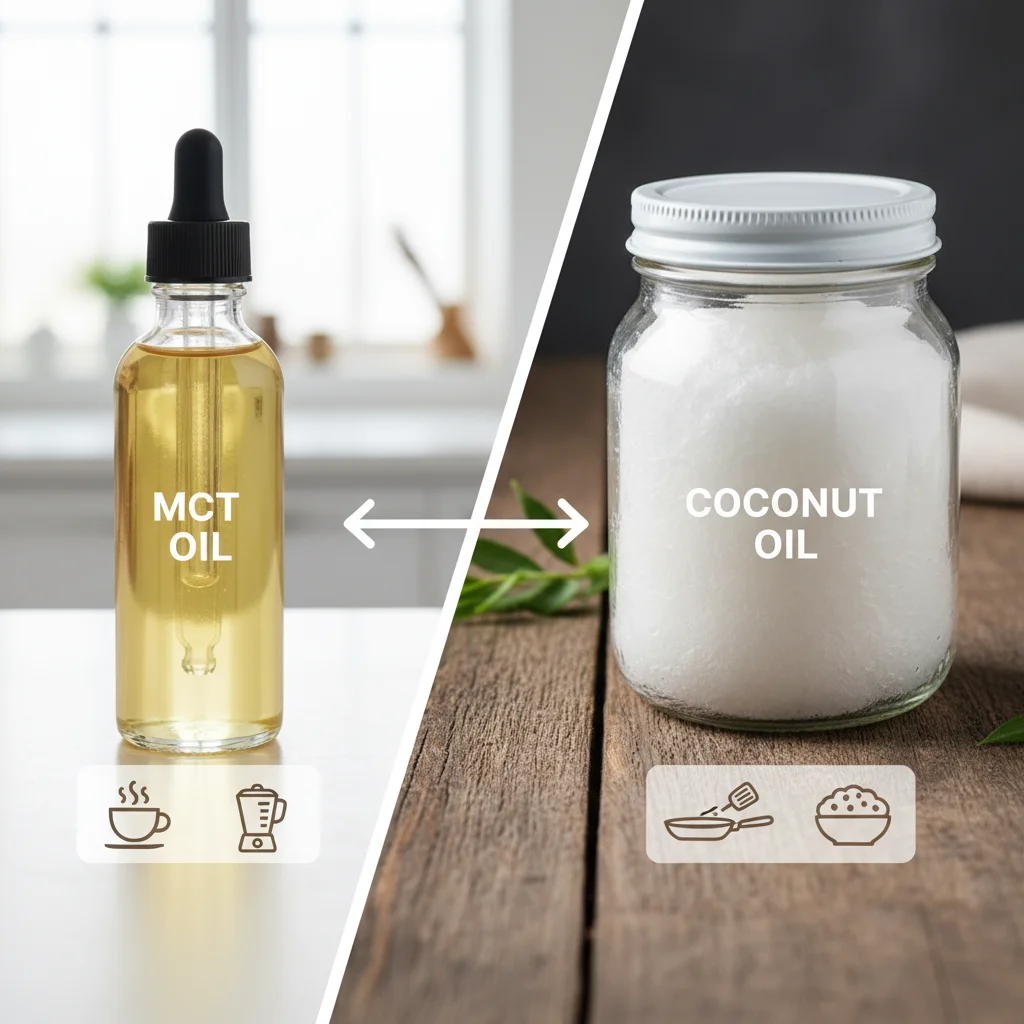
Coconut Oil is a natural fat extracted from the meat of mature coconuts. It is solid at room temperature and contains a mix of different fatty acids. Notably, it is rich in a type of saturated fat called Medium-Chain Triglycerides (MCTs), but it also contains longer-chain fats.
MCT Oil is a more refined product. It is typically derived from coconut oil or palm kernel oil through a process that isolates and concentrates the medium-chain triglycerides. Consequently, it is a liquid at room temperature and contains almost 100% MCTs.
The Core Difference: Fatty Acid Composition
The primary distinction lies in their fatty acid profiles. This difference fundamentally impacts how your body metabolizes each oil.
| Fatty Acid Type | Coconut Oil (Approx. %) | MCT Oil (Approx. %) | Key Property |
|---|---|---|---|
| Caprylic Acid (C8) | ~6-7% | ~50-80% (in C8 formulas) | Quickly converted to ketones for energy. |
| Capric Acid (C10) | ~5-9% | ~20-50% (in C10 formulas) | Also ketogenic, but slightly slower than C8. |
| Lauric Acid (C12) | ~45-50% | ~0-5% (often filtered out) | Behaves more like a long-chain fat; has antimicrobial properties. |
| Long-Chain Fats | ~15-20% | ~0% | Metabolized more slowly, often stored as fat. |
As shown, coconut oil is about 50% lauric acid, which some experts classify as a “longer” medium-chain fat. MCT oil, however, is prized for its high concentration of caprylic (C8) and capric (C10) acids, which are more rapidly absorbed and converted into ketones by the liver.
Health Benefits: How Do They Compare?
Both oils offer advantages, but their applications differ based on your objectives.
🧠 Cognitive Function and Energy
MCT oil is often favored for a rapid energy boost. Because the C8 and C10 fats go straight to the liver, they are quickly converted into ketones—an alternative fuel source for the brain. This can support mental clarity and focus, especially on a low-carb or ketogenic diet. Coconut oil provides a slower, more sustained release of energy due to its lauric acid content.
⚖️ Weight Management
MCT oil may have a slight edge for weight management. Studies suggest that C8 and C10 can increase feelings of fullness and boost metabolic rate more effectively than longer-chain fats. Therefore, incorporating MCT oil into your routine could support a weight loss strategy. Coconut oil can still be beneficial, but its effects are more moderate.
❤️ Heart Health
This is a nuanced area. While both are saturated fats, some research indicates that the unique MCTs in coconut oil may have a neutral or slightly beneficial effect on cholesterol profiles for some individuals. However, moderation is key, and it’s wise to balance them with unsaturated fats from sources like nuts and avocados. For more on supporting overall metabolic health, you might explore resources on managing blood sugar levels.
🦠 Antimicrobial and Immune Support
Coconut oil shines here due to its high lauric acid content. When digested, lauric acid converts to monolaurin, a compound with potent antiviral and antibacterial properties. This makes coconut oil a popular choice for supporting immune function. MCT oil retains some of these properties but to a lesser degree unless it includes lauric acid.
How to Use Them in Your Diet
Choosing the right oil depends on how you plan to use it.
Best Uses for MCT Oil:
* Ketogenic Diets: A perfect source of quick ketones.
* Bulletproof Coffee: Blends smoothly for a creamy, energizing drink.
* Salad Dressings & Smoothies: Adds a fat source without strong flavor.
* Direct Supplementation: Taken by the tablespoon for a fast energy hit.
Best Uses for Coconut Oil:
* Medium-Heat Cooking & Baking: Its stable saturated fats make it suitable for sautéing and baking.
* Skin & Hair Care: A popular natural moisturizer.
* Popcorn Topping: For a rich, buttery flavor.
* General Purpose Cooking: Where a subtle coconut flavor is desired.
Potential Side Effects and Considerations
Introducing these oils, especially MCT oil, should be done gradually. A common side effect is digestive distress, such as cramps, diarrhea, or nausea, if you start with too large a dose. Begin with one teaspoon of MCT oil daily and slowly increase.
Moreover, it’s important to remember that both are calorie-dense fats. They should be used to replace other fats in your diet, not simply added on top, to avoid unwanted calorie surplus.
Which One Should You Choose? The Verdict
Your choice between MCT oil and coconut oil hinges on your specific health goals.
- Choose MCT Oil if: You are on a ketogenic diet, want rapid energy and ketone production, seek a flavorless oil for drinks, or are focusing on weight management strategies. For those interested in targeted supplements, reviewing an advanced mitochondrial formula could provide additional context on cellular energy support.
- Choose Coconut Oil if: You want a natural, multi-purpose oil for cooking and baking, seek immune-supporting antimicrobial benefits, or prefer a less-processed, whole-food source of MCTs.
Ultimately, they can coexist in a healthy kitchen. You might use coconut oil for cooking and MCT oil as a targeted supplement in your morning routine.
Conclusion
Both MCT oil and coconut oil are valuable tools with distinct profiles. MCT oil offers a concentrated, rapid source of energy and ketones, while coconut oil provides broader nutritional benefits and culinary versatility.
By understanding their differences in fatty acid composition and intended use, you can make a smarter choice to support your cognitive function, metabolism, and overall well-being. Always consult with a healthcare provider before making significant changes to your diet, particularly if you have underlying health conditions.
Sources:
* Harvard T.H. Chan School of Public Health. (n.d.). Coconut Oil. Retrieved from https://www.hsph.harvard.edu/nutritionsource/food-features/coconut-oil/
* National Institutes of Health. (2018). Medium-Chain Triglycerides. In PubMed. Retrieved from https://pubmed.ncbi.nlm.nih.gov/