
Digestive Teas for Stomach Comfort
Digestive Teas: Your Natural Guide to Gut Health
Feeling bloated, gassy, or just generally uncomfortable after a meal? You’re not alone. Digestive discomfort is a common issue, but reaching for over-the-counter solutions isn’t your only option. A warm, soothing cup of tea can be a remarkably effective and natural remedy. Consequently, digestive teas have been used for centuries across various cultures to calm the stomach, ease digestion, and promote overall gut health. This guide will explore the most potent herbs for your digestive system and how to incorporate them into your daily routine.
What Are Digestive Teas?
Firstly, it’s important to define what we mean by “digestive teas.” These are infusions made from herbs, spices, roots, and flowers that contain compounds known to support the digestive process. Unlike standard black or green tea, which contains caffeine, many digestive teas are naturally caffeine-free. Their primary purpose is to alleviate symptoms like:
* Bloating and gas
* Indigestion or heartburn
* Nausea
* Stomach cramps
* Irregular bowel movements
Moreover, they often work by relaxing digestive tract muscles, reducing inflammation, stimulating digestive enzymes, or providing calming effects that can ease stress-related stomach issues.
Top 6 Digestive Teas and Their Proven Benefits
The following table outlines the most popular and scientifically supported teas for digestion, detailing their key active compounds and primary uses.
| Tea | Key Active Compounds | Primary Digestive Benefits | Best For |
|---|---|---|---|
| Peppermint | Menthol | Relaxes GI tract muscles, reduces spasms | Bloating, Irritable Bowel Syndrome (IBS), gas |
| Ginger | Gingerols, Shogaols | Stimulates gastric emptying, reduces nausea | Nausea, motion sickness, slow digestion |
| Chamomile | Apigenin, Bisabolol | Anti-inflammatory, antispasmodic, calming | General indigestion, stress-related upset, cramps |
| Fennel | Anethole | Antispasmodic, carminative (expels gas) | Infant colic, bloating, abdominal pain |
| Licorice Root | Glycyrrhizin | Soothes stomach lining, mild laxative effect | Heartburn, acid reflux, stomach ulcers |
| Dandelion Root | Sesquiterpene lactones | Mild diuretic, stimulates bile production | Bloating, water retention, liver support |
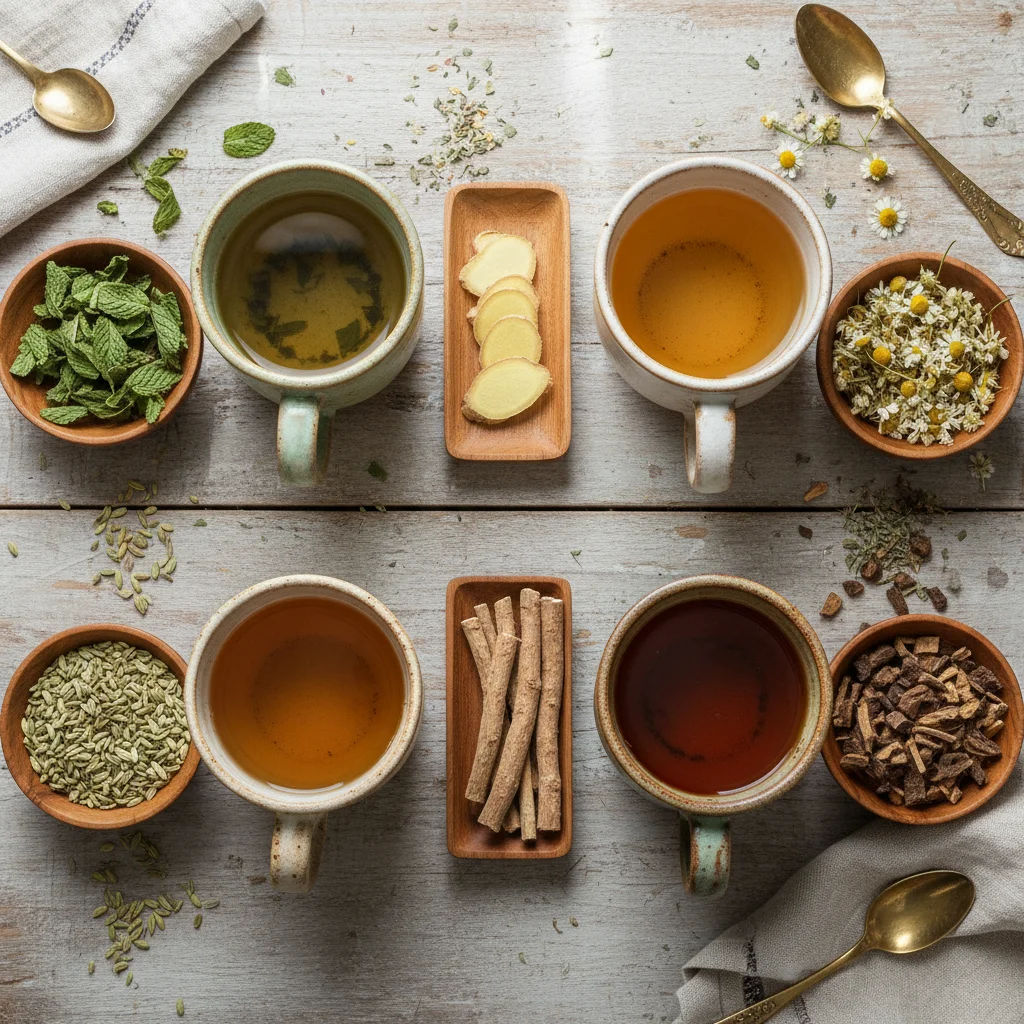
How to Choose and Use Digestive Teas Effectively
Selecting the right tea depends on your specific symptoms. Therefore, understanding the root cause of your discomfort is the first step.
For Immediate Relief from Bloating or Gas: Peppermint and fennel tea are excellent fast-acting choices. The menthol in peppermint is a potent antispasmodic, while anethole in fennel helps expel trapped gas. You can learn more about the specific benefits of one popular option in our detailed guide to peppermint tea.
For Nausea or Upset Stomach: Ginger is the undisputed champion. Research, including studies cited by the National Institutes of Health (NIH), supports its efficacy in reducing nausea from various causes. Sip it slowly for the best results.
For General Calming and Mild Discomfort: Chamomile tea is a wonderful daily drink. Its anti-inflammatory properties soothe the gut lining, and its calming effects can quiet a nervous stomach. For a deeper dive into this gentle herb, explore our article on chamomile tea.
Important Consideration: Always consult with a healthcare provider before using herbal teas regularly, especially if you are pregnant, nursing, on medication, or have a chronic health condition. For instance, licorice root can affect blood pressure and potassium levels.
Brewing the Perfect Cup for Digestion
To maximize the benefits, proper brewing is key. Here is a simple guide:
1. Use Fresh, Filtered Water: Start with cold water for the best flavor extraction.
2. Heat Correctly: For delicate herbs like chamomile or peppermint, bring water to a near-boil (about 200°F or 93°C). For roots like ginger or dandelion, a full rolling boil is better.
3. Steep Adequately: Cover your cup or teapot and steep for 5-10 minutes. This allows the therapeutic compounds to fully infuse into the water.
4. Drink at the Right Time: A cup about 30 minutes before a meal can stimulate digestion, while a cup after a meal can help alleviate fullness and bloating.
Beyond Tea: A Holistic Approach to Digestive Health
While digestive teas are powerful tools, they work best as part of a holistic approach. Additionally, consider these complementary practices:
* Mindful Eating: Eating slowly and chewing thoroughly can dramatically reduce digestive burden.
* Stay Hydrated: Drinking enough water throughout the day is fundamental for healthy digestion.
* Manage Stress: Since the gut and brain are intimately connected (the gut-brain axis), stress management techniques like meditation can improve gut symptoms. Exploring natural supplements for cognitive support, like those discussed in our review of the best brain health supplements, can be part of this holistic strategy.
* Probiotic and Prebiotic Foods: Incorporate yogurt, kefir, and fiber-rich foods to support a healthy gut microbiome.
In conclusion, digestive teas offer a time-tested, gentle, and effective way to support your gastrointestinal well-being. By understanding which herb matches your needs and brewing it correctly, you can transform a simple daily ritual into a powerful act of self-care for your gut.

