
Vegetable Cellulose: Uses & Health Facts
Vegetable Cellulose: The Plant-Based Fiber in Your Food
Have you ever glanced at an ingredient list and seen “vegetable cellulose” or “microcrystalline cellulose”? This common additive is everywhere, from shredded cheese to protein bars. But what exactly is it, and should you be concerned about its presence in your food? This guide will demystify vegetable cellulose, exploring its sources, widespread uses, and the science behind its health effects.
What Is Vegetable Cellulose? 🍃
Vegetable cellulose is a type of insoluble dietary fiber derived from the cell walls of plants. Chemically, it is a complex carbohydrate, or polysaccharide, made up of long chains of glucose molecules. It is the most abundant organic polymer on Earth and serves as the primary structural component of green plants, giving wood, cotton, and hemp their strength.
In an industrial context, it is typically sourced from wood pulp or cotton linters. The purified, white, odorless powder that results is what food manufacturers use. It’s crucial to distinguish this from the natural cellulose you consume by eating whole vegetables and fruits; the processed form is a concentrated, isolated ingredient used for specific functional purposes.
Common Uses of Vegetable Cellulose in Products
Manufacturers value vegetable cellulose for its versatile physical properties. Consequently, you’ll find it in a surprisingly wide array of everyday items.
In the Food Industry
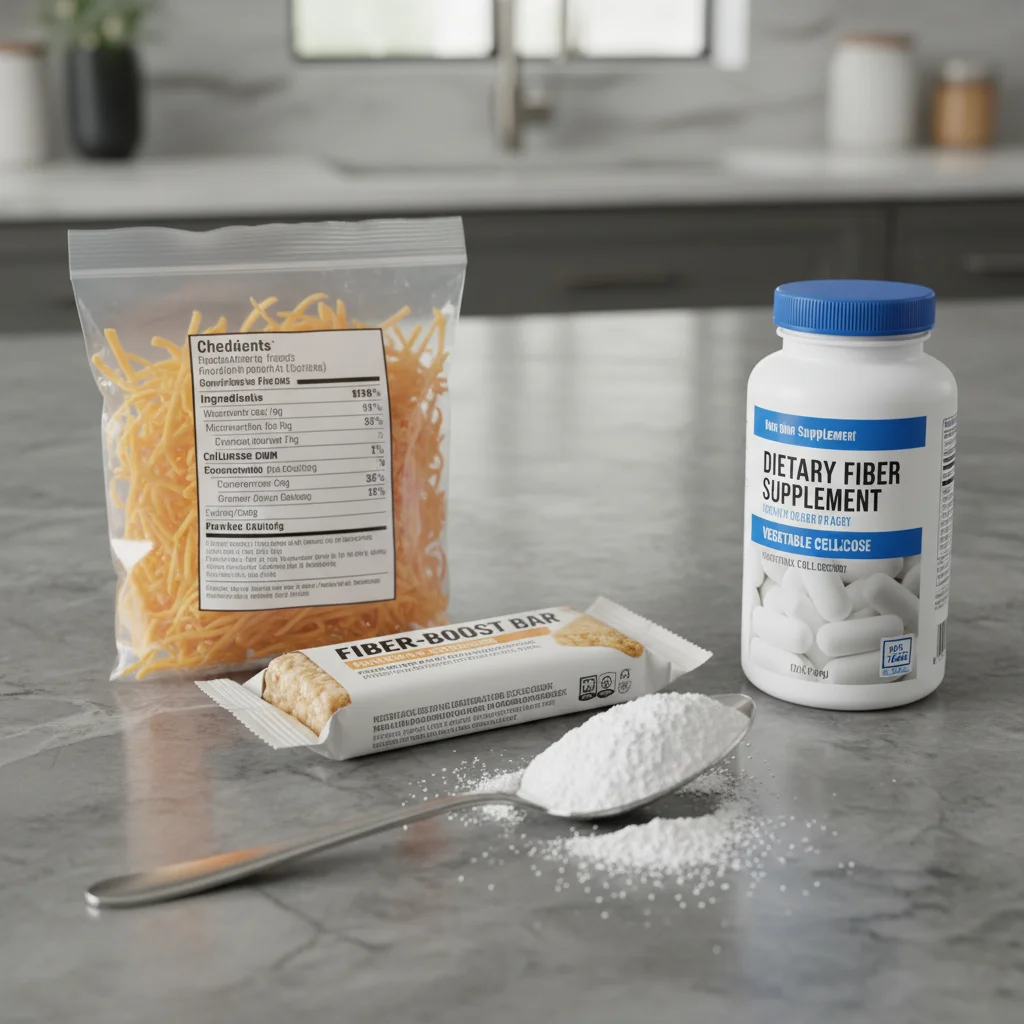
Its primary role in food is as a texturizer, anti-caking agent, and bulking agent. Because it absorbs water and adds structure without calories, it’s a favored ingredient in “diet” or high-fiber foods.
* Shredded Cheese: Prevents clumping by absorbing moisture.
* Baked Goods: Adds bulk and can replace some flour or fat.
* Ice Cream & Sauces: Acts as a stabilizer and thickener.
* High-Fiber Supplements: Serves as a concentrated source of insoluble fiber. For more on targeted nutritional supplements, you can explore our review of best brain health supplements.
* Low-Calorie Foods: Provides volume without adding significant calories or carbs, a concept often explored in specialized diets like those found in 9 vegan keto diet plans.
Beyond the Kitchen
Moreover, its utility extends far beyond food:
* Pharmaceuticals: Used as a binder in pill and tablet formulations.
* Cosmetics: Found in products like mascara and facial powders as a thickener.
* Industrial Applications: Used in paper, textiles, and some plastics.
Nutritional Profile and Health Impact
As a purified fiber, vegetable cellulose itself is not a significant source of vitamins or minerals. Its health impact is primarily related to its function as a dietary fiber.
Potential Benefits
- Digestive Health: Like other insoluble fibers, it can add bulk to stool and may help support regularity.
- Calorie Control: By adding volume to food, it can promote a feeling of fullness, which may aid in weight management.
- Blood Sugar Management: Fiber can slow the absorption of sugars. For a broader understanding of metabolic health, consider reading our blood sugar levels guide.
Safety and Considerations
Regulatory bodies like the U.S. FDA and the European Food Safety Authority (EFSA) generally recognize purified cellulose as safe (GRAS) for consumption. However, there are some considerations:
* Digestibility: Humans lack the enzyme (cellulase) to break it down. Therefore, it passes through the digestive system largely intact, which is why it contributes zero calories.
* Moderation is Key: Excessive intake of isolated fiber, especially without adequate water, can lead to digestive discomfort, such as bloating or gas.
* Whole Food vs. Additive: Nutrition experts consistently emphasize that fiber from whole plant foods (like vegetables, fruits, and legumes) is superior because it comes packaged with vitamins, minerals, and phytonutrients. Processed cellulose should not be a primary fiber source.
Vegetable Cellulose vs. Other Dietary Fibers
It’s helpful to understand how this ingredient compares to other common fibers. The table below outlines key differences.
| Fiber Type | Source | Solubility | Primary Function in Body | Common Food Sources |
|---|---|---|---|---|
| Vegetable Cellulose | Wood pulp, cotton | Insoluble | Adds bulk to stool, promotes regularity | Shredded cheese, fiber supplements, low-cal foods |
| Psyllium Husk | Plantago ovata seeds | Soluble | Forms gel, can lower cholesterol, aids regularity | Fiber supplements, some cereals |
| Inulin | Chicory root, agave | Soluble (Prebiotic) | Feeds beneficial gut bacteria | Protein bars, yogurts, supplements |
| Oat Beta-Glucan | Oats, barley | Soluble | Helps lower LDL cholesterol, modulates blood sugar | Oatmeal, oat bran |
| Pectin | Citrus peels, apples | Soluble | Forms gel, slows digestion | Jams, jellies, fruit |
Frequently Asked Questions
Is vegetable cellulose safe to eat?
Yes, regulatory authorities worldwide deem it safe for consumption in the amounts typically used in food products. It has been used for decades.
Is it vegan and gluten-free?
Typically, yes. It is derived from plants and does not contain gluten. However, those with severe allergies should check with manufacturers about processing facilities.
Does it have any nutritional value?
It provides insoluble dietary fiber but no significant vitamins, minerals, or calories. Its value is functional for digestion, not nutritive.
Why is it in so many processed foods?
Primarily, it improves texture, prevents clumping, adds fiber content on labels, and reduces calories—all desirable traits for food manufacturers.
Should I avoid it?
For most people, it is not harmful. However, a diet focused on whole, unprocessed foods will naturally limit your intake of this and other additives while providing superior overall nutrition. Focusing on natural sources of fiber is always the best strategy for long-term health.
In conclusion, vegetable cellulose is a benign, plant-derived additive that serves important technical functions in the food industry. While it can contribute to your daily fiber intake, it should not replace the diverse array of fibers and nutrients found in whole fruits, vegetables, and grains. By understanding its role, you can make more informed choices about the processed foods in your diet.

