
Olive Oil Cleanse: Benefits & Steps
The Olive Oil Cleanse: A Comprehensive Guide to Benefits and Risks
The “olive oil cleanse” is a popular folk remedy often touted for detoxification, gallbladder flushing, and digestive reset. This practice typically involves consuming a significant quantity of olive oil, often combined with lemon juice or citrus, over a short period. While anecdotal reports abound, it’s crucial to separate potential benefits from significant health risks. This guide provides a balanced, evidence-based look at the olive oil cleanse.
What Is an Olive Oil Cleanse?
An olive oil cleanse is a type of mono-diet or short-term dietary protocol. Proponents claim it helps purge toxins, expel gallstones, and improve liver function. The most common method involves fasting for part of a day and then consuming up to 2/3 cup of extra virgin olive oil mixed with lemon juice in the evening, followed by a specific sleeping position.
It is fundamentally important to note that mainstream medicine does not endorse this practice for gallstone removal, and it can be dangerous. Always consult a healthcare professional before attempting any cleanse.
Purported Benefits and the Science Behind Them
Advocates of the olive oil cleanse attribute several benefits to it. However, scientific support for these claims is generally weak, and many effects are anecdotal.
1. Potential Gallbladder Stimulation
The high fat content in olive oil stimulates the gallbladder to contract and release bile. In theory, this forceful contraction could push small gallstones through the bile duct. However, this is precisely where the danger lies, as a stone can become lodged, causing a medical emergency requiring immediate surgery. The Mayo Clinic explicitly warns against such “gallbladder flushes.”
2. Source of Healthy Fats and Antioxidants
Outside of the cleanse context, olive oil is undoubtedly healthy. It is rich in monounsaturated fats and antioxidants like polyphenols, which support heart health and combat inflammation. Consuming it as part of a regular diet, such as in salad dressings, is highly beneficial. For instance, incorporating healthy fats is a key part of managing overall wellness, much like understanding your blood sugar levels guide is crucial for metabolic health.
3. Temporary Laxative Effect
A large bolus of oil can have a laxative effect, which some people misinterpret as a “detox” or cleansing of the intestines. This is simply the body’s natural response to a high fat intake and does not equate to removing toxins.
Significant Risks and Side Effects
The potential dangers of an olive oil cleanse often outweigh its unproven benefits. Consequently, understanding these risks is essential.
- Gallstone Complications: As mentioned, this is the most severe risk. A lodged gallstone can cause pancreatitis, jaundice, or a life-threatening gallbladder infection.
- Severe Digestive Distress: Nausea, vomiting, cramping, and diarrhea are extremely common side effects.
- Nutrient Deficiency and Disruption: Such a restrictive protocol disrupts normal eating patterns and can lead to short-term deficiencies.
- Dehydration and Electrolyte Imbalance: Frequent diarrhea can quickly lead to dehydration and a loss of essential electrolytes.
- Weight Rebound: Any rapid weight loss is almost entirely water and digestive tract content, not fat, and will return once you resume eating normally.
How to Perform an Olive Oil Cleanse (If You Proceed)
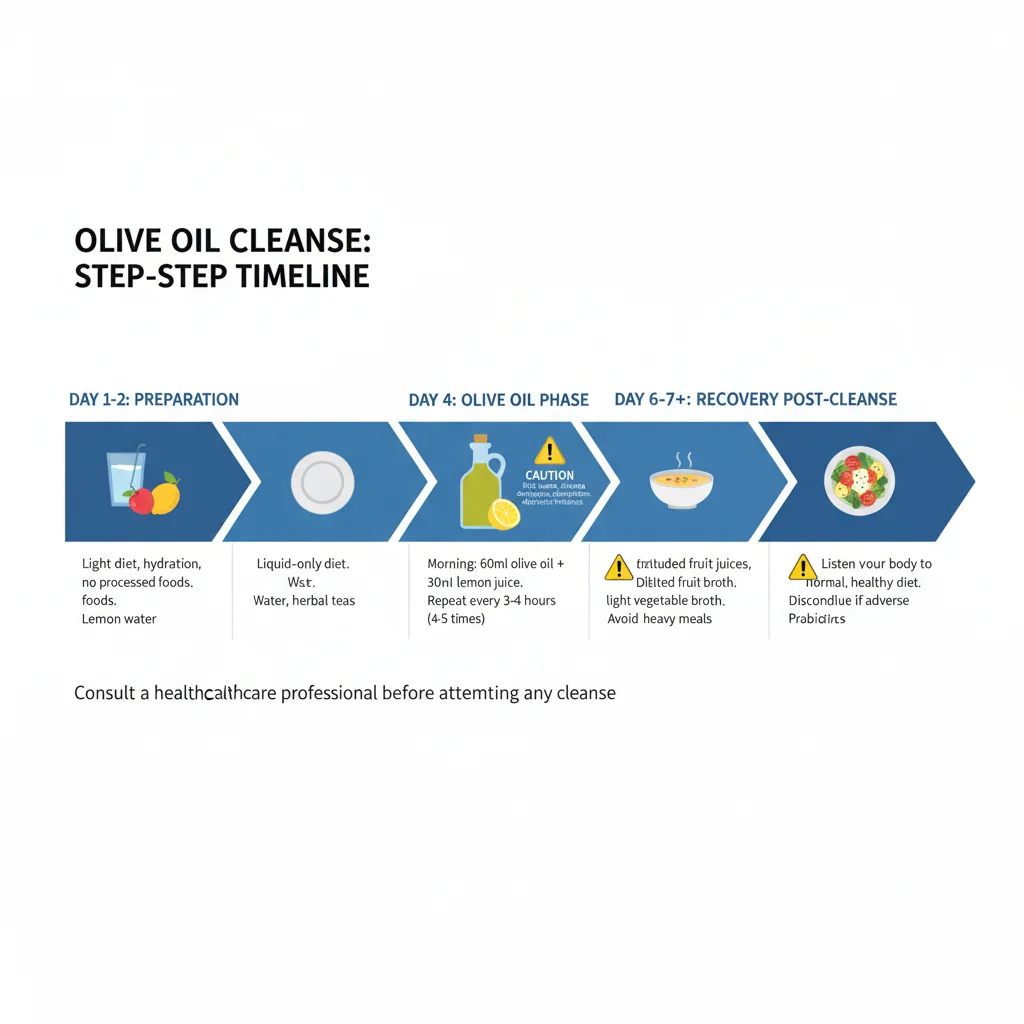
We strongly advise against attempting this cleanse without direct supervision from a qualified healthcare provider. If, after consultation, you and your provider decide to proceed with a modified version for general wellness (not gallstone treatment), here is a common protocol.
Disclaimer: This is for informational purposes only. It is not medical advice.
| Time | Action | Notes & Purpose |
|---|---|---|
| Day of Cleanse | Eat a light, fat-free breakfast (e.g., oatmeal, fruit). | Begins to reduce digestive load. |
| 12:00 PM Onwards | Begin a liquid fast. Drink only apple juice, water, or herbal tea. | Some protocols use apple juice to soften stones (unproven). |
| 6:00 PM | Mix 2/3 cup extra virgin olive oil with 1/3 cup fresh lemon juice. Shake or stir vigorously. | Lemon juice is believed to make the oil more palatable. |
| Evening | Drink the mixture in 2-4 servings every 15-20 minutes. Lie on your right side afterward. | Lying on the right side is thought to aid bile duct flow. |
| Next Morning | You may experience urgent bowel movements. Break your fast gently with broth or fruit. | Reintroduce solid food slowly to avoid shocking your system. |
Safer Alternatives for Detoxification and Digestive Health
Instead of a drastic cleanse, consider these evidence-based practices to support your body’s natural detoxification systems and digestive health sustainably.
- Stay Hydrated: Drinking ample water is the simplest and most effective way to support kidney and liver function.
- Increase Fiber Intake: Fiber from vegetables, fruits, and whole grains promotes regular bowel movements and gut health. For example, exploring a vegan keto diet plan can be one way to focus on high-fiber, plant-based foods.
- Support Liver Health with Food: Incorporate cruciferous vegetables (broccoli, kale), beets, and garlic into your diet. These foods contain nutrients that support the liver’s natural detox pathways.
- Exercise Regularly: Physical activity improves circulation and promotes elimination through sweat.
- Consider Targeted Supplements: Some supplements, like milk thistle, are researched for liver support. Always choose high-quality options, similar to how you would vet any health product, such as reading an advanced mitochondrial formula review before purchase.
Final Verdict: Is the Olive Oil Cleanse Worth It?
The olive oil cleanse is a controversial practice with minimal scientific backing and notable risks. While olive oil itself is a cornerstone of a healthy diet like the Mediterranean diet, consuming it in large, concentrated doses for “cleansing” is a different matter altogether.
Therefore, for most people, the potential for severe adverse effects—particularly regarding gallbladder issues—makes this cleanse inadvisable. A far safer and more effective approach is to adopt long-term healthy habits: a balanced diet rich in whole foods, consistent hydration, regular exercise, and adequate sleep. Your body is equipped with sophisticated organs like the liver and kidneys that detoxify around the clock; they thrive on consistent care, not short-term shocks. If you have specific health concerns, always seek guidance from a medical professional.