
Lowest Calorie Mustard Guide
Your Guide to the Lowest Calorie Mustard
When you’re meticulously managing your calorie intake, every condiment counts. Fortunately, mustard stands out as a flavorful champion in the world of low-calorie foods. But not all mustards are created equal. This guide will help you navigate the varieties to find the lowest calorie mustard for your diet, explain why it’s such a diet-friendly choice, and show you how to incorporate it into your meals creatively.
Why Mustard is a Calorie-Conscious Condiment
Mustard’s primary ingredients are mustard seeds, vinegar, water, and spices. These components are inherently very low in fat and sugar, which consequently translates to minimal calories. Unlike mayonnaise, ketchup, or creamy dressings that often rely on oils and sugars, mustard delivers a powerful punch of flavor with almost negligible caloric cost. Therefore, it’s an excellent tool for adding zest to meals without derailing your nutritional goals. Moreover, mustard seeds contain compounds like isothiocyanates, which are studied for their potential anti-inflammatory properties.
Comparing Mustard Varieties: A Calorie Breakdown
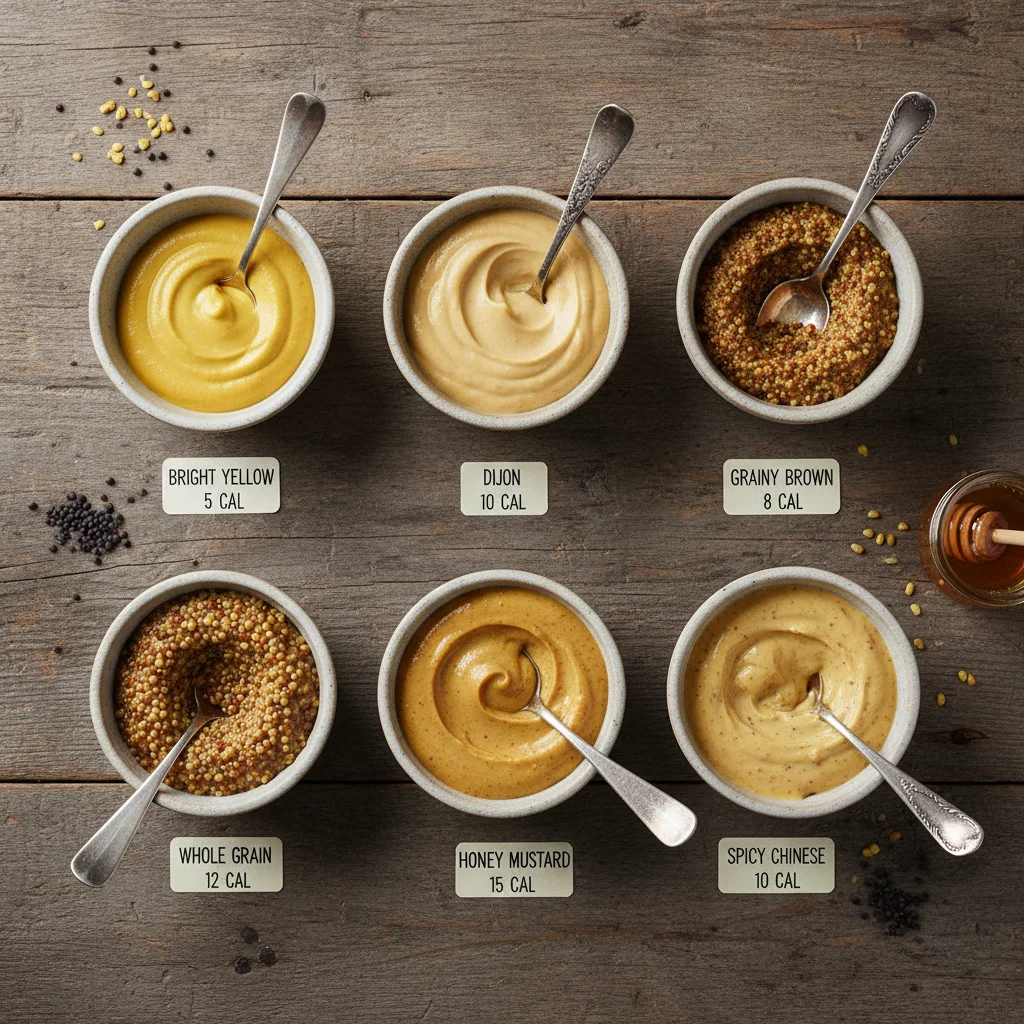
The calorie content can vary slightly based on added ingredients like honey, wine, or specialty spices. Here is a comparative look at the most common types, with nutrition based on a standard one-teaspoon (5g) serving.
| Mustard Type | Calories (per tsp) | Key Characteristics | Best For |
|---|---|---|---|
| Yellow Mustard | 3-5 calories | Mild, tangy, bright yellow. The classic. | Hot dogs, burgers, potato salad, marinades. |
| Dijon Mustard | 5-10 calories | Sharp, clean, slightly wine-forward flavor. | Vinaigrettes, sauces, coating for meats pre-cooking. |
| Spicy Brown Mustard | 5-10 calories | Grainy texture, robust, horseradish-like heat. | Deli sandwiches, pretzels, charcuterie boards. |
| Whole Grain Mustard | 5-15 calories | Visible seeds, rustic texture, complex flavor. | Artisanal sandwiches, cheese plates, glaze for pork. |
| Honey Mustard | 20-45 calories | Sweet, creamy, often contains sugar/oil. | Dipping sauces, salad dressings (use sparingly). |
As you can see, classic yellow mustard is consistently the lowest calorie option. Dijon and spicy brown are also excellent, very low-calorie choices that offer more complex flavors. However, you must be cautious with honey mustard and other “gourmet” flavored mustards, as they can contain significant added sugars and fats.
How to Use Low-Calorie Mustard in Your Diet
Integrating mustard into your meals is simple and can dramatically enhance flavor without added calories. Here are several practical applications.
As a Direct Condiment
This is the most straightforward use. Swap out mayonnaise on your sandwich for spicy brown mustard, or use yellow mustard on your burger instead of ketchup. You’ll save dozens of calories per serving.
As a Marinade or Meat Rub
Mustard acts as a fantastic binder for herbs and spices. A mix of Dijon mustard, garlic, and rosemary makes a perfect coating for chicken breasts or pork tenderloin before roasting. The vinegar in the mustard also helps tenderize the meat.
As the Base for Salad Dressings
You can create a delicious, creamy-tasting dressing without any cream. Whisk together two tablespoons of Dijon mustard with one tablespoon of vinegar (like apple cider or white wine vinegar), a squeeze of lemon, and herbs. Slowly whisk in a little water or plain Greek yogurt until you reach the desired consistency. This is a fantastic alternative to high-calorie bottled dressings and complements our guide on creating a balanced diet for managing blood sugar levels.
In Sauces and Dips
Add a spoonful of whole grain mustard to a pan sauce for steak, or mix yellow mustard into plain Greek yogurt with dill for a healthy vegetable dip. Additionally, a touch of mustard can elevate the flavor of healthy soups and stews.
What to Look for on the Label
To ensure you’re getting the lowest calorie mustard, become a vigilant label reader. Firstly, check the ingredient list. The first ingredients should be vinegar, water, and mustard seeds. Secondly, scan the nutrition facts for added sugars and fats. A true low-calorie mustard will have 0g of fat and 0-1g of sugar per serving. Be wary of terms like “honey,” “maple,” “creamy,” or “bacon” in the title, as these often indicate higher calorie counts.
The Bottom Line
Mustard is unequivocally one of the most calorie-efficient ways to add flavor to your food. For the absolute lowest calorie mustard, stick with classic yellow. For more gourmet, robust flavor while still keeping calories remarkably low, opt for Dijon, spicy brown, or whole grain varieties.
By using it as a swap for higher-calorie condiments and as a base in cooking, you can enjoy delicious, satisfying meals that support your health goals. For another example of using simple dietary swaps for wellness, explore the benefits of herbal teas like chamomile tea for relaxation.

