
Pure Honey vs Raw Honey: Differences
Pure Honey vs Raw Honey: Uncovering the Sweet Truth
Navigating the honey aisle can be surprisingly complex. You’re faced with labels like “pure,” “raw,” “organic,” and “natural,” each promising a superior product. Consequently, understanding the distinction between pure honey and raw honey is crucial for making an informed choice that aligns with your health and culinary needs. This guide will break down the key differences, from processing methods to nutritional profiles, helping you select the perfect jar.
What is Pure Honey?
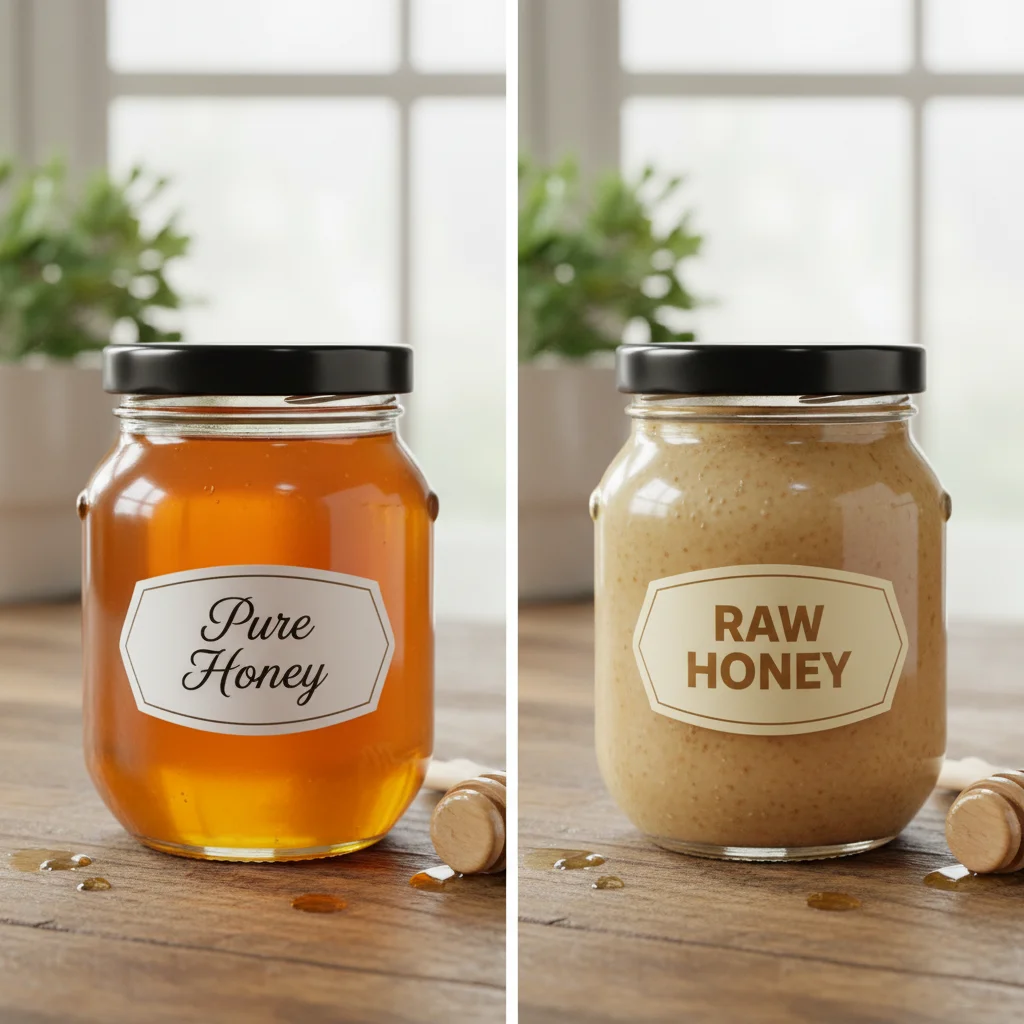
Firstly, let’s define pure honey. The term “pure honey” indicates that the product contains only honey, with no additional ingredients like corn syrup or additives. However, this label does not specify how the honey has been processed. Pure honey is often pasteurized and filtered.
Pasteurization involves heating the honey to high temperatures (typically around 160°F or 71°C) to kill yeast cells, prevent fermentation, and extend shelf life. Filtration goes beyond removing large particles like wax; it often involves fine filtering to remove pollen and air bubbles, resulting in a clearer, smoother product that stays liquid longer.
Therefore, while “pure” assures you’re getting real honey, it often means the honey has been significantly altered from its natural state.
What is Raw Honey?
In contrast, raw honey is honey as it exists in the beehive. It is extracted, strained to remove debris like beeswax and dead bees, and then bottled. Crucially, it is not pasteurized or heavily filtered.
Because it avoids high-heat processing, raw honey retains its natural enzymes (like diastase and invertase), antioxidants, vitamins, and pollen grains. Moreover, it may crystallize more quickly, which is a natural process and a sign of its unadulterated state. For individuals interested in natural wellness, raw honey is often considered the more bioactive option, similar to how some seek out specific supplements for targeted health support, such as those detailed in our best powder supplements for gut health guide.
Key Differences: A Side-by-Side Comparison
The table below summarizes the fundamental distinctions between these two types of honey.
| Feature | Pure Honey | Raw Honey |
|---|---|---|
| Processing | Typically pasteurized & finely filtered. | Unpasteurized, only coarsely strained. |
| Heat Exposure | High heat during pasteurization. | Minimal to no heat. |
| Nutrient Retention | Lower levels of enzymes, antioxidants, and pollen due to heat. | Higher levels of natural enzymes, antioxidants, vitamins, and pollen. |
| Appearance & Texture | Very clear, smooth, and slow to crystallize. | Cloudier, may contain fine particles, crystallizes naturally. |
| Flavor Profile | Consistent, but sometimes milder. | More complex, varies by floral source, often more robust. |
| Common Uses | General sweetener, baking, in teas. | Wellness uses, natural remedies, drizzling on foods. |
Health Benefits and Nutritional Considerations
Both pure and raw honey offer health advantages over refined sugar, primarily because they contain trace amounts of vitamins, minerals, and antioxidants. However, the extent of these benefits differs significantly.
Raw Honey’s Potential Edge:
Raw honey is renowned for its potential health-promoting compounds. Because it retains pollen, it may offer allergy-relief properties for some individuals through localized exposure. Furthermore, its natural enzymes can aid digestion. Its antioxidant content, which includes flavonoids and phenolic acids, helps combat oxidative stress in the body. This aligns with the principles of seeking out nutrient-dense foods and supplements, much like the approach one might take for specific health areas, such as exploring antioxidants for prostate health.
Pure Honey’s Role:
Pure honey is still a natural sweetener and can soothe a sore throat. The pasteurization process, however, diminishes many of the delicate compounds that give raw honey its unique therapeutic profile. Therefore, for general sweetening purposes where high heat is involved (like in baking), pure honey is a perfectly suitable and often more economical choice.
Which One Should You Choose?
Your choice ultimately depends on your intended use and health priorities.
Choose Raw Honey if:
* You seek maximum potential health benefits, enzymes, and antioxidants.
* You want a honey with a more complex, terroir-driven flavor.
* You plan to use it as a topping, in smoothies, or in recipes where it won’t be heavily cooked.
* You are using it for natural remedy purposes, such as in sore throat remedies.
Choose Pure Honey if:
* You need honey primarily for baking or cooking at high temperatures.
* You prefer a clear, liquid honey that won’t crystallize quickly.
* You are giving honey to infants under one year old (note: NEVER give any honey to infants under 12 months due to the risk of infant botulism, which is present in both raw and pure honey).
* You are looking for a more budget-friendly, all-purpose sweetener.
How to Identify Quality Honey
Regardless of your choice, look for trusted sources. Read labels carefully. “Raw” should mean unpasteurized. “Pure” should mean 100% honey. For raw honey, local beekeepers or farmers’ markets are excellent sources, as you can often learn about the honey’s origin. Additionally, understanding product sourcing is a good practice in all consumer areas, similar to reviewing detailed analyses like a Purisaki Berberine review before choosing a supplement.
In conclusion, while both pure and raw honey are delightful natural sweeteners, raw honey offers a less processed product with a richer nutritional profile. Pure honey provides consistency and shelf stability. By understanding these key differences, you can confidently choose the honey that best sweetens your life and supports your wellness journey.


2 thoughts on “Pure Honey vs Raw Honey: Differences”
Comments are closed.