
Botox Units for Forehead Lines Guide
How Many Units of Botox for Forehead Lines? A Clear Dosage Guide
Considering Botox to smooth forehead lines is a popular choice for a refreshed appearance. However, a common and crucial question arises: how many units of Botox are needed for the forehead? The answer isn’t one-size-fits-all. The typical range is 10 to 30 units, but the precise number depends on several individual factors. This guide will break down the key considerations, provide a detailed dosage table, and explain what to expect from your treatment.
Understanding Botox Units and Forehead Anatomy
Firstly, it’s essential to understand what a “unit” of Botox represents. A unit is a measure of biological activity, not a volume. Botox works by temporarily blocking the nerve signals that cause muscles to contract. When these muscles relax, the overlying skin smoothens.
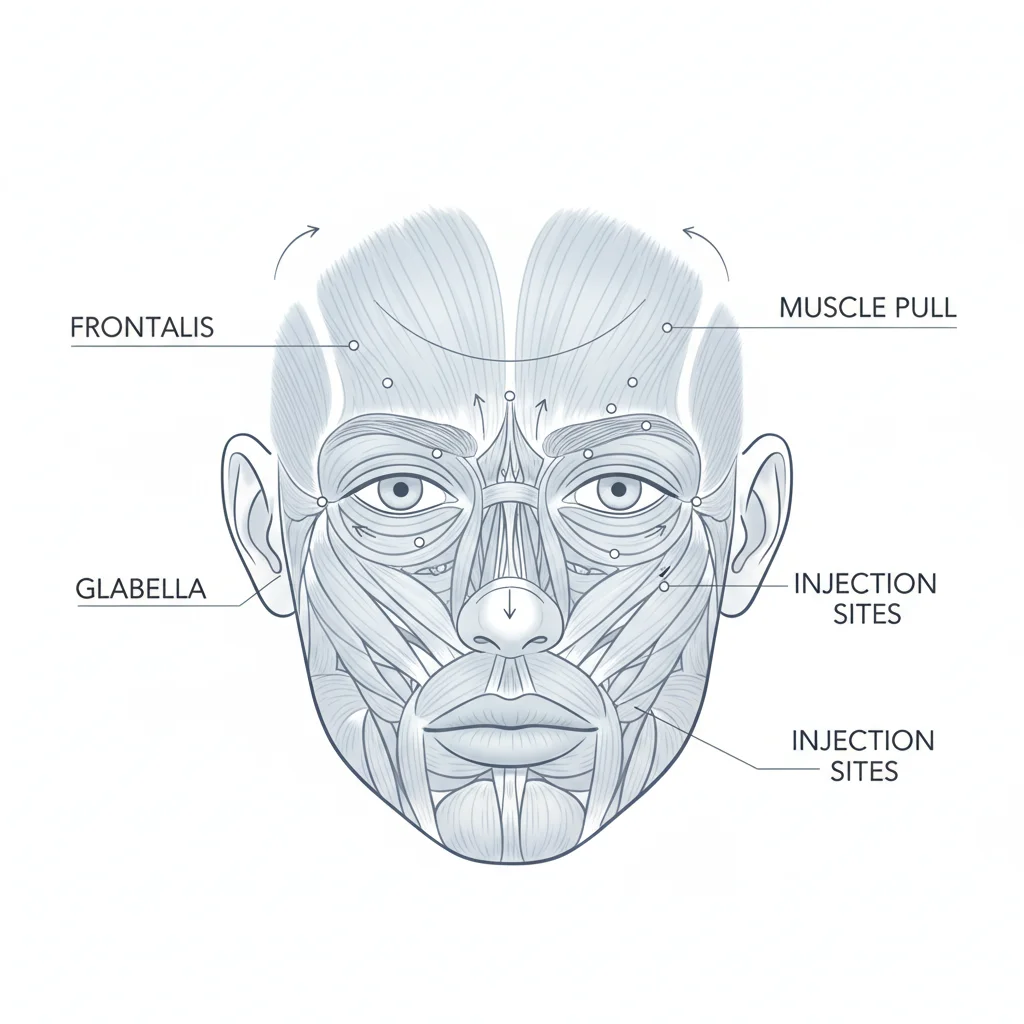
The forehead contains two primary muscle groups treated for wrinkles:
* Frontalis Muscle: This is the large, vertical muscle that raises your eyebrows and creates horizontal forehead lines when it contracts.
* Glabellar Complex (The “11s”): These muscles between the eyebrows pull inward and downward, creating vertical frown lines. Treating this area often complements forehead treatment for a balanced look.
Consequently, a comprehensive forehead treatment usually addresses both areas, which increases the total unit count.
Key Factors That Determine Your Botox Dosage
Your injector will assess multiple elements to determine your personalized dose. Here are the primary factors:
1. Muscle Mass and Strength: Individuals with thicker, stronger facial muscles typically require more units to achieve adequate relaxation. This is often why men may need higher doses than women.
2. Severity of Lines:
* Fine Lines (Preventative or Mild): Fewer units may be used to slightly soften muscle movement.
* Deep, Static Wrinkles: These lines are visible even at rest and generally require a higher dosage for optimal smoothing.
3. Treatment Goals: Do you want a completely smooth, immobile forehead or a more natural look with some preserved expression? The latter requires a more conservative, strategic approach.
4. Gender: On average, male facial anatomy involves larger, stronger muscles, often necessitating a 10-20% higher dose than for females.
5. Your Injector’s Technique: An experienced, board-certified professional will tailor the injection pattern and depth to your anatomy, which influences efficacy and unit usage.
Typical Botox Unit Ranges for the Forehead
The following table outlines common dosage ranges. This is for informational purposes only; your medical provider will determine your exact treatment plan.
| Treatment Area | Common Unit Range | Key Considerations |
|---|---|---|
| Forehead Lines (Frontalis) | 10 – 20 units | Targets horizontal lines. Higher doses risk a “heavy” or frozen brow if not expertly placed. |
| Glabellar Lines (“11s”) | 15 – 25 units | Standard treatment for frown lines between the eyebrows. Often treated with forehead. |
| Combined Forehead & Glabellar | 25 – 45 units | This is a very common treatment plan for full upper face smoothing. |
| Brow Lift (Strategic) | 2 – 6 units | Not a standard lift, but relaxing specific muscles can allow others to gently lift the brow tail. |
What to Expect During and After Treatment
The injection process is quick, often taking about 10-15 minutes. You might feel minor, brief pinpricks. Importantly, results are not immediate. It typically takes 3 to 7 days to begin noticing softening, with full effects visible at around 2 weeks.
Aftercare is straightforward: avoid rubbing the area, strenuous exercise, and lying down for 4-6 hours post-treatment to prevent the product from migrating. Results generally last 3 to 4 months, after which muscle activity gradually returns.
Moreover, choosing a qualified injector is the most critical step for safety and satisfaction. Always seek a licensed medical professional specializing in cosmetic dermatology or plastic surgery.
Frequently Asked Questions (FAQs)
Can I use fewer units to save money?
While possible, an insufficient dose may lead to underwhelming results and shorter duration. It’s more effective to follow your provider’s recommendation based on your anatomy.
Is more Botox always better?
Absolutely not. Over-treatment can lead to a frozen, unnatural appearance, drooping eyebrows (ptosis), or a “heavy” brow. The goal is a refreshed, natural look.
How does diet or lifestyle affect Botox?
There is some evidence that certain nutritional supplements for gut health can influence inflammation and overall skin quality, which is a secondary concern. However, the primary factor for Botox metabolism is your individual neuromuscular physiology. For overall wellness, understanding your body’s signals is key, much like learning to interpret changes in blood sugar levels.
Are there alternatives to Botox for the forehead?
Yes. Other neuromodulators like Dysport, Xeomin, and Jeuveau work similarly but have different unit conversion ratios. Additionally, dermal fillers can sometimes treat deep static lines, and procedures like laser resurfacing address skin texture.
Conclusion: Personalized Treatment is Essential
In summary, the number of Botox units needed for your forehead is a personalized prescription. While the combined forehead and glabellar area often falls within a 25 to 45-unit range, your unique facial structure, muscle strength, and aesthetic goals are the true determinants. Therefore, the most important step is to consult with a skilled, experienced medical professional who can design a safe and effective treatment plan just for you.