
Is Peanut Oil a Seed Oil? Truth
Is Peanut Oil a Seed Oil? Unpacking the Botanical and Nutritional Facts
The question “Is peanut oil a seed oil?” often arises in health and cooking circles, particularly amidst discussions about inflammatory fats and optimal dietary choices. The answer, from a botanical and industrial perspective, is a definitive yes. However, the full story involves important nuances about its composition and health implications. This article will clarify the classification, explore its nutritional profile, and compare it to other common oils to help you make informed decisions for your kitchen and your health.
The Botanical Classification: Nut or Legume Seed?
First and foremost, we must address the source. Despite its name, a peanut is not a true nut. Botanically, it is a legume, related to beans and lentils. The edible part we consume grows underground and is, specifically, the seed of the Arachis hypogaea plant.
Consequently, the oil extracted from this seed is logically categorized as a seed oil. In the broader culinary and manufacturing world, “seed oils” typically refer to vegetable oils extracted from the seeds of various plants, such as sunflower, canola (rapeseed), soybean, and corn. Peanut oil fits squarely within this industrial grouping. Therefore, when people discuss limiting “seed oils,” peanut oil is generally included in that category.
Nutritional Profile and Fatty Acid Composition
Understanding whether an oil is healthful requires looking beyond its classification to its fat composition. Peanut oil’s health impact is primarily determined by its blend of fatty acids.
Breakdown of Fats in Peanut Oil
| Fatty Acid Type | Percentage (Approx.) | Primary Characteristics |
|---|---|---|
| Monounsaturated Fats (MUFAs) | 46-50% | Considered heart-healthy; stable at medium-high heat. Oleic acid is the main type. |
| Polyunsaturated Fats (PUFAs) | 30-35% | Contains both Omega-6 (linoleic acid) and a small amount of Omega-3. Prone to oxidation at high heat. |
| Saturated Fats | 15-20% | More stable than PUFAs; contributes to the oil’s high smoke point. |
This composition makes peanut oil relatively balanced. Its high monounsaturated fat content is similar to that of olive oil, which is often praised for its cardiovascular benefits. However, its significant polyunsaturated fat content, which is predominantly the Omega-6 linoleic acid, is a point of discussion in modern nutrition.
Health Implications: The Omega-6 Consideration
The primary health debate surrounding many seed oils, including peanut oil, revolves around Omega-6 fatty acids. While essential in moderation, the typical Western diet is excessively high in Omega-6s and low in Omega-3s. This imbalance is theorized to promote systemic inflammation, a root cause of many chronic diseases.
Peanut oil contains a notable amount of these Omega-6 PUFAs. Consequently, consuming it in large quantities, especially if your diet is already rich in other seed oils and processed foods, may contribute to an unhealthy fatty acid ratio. For a balanced approach, it’s wise to pair oils high in Omega-6 with sources of Omega-3s, such as fatty fish, flaxseeds, or walnuts.
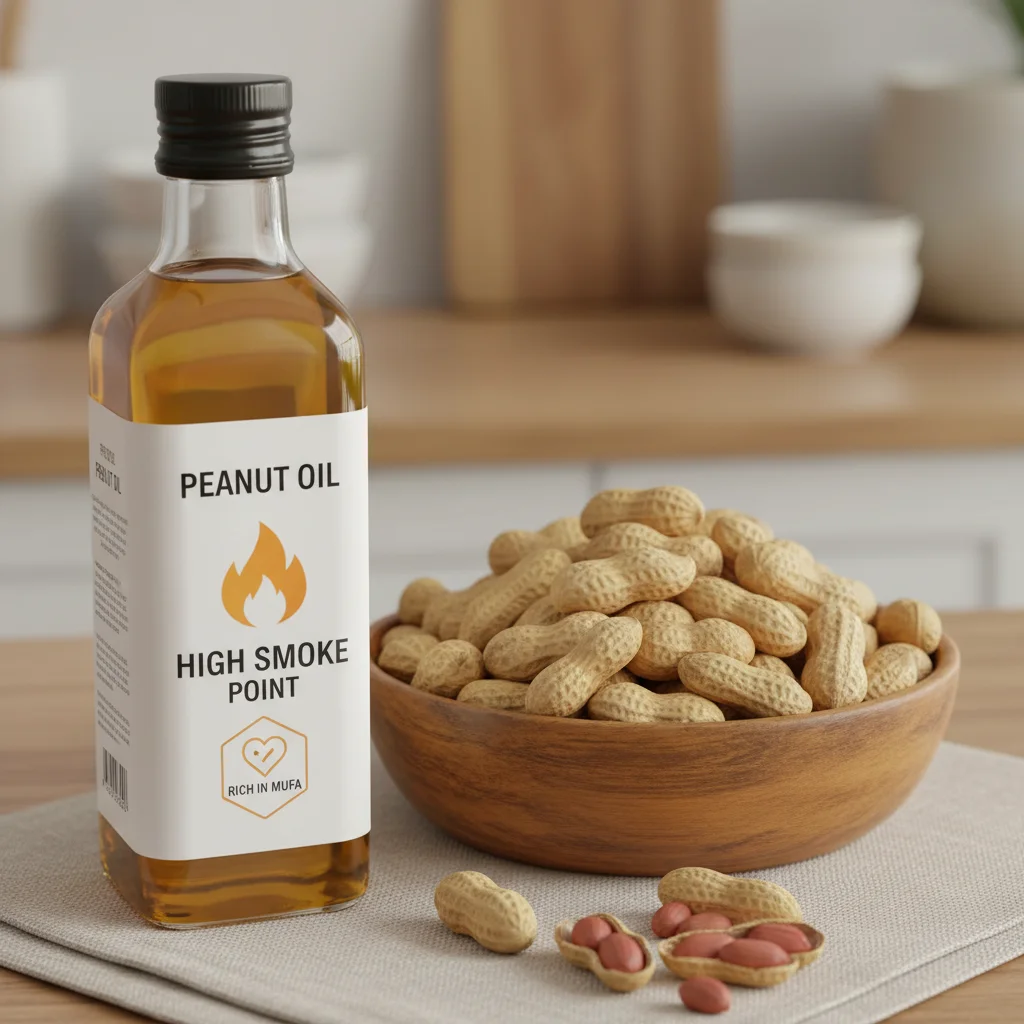
Furthermore, the stability of an oil matters. Peanut oil has a high smoke point (around 450°F / 232°C), making it suitable for frying and sautéing. Its stability is aided by its monounsaturated and saturated fat content. However, repeatedly heating any oil, especially those with PUFAs, can lead to oxidation and the formation of harmful compounds. For optimal health, it’s crucial to manage cooking temperatures and avoid reusing oil multiple times.
Peanut Oil vs. Other Common Cooking Oils
How does peanut oil stack up against other pantry staples? Here’s a comparative glance:
| Oil | Primary Source | Dominant Fat | Smoke Point | Key Consideration |
|---|---|---|---|---|
| Peanut Oil | Legume Seed | Monounsaturated | High (~450°F) | Balanced but high in Omega-6. |
| Olive Oil | Fruit (Olive) | Monounsaturated | Medium-High (~410°F) | Rich in antioxidants; cornerstone of Mediterranean diet. |
| Canola Oil | Rapeseed Seed | Monounsaturated | High (~400°F) | Highly processed; often genetically modified. |
| Coconut Oil | Fruit (Coconut) | Saturated | Medium (~350°F) | Very stable; debated impact on cholesterol levels. |
| Sunflower Oil | Sunflower Seed | Polyunsaturated (High-Oleic versions vary) | High (~450°F) | Often very high in Omega-6 linoleic acid. |
As you can see, peanut oil occupies a middle ground. It is less saturated than coconut oil but less celebrated for phytonutrients than extra virgin olive oil. Its suitability depends largely on your cooking method and overall dietary pattern.
Practical Recommendations for Use
So, should you use peanut oil? The answer is not a simple yes or no, but rather “it depends.”
- For High-Heat Cooking: It is a good choice for stir-frying, deep-frying, or roasting due to its high smoke point and neutral flavor.
- For Heart Health: In moderation, its monounsaturated fat content can be part of a heart-healthy diet, especially if it replaces more saturated fats like butter or lard. However, for daily use, oils higher in antioxidants and lower in Omega-6, like extra virgin olive oil, might be superior choices.
- For Balanced Nutrition: Be mindful of your total Omega-6 intake from all sources. Diversify your oil use and prioritize whole food fats from nuts, seeds, and avocados.
If you are particularly focused on reducing inflammatory foods, you may explore our guide on antioxidants for prostate health, which discusses dietary strategies to combat inflammation.
The Bottom Line
To conclude, peanut oil is indeed a seed oil—it is extracted from the seed of a legume. Nutritionally, it offers a mix of monounsaturated, polyunsaturated (high in Omega-6), and saturated fats. While it can be a practical option for high-heat cooking, its significant Omega-6 content warrants mindful consumption within a varied diet.
Ultimately, the healthiest approach to dietary fats is diversity and moderation. Instead of fixating on a single oil, rotate through a few high-quality options based on your cooking needs. For instance, use extra virgin olive oil for dressings and low-heat cooking, avocado or peanut oil for sautéing, and reserve coconut oil for specific recipes. By understanding the properties of each, like the fact that peanut oil is a seed oil with a particular fat profile, you empower yourself to make the best choices for your well-being.
For further reading on the classification and processing of foods, you can refer to reliable sources like the Harvard T.H. Chan School of Public Health’s nutrition guide.