
Dermal Piercings Guide: Risks & Aftercare
Dermal Piercings: A Complete Guide to Risks, Aftercare, and Healing
Considering a unique form of body modification? Dermal piercings, also known as single-point piercings or microdermals, offer a distinctive look that differs from traditional piercings. Unlike a standard piercing that has an entry and exit point, a dermal anchor is implanted under the skin with a single visible top, or “jewel.”
This creates the appearance of a jewel floating on your skin. However, because they are partially embedded, they require special consideration. This guide will walk you through everything you need to know, from the procedure to long-term care.
What Exactly Is a Dermal Piercing?
A dermal piercing involves implanting a small anchor beneath the top layer of your skin (the dermis). Consequently, the anchor has a hole where a decorative top screws in, which is the only part you see. This structure allows for placement on almost any flat surface of the body, making it incredibly versatile. Popular locations include the cheekbone, nape of the neck, chest, lower back, and hands.
Because the anchor is embedded, the healing process and potential risks are more complex than with a standard ear or nose piercing. Therefore, understanding the commitment is crucial before you decide to get one.
The Dermal Piercing Procedure: What to Expect
Firstly, it’s imperative to choose a reputable, professional piercer who uses sterile, single-use equipment and high-quality, implant-grade materials like titanium. The procedure generally follows these steps:
- Consultation and Marking: Your piercer will discuss placement and aftercare. They will then clean the area and mark the precise spot for the anchor.
- Creating the Pocket: Using a specialized needle or a dermal punch, the piercer creates a small pocket in the dermis layer of the skin.
- Anchor Insertion: The base of the dermal anchor is then inserted into this pocket. The design of the anchor (often with small holes or textured sides) allows your skin to grow around it, holding it securely in place.
- Attaching the Top: Finally, the decorative top is screwed onto the anchor’s post, which sits flush with the skin’s surface.
The process is relatively quick, but you can expect some discomfort and bleeding, similar to other piercings.
Potential Risks and Complications
Dermal piercings carry a higher risk of complications compared to many other piercings. Being aware of these risks is a key part of making an informed decision.
- Infection: This is the most common risk. Signs include excessive redness, swelling, heat, and yellow or green pus. Proper aftercare is your best defense.
- Rejection and Migration: Your body may treat the anchor as a foreign object and slowly push it out. This process, called rejection, is often preceded by migration, where the piercing moves from its original spot. Thinning skin, increased visibility of the anchor, and prolonged irritation are warning signs.
- Scarring: Removal or rejection will almost always leave some form of scarring, which can be raised (keloid) or indented.
- Snagging and Trauma: Because they sit on the skin’s surface, dermal piercings are prone to getting caught on clothing, jewelry, or towels, which can cause trauma, tearing, or even ripping the anchor out.
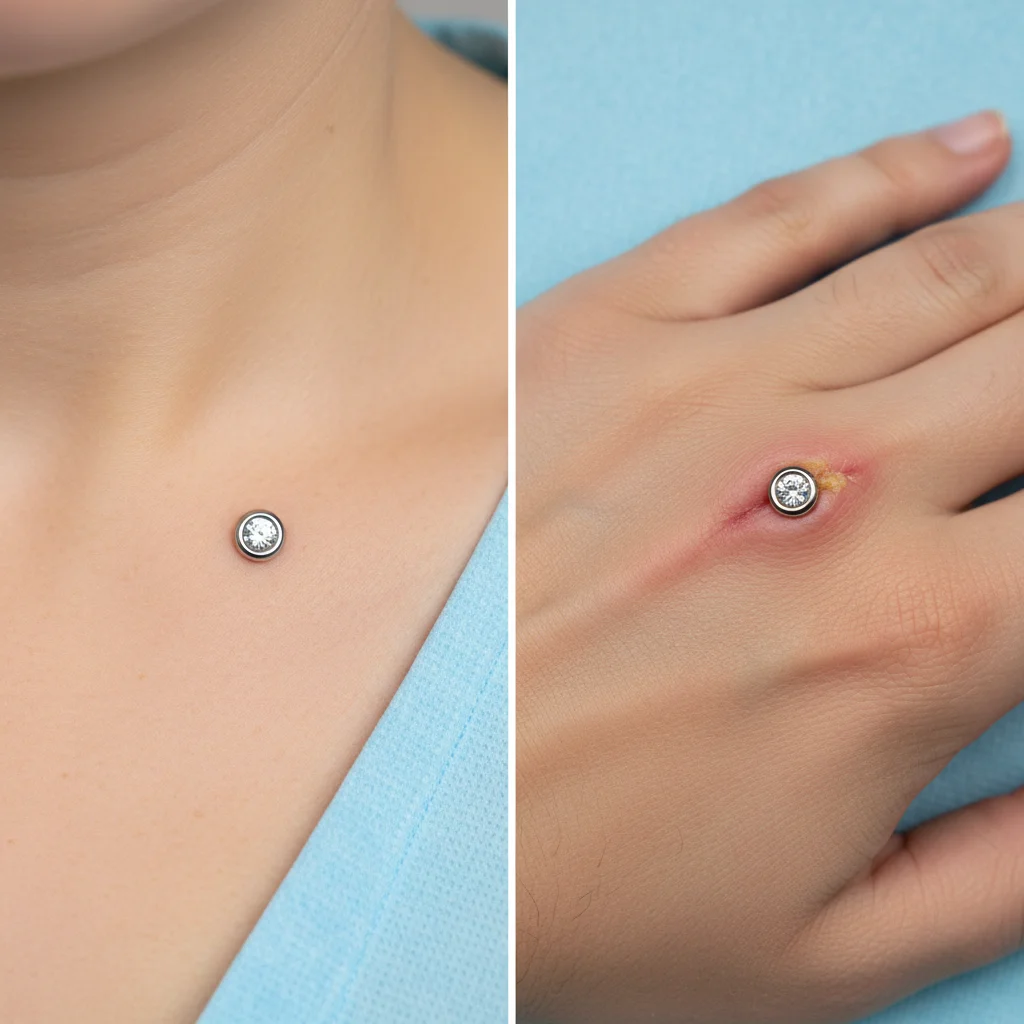
Comparing Common Piercing Risks
| Complication | Dermal Piercing Risk Level | Standard Piercing (e.g., Lobe) Risk Level | Key Reason for Difference |
|---|---|---|---|
| Rejection/Migration | High | Very Low | The embedded anchor is a larger foreign body under tension. |
| Infection | Moderate to High | Low to Moderate | The subdermal pocket can trap bacteria if aftercare is poor. |
| Scarring upon Removal | High | Low | Removal requires cutting the anchor out of healed tissue. |
| Snagging/Trauma | High | Low | The surface-mounted top is easily caught on objects. |
The Critical Healing and Aftercare Process
Proper aftercare is non-negotiable for a successful dermal piercing. The initial healing period typically lasts 1 to 3 months, but the piercing can remain delicate for much longer.
Essential Aftercare Steps:
- Clean Gently: Wash your hands thoroughly before touching the area. Clean around the piercing twice daily with a sterile saline solution (no homemade salt mixes!). Gently pat dry with a clean, disposable paper towel.
- Leave It Alone: Do not twist, turn, or play with the jewelry. Moreover, avoid letting shampoos, soaps, or lotions cover the piercing.
- Protect the Area: Keep the piercing covered with a clean, breathable bandage during activities where it might get dirty or snagged (e.g., gym, gardening). Sleep on the opposite side if possible.
- Monitor Closely: Watch for the signs of infection or migration mentioned above. Additionally, some redness and clear fluid (lymph) is normal initially; pus is not.
Remember, healing is a process that requires patience. If you’re interested in natural remedies that support skin health from the inside, you might explore options like horsetail plant tea, which is traditionally used for connective tissue. However, never apply anything topically to a fresh piercing without consulting your piercer.
Dermal Piercing Removal: A Professional Job
Unlike simply removing an earring, dermal anchor removal is a minor surgical procedure. Do not attempt to remove it yourself. A professional piercer or dermatologist will numb the area, make a small incision to free the anchor, and then remove it. Consequently, this will leave a small scar. The process is quick but underscores the semi-permanent nature of this modification.
Are Dermal Piercings Right for You?
Dermal piercings are a bold statement, but they are a significant commitment. They are best suited for individuals who are diligent about aftercare, understand the high risk of rejection, and are comfortable with the potential for permanent scarring. If you have a history of keloids, poor wound healing, or autoimmune issues, it’s highly advisable to consult a doctor first.
Ultimately, your health and safety are paramount. Therefore, investing in a skilled piercer and committing to meticulous aftercare are the most important factors in your dermal piercing journey. For more information on professional medical perspectives on skin procedures and healing, you can refer to resources like the American Academy of Dermatology.

