
Apicoectomy: Procedure & Recovery Step By Step Guide
Apicoectomy: A Surgical Solution to Save Your Tooth
When a standard root canal treatment isn’t enough to resolve an infection at the very tip of a tooth’s root, your endodontist may recommend an apicoectomy. This specialized surgical procedure, also known as root-end surgery, is a last-resort effort to save a natural tooth from extraction. Consequently, understanding what it entails can alleviate anxiety and help you make an informed decision about your oral health.
What Is an Apicoectomy?
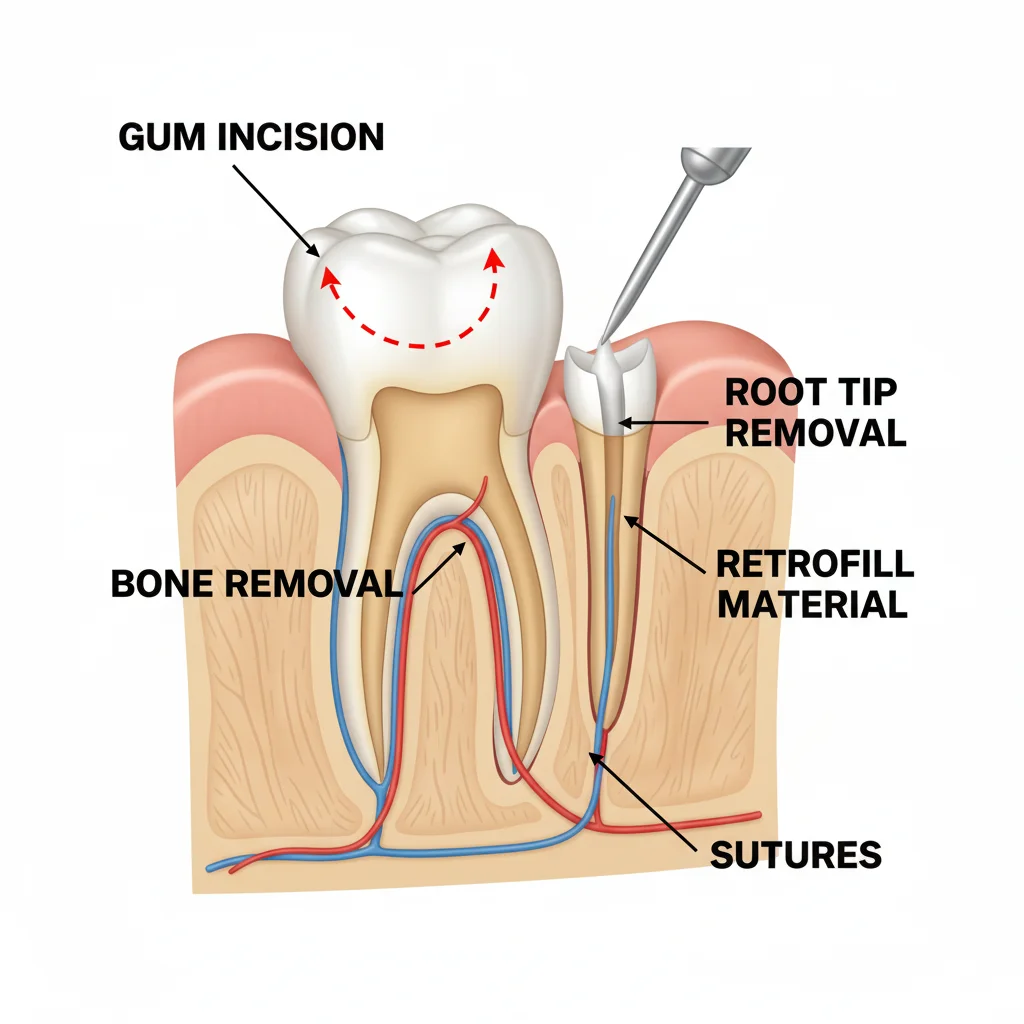
An apicoectomy is a minor surgical procedure performed by an endodontist. Specifically, it involves accessing the very tip (or “apex”) of a tooth’s root through the gum and bone to remove infected tissue and seal the root end. This is typically necessary when inflammation or infection persists in the bony area around the root tip after a root canal. Moreover, it is often the final option before considering tooth extraction and replacement with an implant or bridge.
Why You Might Need an Apicoectomy
Several conditions can necessitate this procedure. Primarily, it addresses persistent infections that do not heal with non-surgical treatment. For instance, you might need an apicoectomy if you have:
* A recurring infection due to new decay or a fractured root.
* Persistent symptoms like pain or swelling in a previously treated tooth.
* Complex, curved, or blocked root canals that cannot be fully cleaned through a standard retreatment.
* Small, accessory canals that harbor bacteria beyond the main canal.
The Apicoectomy Procedure: A Step-by-Step Overview
Understanding the steps can demystify the process. Generally, the entire procedure takes between 30 to 90 minutes, depending on the tooth’s location and complexity.
- Diagnosis and Imaging: Firstly, your endodontist will take a 3D cone-beam CT scan or detailed X-rays to visualize the root’s anatomy and the extent of the infection.
- Anesthesia: Local anesthesia is administered to completely numb the area, ensuring you feel no pain during the surgery.
- Incision: The endodontist makes a small incision in the gum tissue to expose the underlying bone and the root tip of the tooth.
- Removal of Infected Tissue: A small opening is made in the bone to access the root end. The infected tissue, along with the very tip of the root itself, is carefully removed.
- Sealing the Root: The endodontist then seals the end of the root canal with a small filling to prevent future infection.
- Stitching: Finally, the gum tissue is repositioned and secured with sutures. The bone will naturally heal around the root over the following months.
Apicoectomy Recovery: What to Expect
Recovery is generally straightforward, but knowing what’s normal is key. Here’s a typical timeline:
| Time After Surgery | What to Expect & Care Instructions |
|---|---|
| First 24-48 Hours | Swelling and mild discomfort are common. Apply an ice pack to the outside of your cheek in intervals (20 minutes on, 20 minutes off). Eat soft foods and avoid chewing on that side. |
| First Week | Swelling subsides. You may rinse gently with warm salt water after 24 hours. Continue with a soft diet. Stitches are often dissolvable but may be removed after about a week. |
| 2 Weeks to 6 Months | The gum tissue heals completely within weeks. However, the bone around the root tip takes several months to fully fill in, which will be confirmed with a follow-up X-ray. |
To support your body’s healing process, maintaining good overall health is beneficial. For example, ensuring you get proper nutrition can aid recovery; exploring options like the best powder supplements for gut health might be useful for overall wellness. Additionally, some patients find that natural remedies, such as chamomile tea, can provide a soothing effect during recovery, though you should always consult your doctor first.
Success Rates and Potential Risks
The success rate for apicoectomies is high, often cited between 85% and 95%. However, as with any medical procedure, there are potential risks. These can include, but are not limited to, infection, nerve damage (particularly in lower jaw teeth), or the possibility that the surgery may not resolve the issue, leading to eventual tooth extraction.
Apicoectomy vs. Tooth Extraction: Making the Choice
Choosing between saving a tooth and extracting it is a significant decision. An apicoectomy preserves your natural tooth, maintains jawbone density, and avoids the need for more extensive prosthetic work. Conversely, extraction followed by an implant or bridge is a more predictable and permanent solution for a non-restorable tooth, but it is often more costly and invasive. Your endodontist will discuss the specific prognosis of your tooth to guide this choice.
How to Prepare for Your Surgery
Preparation can ensure a smoother experience. Firstly, follow any pre-operative instructions from your endodontist, which may include taking prescribed antibiotics. Arrange for someone to drive you home after the procedure, as the effects of anesthesia and sedation can linger. Furthermore, prepare soft foods like yogurt, applesauce, and soup for your first few meals post-surgery.
Conclusion: Is an Apicoectomy Right for You?
Ultimately, an apicoectomy is a valuable, tooth-saving procedure with a strong track record of success. It is a targeted solution for persistent infections that non-surgical root canal treatment cannot resolve. Therefore, if you are experiencing ongoing pain or have been told a previous root canal has failed, consulting with a qualified endodontist is the crucial next step. They can provide a definitive diagnosis and discuss whether this surgical approach is the best path to restore your oral health and comfort.
Disclaimer: This article is for informational purposes only and is not a substitute for professional medical advice. Always consult with a licensed dentist or endodontist for diagnosis and treatment. For more authoritative information on dental procedures, you can refer to resources like the American Association of Endodontists.

