
Cha Puer Tea: Benefits & Brewing Guide
The Complete Guide to Cha Puer Tea: From Ancient Tradition to Modern Cup
Cha Puer, often romanized as Pu-erh or Pu’er, is a unique category of fermented tea from China’s Yunnan province, renowned for its earthy depth, potential health properties, and capacity to improve with age. Unlike green tea, which is prized for its freshness, Puer tea is celebrated for its maturity and complexity, developed through a specialized microbial fermentation process. This guide will delve into everything you need to know about this fascinating beverage.
What is Cha Puer Tea?
Cha Puer is a post-fermented tea. This means that after the leaves are dried and rolled, they undergo a microbial fermentation process. This can happen naturally over many years (Sheng/Raw Puer) or be accelerated through a controlled composting method (Shou/Ripe Puer). Consequently, it develops a distinct profile that is deep, smooth, and often described as earthy, woody, or musky. Its production is historically linked to the ancient tea horse road, where it was compressed into cakes for easier transport.
Primary Types of Cha Puer
Understanding the two main categories is essential for any tea drinker.
Sheng Puer (Raw Puer)
Sheng Puer is the traditional, naturally aged form. The tea leaves are pan-fired to halt oxidation, similar to green tea, but are then compressed and allowed to ferment slowly over decades. Firstly, it has a brighter, more astringent, and floral profile when young. Moreover, as it ages, it mellows, developing deeper, sweeter, and more complex flavors. This aging potential makes it highly collectible.
Shou Puer (Ripe Puer)
Developed in the 1970s to mimic the characteristics of aged Sheng, Shou Puer undergoes a accelerated fermentation process called wo dui (wet piling). Therefore, it achieves a dark, smooth, and earthy cup in a matter of months rather than years. It is immediately drinkable and offers a consistent, mellow flavor often preferred by newcomers.
Health and Wellness Benefits of Cha Puer
While more research is needed, traditional use and preliminary studies suggest several potential benefits linked to its fermentation.
- Digestive Aid: Historically consumed after heavy meals in China, Puer tea is believed to promote digestion and gut health. The fermentation process may produce beneficial microbes.
- Heart Health: Some studies indicate it may help manage cholesterol levels, contributing to cardiovascular wellness.
- Metabolic Support: Research has explored its potential role in weight management and fat metabolism, possibly due to its unique polyphenols and microbial activity.
- Antioxidant Properties: Like all tea, it contains antioxidants. The fermentation process alters these compounds, potentially creating unique antioxidants not found in other teas.
It’s important to note that tea is a supplement to a healthy lifestyle, not a cure-all. For insights into managing metabolic health through diet, you can explore resources on blood sugar levels. Additionally, for other wellness beverages, learn about the soothing properties of chamomile tea.
How to Brew Cha Puer Tea: A Step-by-Step Guide
Brewing Puer correctly unlocks its full spectrum of flavors. The Gongfu Cha method, using a high leaf-to-water ratio and short steeps, is highly recommended.
- Warm Your Vessel: Rinse your teapot or gaiwan with boiling water to preheat it.
- Rinse the Leaves: Place the Puer (5-7 grams per 100ml) into the pot. Cover with boiling water and immediately pour it off. This “awakening” rinse cleans the leaves and opens them up for brewing.
- First Infusion: Pour boiling water (95-100°C / 203-212°F) over the leaves. Steep for 10-20 seconds, then decant completely into a serving pitcher or cup.
- Subsequent Infusions: Puer tea can be re-steeped many times. Gradually increase the steeping time by 5-10 seconds with each infusion. High-quality Puer may yield 10-15 flavorful steeps.
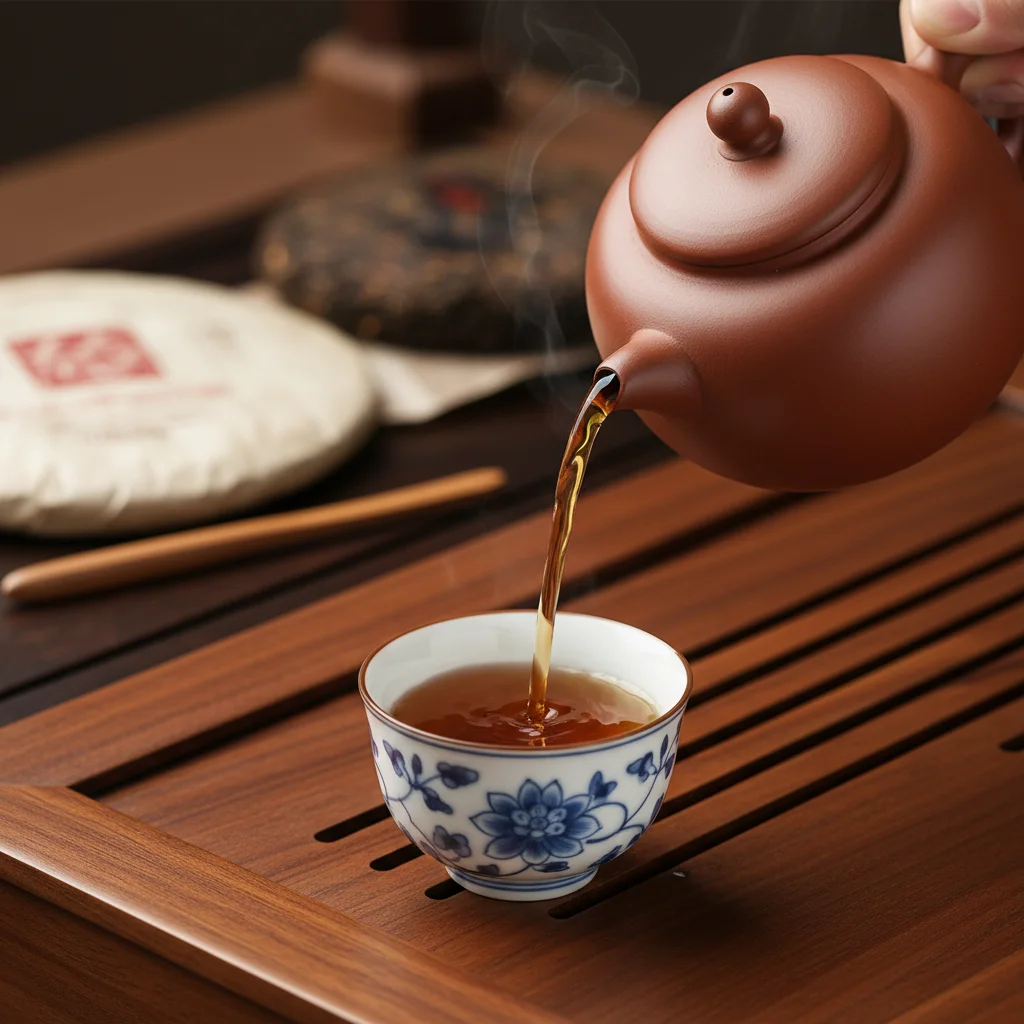
Buying and Storing Cha Puer Tea
When purchasing Puer, you’ll often find it compressed into shapes like cakes (bing), bricks (zhuan), or nests (tuo). Look for reputable vendors who provide information on origin and year. For storage, keep your Puer in a cool, dry, odor-free place with stable humidity and good air circulation. Avoid sealing it in airtight containers, as it needs to “breathe” to continue aging properly.
Frequently Asked Questions (FAQ)
What does Cha Puer taste like?
Flavors range from earthy, woody, and musky (common in Shou) to floral, fruity, and herbaceous with aging potential (common in young Sheng). Aged Sheng develops notes of dried fruit, honey, and camphor.
Does Cha Puer contain caffeine?
Yes, it contains caffeine, but generally less than a cup of coffee. The level can vary based on the tea’s age and processing.
Can I drink Puer tea every day?
Many people do, often with meals. However, due to its potency, it’s advisable to start with one cup per day to see how your body reacts.
In conclusion, Cha Puer tea offers a profound and evolving drinking experience that connects you to an ancient tradition. Whether you seek its potential wellness benefits, its complex flavor journey, or simply a robust and satisfying cup, this fermented tea is a world worth exploring.