
Remove Tooth Decay Yourself? Risks & Steps -4 Strategies
How to Remove Tooth Decay Yourself? Understanding the Risks and Realities
The sharp twinge of a toothache or the discovery of a dark spot on a tooth can be alarming. Consequently, many people search for ways to remove tooth decay themselves to avoid a dental visit. However, attempting a DIY cavity removal is not only ineffective but also extremely dangerous for your oral and overall health.
This guide explains why professional care is non-negotiable and outlines the only safe steps you can take at home to manage your dental health proactively.
Why You Cannot Safely Remove Tooth Decay at Home
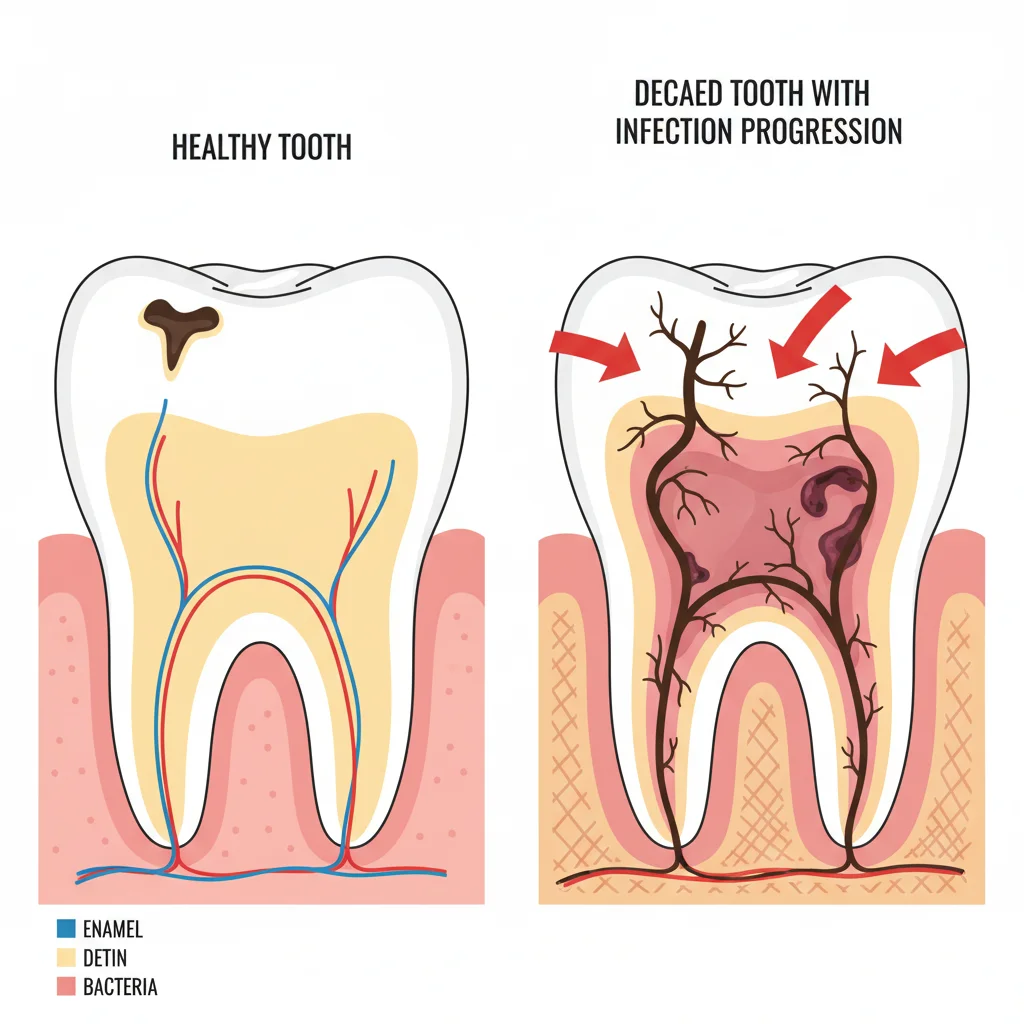
Tooth decay, or a cavity, is a bacterial infection that demineralizes and destroys the hard structure of your tooth. Importantly, this damage occurs beneath the surface enamel. What you see is often just the “entry point.”
- You Cannot Remove the Infection: The decayed portion is soft and infected. Simply scraping away the visible dark spot does not eliminate the bacteria that have tunneled deeper into the tooth. This leaves the infection to progress silently.
- Risk of Severe Damage: Using unsterilized, sharp instruments like pins, needles, or dental picks can cause significant harm. You risk fracturing the tooth, damaging the pulp (the living nerve center), causing a severe infection, or injuring your gums.
- No Sterile Environment: A dental office is a controlled, sterile environment. Your home is not. Introducing bacteria deep into the tooth structure can lead to a painful abscess, a serious infection that can spread to your jaw or bloodstream.
- Pain Management is Not a Cure: While you might temporarily relieve a sensitive spot, you are not treating the underlying problem. The decay will continue to spread, inevitably leading to more extensive and expensive treatment, like a root canal or extraction.
What Actually Happens During Professional Cavity Removal
Understanding the professional process highlights why a DIY approach is futile. A dentist or hygienist removes decay using precise, sterilized instruments in a multi-step procedure.
- Diagnosis with X-Rays: First, a dentist uses visual examination and X-rays to see the full extent of the decay, including areas between teeth and below the gum line that are invisible to you.
- Numbing and Isolation: The area is anesthetized for comfort, and the tooth is often isolated with a rubber dam to keep it clean and dry.
- Precise Removal: Using a high-speed drill or laser, the dentist meticulously removes all the decayed material until only healthy, solid tooth structure remains.
- Restoration and Seal: The cleaned cavity is then filled with a durable material (like composite resin or amalgam) to restore the tooth’s shape, function, and seal it from future bacterial invasion.
Safe “At-Home” Strategies for Cavity Prevention and Early Care
While you cannot remove established decay yourself, you can absolutely take powerful steps at home to reverse early demineralization (the stage before a cavity forms) and prevent new decay. Think of these as proactive, DIY prevention methods.
1. Optimal Oral Hygiene: Your First Line of Defense
A consistent routine is paramount. Therefore, you must be diligent.
* Fluoride Toothpaste: Brush twice daily with a fluoride toothpaste. Fluoride helps remineralize weakened enamel. For an extra boost, consider a prescription-strength toothpaste if your dentist recommends it.
* Proper Technique: Brush for two minutes, angling the bristles toward the gum line. Don’t forget your tongue!
* Interdental Cleaning: Floss daily to remove plaque from between teeth, where cavities often start. Water flossers can be a helpful adjunct.
2. Dietary Adjustments to Starve the Bacteria
What you eat directly fuels or fights decay. Consequently, being mindful of your diet is crucial.
* Limit Sugary and Acidic Foods: Bacteria feast on sugars and produce acids that erode enamel. Reduce frequency of sodas, candy, and sticky snacks.
* Choose Tooth-Friendly Foods: Crunchy fruits and vegetables (like apples, carrots) can help clean teeth. Dairy products, rich in calcium and phosphates, support remineralization. For more on supportive nutrition, explore our guide on the nutritional value of graham crackers to make informed snack choices.
* Drink Water: Water, especially fluoridated tap water, helps rinse away food particles and acids.
3. Consider Remineralizing Agents (Under Guidance)
These products can help strengthen enamel but are not cavity cures.
* Fluoride Mouthwash: An over-the-counter fluoride rinse used daily can provide additional protection.
* Xylitol: Chewing gum or mints with xylitol (a sugar alcohol) can reduce cavity-causing bacteria. However, it’s not a treatment for existing decay.
4. Natural Remedies: Supportive, Not Curative
Some natural approaches may support oral health but should never replace treatment for an active cavity.
* Oil Pulling: Swishing with coconut or sesame oil for 15-20 minutes may reduce bacteria plaque but does not remove decay. It should be done in addition to brushing/flossing.
* Herbal Rinses: Rinses with antibacterial herbs like sage or chamomile may offer mild benefits. Speaking of herbal support, you can learn about the calming properties of chamomile tea for overall wellness.
When You Must See a Dentist: Red Flags
If you notice any of the following signs, seeking professional help is urgent. Delaying will only worsen the problem.
| Symptom | What It Likely Indicates | Why DIY is Dangerous |
|---|---|---|
| Visible hole or pit in your tooth | An established cavity requiring a filling. | Scratching at it will not clean the internal infection. |
| Tooth sensitivity to hot, cold, or sweets | Decay may be approaching the nerve. | Desensitizing toothpaste only masks the symptom. |
| Toothache or spontaneous pain | Advanced decay or infection in the pulp. | Painkillers treat the pain, not the abscess that could form. |
| Brown, black, or white staining on any surface | Active decay or demineralization. | Staining can be superficial, but a dentist must diagnose it. |
| Pain when biting down | Decay under a filling or a crack/fracture. | This indicates structural damage needing professional repair. |
The Bottom Line: Prioritize Professional Care
The idea of removing tooth decay yourself is tempting, but it is a perilous misconception. There is no safe or effective method for DIY cavity removal. The risks of severe infection, tooth loss, and higher dental costs far outweigh any perceived short-term benefit.
Your safest and most effective course of action is to partner with a dental professional. Schedule regular check-ups and cleanings, and maintain impeccable oral hygiene at home. If you suspect you have a cavity, contact your dentist immediately. Early professional intervention is always simpler, less painful, and more affordable than treating the consequences of advanced decay or a DIY mishap.
For more information on the science of tooth decay, you can refer to this authoritative resource from the National Institute of Dental and Craniofacial Research.

