
Preschool Caterpillar Craft- Benifits and Tips
Crawl into Creativity: A Simple Caterpillar Craft for Preschoolers
Engaging young children in crafts is a fantastic way to blend fun with foundational learning. A caterpillar craft for preschool is particularly wonderful because it combines art, science, and storytelling into one delightful activity.
This project is designed to be simple, using common household materials, and is perfect for developing fine motor skills. Moreover, it opens the door to conversations about nature, transformation, and life cycles.
Why a Caterpillar Craft is a Preschool Powerhouse
Before we gather our supplies, let’s explore why this specific craft is so beneficial. Firstly, it aligns perfectly with a preschooler’s developmental stage. The act of grasping, gluing, and decorating strengthens the small muscles in their hands, which is crucial for future writing skills. Additionally, because the craft is based on a real insect, it naturally introduces basic biology concepts in an accessible way.
Consequently, this activity can be a springboard for reading The Very Hungry Caterpillar or for a discussion about butterflies. It also encourages color recognition, pattern making, and counting as children decide how many segments their caterpillar will have. Therefore, it’s far more than just a cute art project; it’s a multidimensional learning tool.
What You’ll Need for Your Caterpillar Craft
Gathering your materials is the first step. The beauty of this craft lies in its simplicity and adaptability. You likely have most of these items already.
Basic Supplies:
* Construction paper or cardstock (various colors)
* Child-safe scissors
* Non-toxic glue stick or white school glue
* Markers or crayons
* Googly eyes (optional but highly recommended for fun!)
* Pipe cleaners (for antennae)
Creative & Upcycled Options:
To make this even more engaging, you can substitute paper circles with other materials. For instance, you could use:
* Pom-poms strung on a pipe cleaner
* Painted bottle caps
* Colored egg carton cups
* Finger-painted paper circles
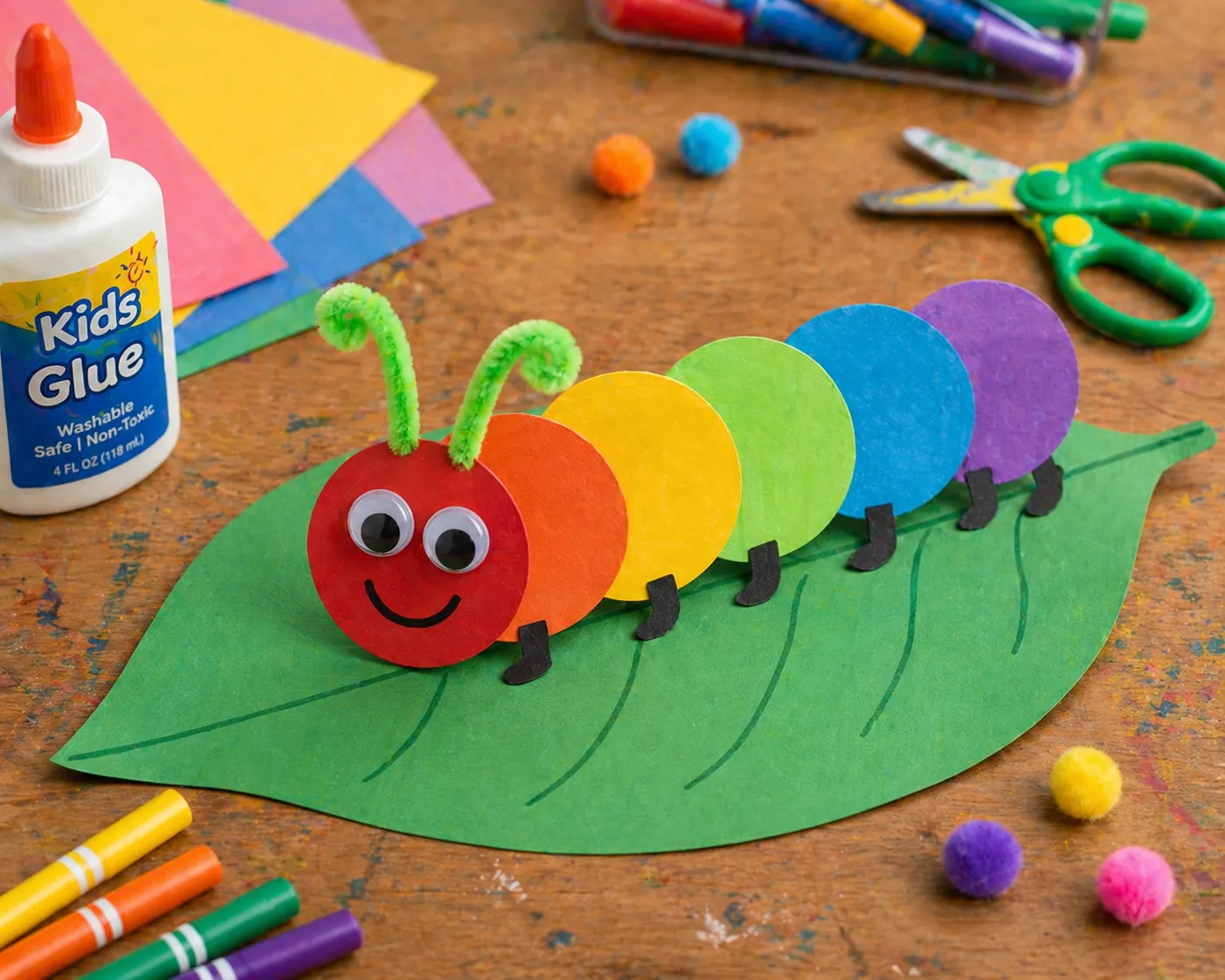
Step-by-Step Guide to Your Preschool Caterpillar
Follow these easy steps to guide your little one through creating their very own caterpillar. Remember, the process is more important than perfection!
Step 1: Create the Caterpillar’s Body
Firstly, help your preschooler cut or tear paper into circles. You can use a bottle cap to trace circles for cutting practice, or simply let them tear freehand shapes for a more abstract, tactile experience. Aim for 5-8 circles to make a nice, long caterpillar body.
Step 2: Assemble and Decorate
Next, arrange the circles in a curvy line on a background sheet of paper (a green piece cut into a leaf shape is perfect!). Glue them down one by one. Then, it’s time for the fun details. Add googly eyes to the first circle. After that, poke two short pieces of pipe cleaner above the head for antennae. Moreover, use markers to draw a smile and decorate each body segment with dots, stripes, or squiggles.
Step 3: Extend the Learning Play
Once the craft is complete, the learning continues. Ask your child to count the body segments. You can also discuss what real caterpillars eat. This is a great opportunity to introduce healthy food topics, much like exploring the nutritional value of graham crackers or comparing different fruits. For a truly immersive experience, pair this craft with other nature-themed activities, such as the ideas found in our guide to messy crafts for outdoor fun.
Educational Benefits of This Simple Activity
To summarize, this engaging craft offers a wealth of developmental benefits. Here’s a quick overview:
| Skill Area | How the Craft Helps |
|---|---|
| Fine Motor Development | Strengthens hand muscles through cutting, tearing, gluing, and drawing. |
| Cognitive Skills | Introduces counting, sequencing (first, next, last), and color/pattern recognition. |
| Science & Nature | Sparks curiosity about insects, life cycles (caterpillar to butterfly), and habitats. |
| Language & Literacy | Builds vocabulary (segment, antennae, chrysalis) and supports story comprehension. |
| Creativity & Imagination | Allows for personal expression through color choice and decoration. |
Tips for a Successful Crafting Session
To ensure a smooth and enjoyable experience, keep a few tips in mind. Always supervise scissor use and opt for child-safe versions. Furthermore, cover your workspace with newspaper or a cheap tablecloth for easy cleanup. Most importantly, focus on the fun and effort, not the final product.
If the caterpillar has three eyes or purple polka dots, celebrate that creative choice!
Additionally, be prepared to answer questions. Your child might wonder what caterpillars turn into or what they eat. You can use reliable resources like National Geographic Kids to explore these questions together.
Final Thoughts
In conclusion, this caterpillar craft for preschool is a classic for a reason. It’s inexpensive, adaptable, and packed with learning potential. By engaging in this simple creative process, you’re not just making a paper insect—you’re nurturing curiosity, building essential skills, and creating cherished memories.
So, gather your paper and glue, and get ready for some colorful, crawling fun!

