
How Many Carbs in Bacon? A Complete Guide
How Many Carbs in Bacon? Your Complete Guide to Low-Carb Breakfast
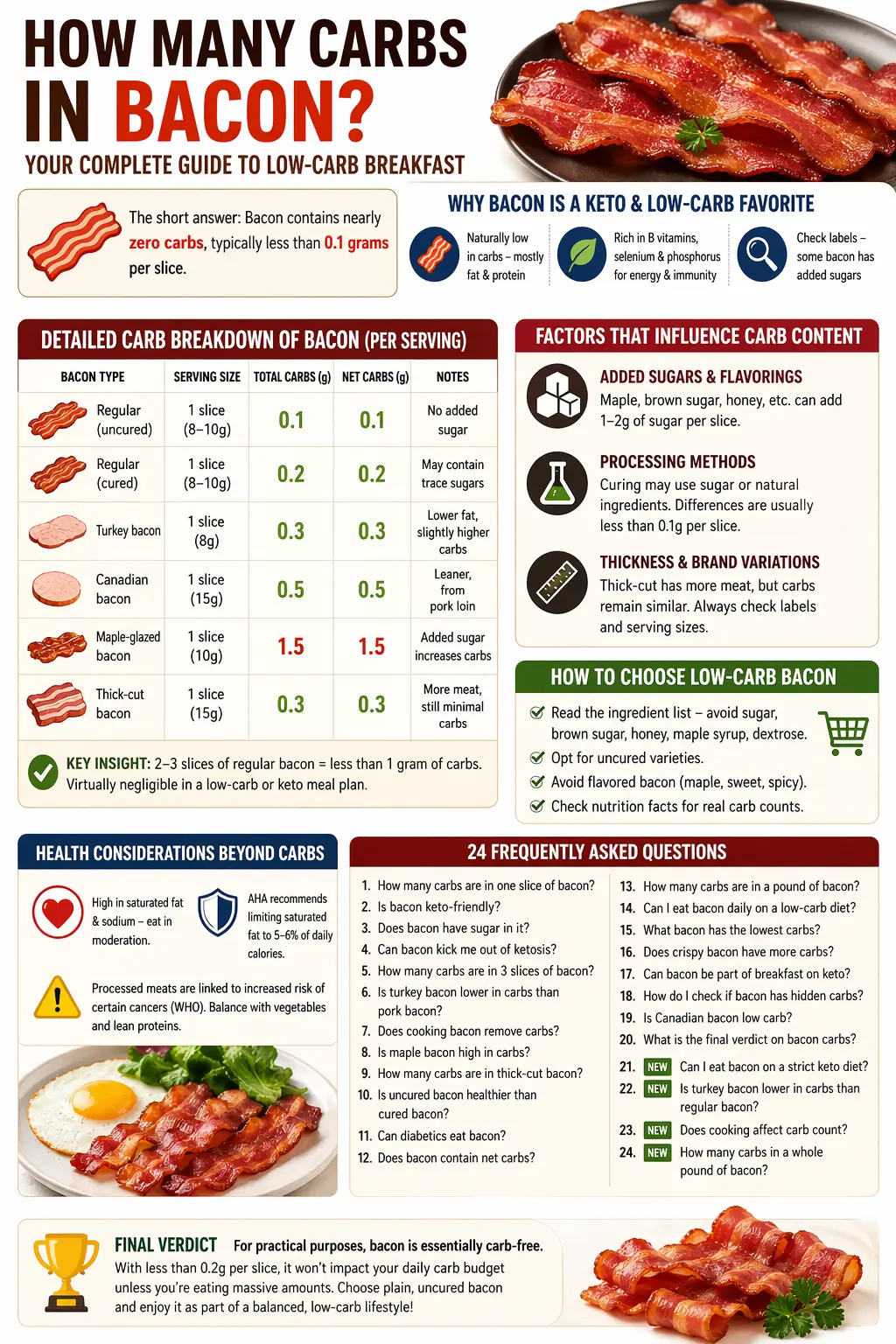
If you’re following a low-carb or ketogenic diet, bacon often feels like a safe bet. It’s crispy, savory, and satisfying—but how many carbs are actually hiding in that strip? The short answer: bacon contains nearly zero carbs, typically less than 0.1 grams per slice. However, not all bacon is created equal. Consequently, some processed varieties or flavored options may introduce hidden sugars and carbs. Let’s dive into the nitty-gritty details.
Why Bacon is a Keto and Low-Carb Favorite
Firstly, bacon is naturally low in carbohydrates because it’s primarily fat and protein. A standard slice of cooked bacon (about 8–10 grams) contains roughly 0.1 grams of carbs, making it an excellent choice for those limiting carb intake. Additionally, bacon is rich in B vitamins, selenium, and phosphorus, which support energy metabolism and immune function.
However, many people overlook the impact of added sugars or curing agents. For example, some brands use brown sugar, maple syrup, or honey during smoking. Therefore, it’s crucial to check nutrition labels if you’re strictly counting carbs. Moreover, if you’re interested in optimizing your diet, you might also explore related topics like coffee creamer on keto diet to ensure your morning cup stays low-carb.
Detailed Carb Breakdown of Bacon
To help you make informed choices, here’s a table comparing different types of bacon and their approximate carb content per serving.
| Bacon Type | Serving Size | Total Carbs (g) | Net Carbs (g) | Notes |
|---|---|---|---|---|
| Regular (uncured) | 1 slice (8–10g) | 0.1 | 0.1 | No added sugar |
| Regular (cured) | 1 slice (8–10g) | 0.2 | 0.2 | May contain trace sugars |
| Turkey bacon | 1 slice (8g) | 0.3 | 0.3 | Lower fat, slightly higher carbs |
| Canadian bacon | 1 slice (15g) | 0.5 | 0.5 | Leaner, from pork loin |
| Maple-glazed bacon | 1 slice (10g) | 1.5 | 1.5 | Added sugar significantly increases carbs |
| Thick-cut bacon | 1 slice (15g) | 0.3 | 0.3 | More meat, but still minimal carbs |
Key insight: For most people, a serving of 2–3 slices of regular bacon contributes less than 1 gram of carbs. Therefore, it’s virtually negligible in a standard low-carb or keto meal plan.
Factors That Influence Carb Content
Added Sugars and Flavorings
Not all bacon is pure pork. Many commercial varieties are cured with sugar-based solutions to enhance flavor and texture. For instance, “hickory-smoked” or “maple” bacon often contains 1–2 grams of sugar per slice. Consequently, if you eat 3 slices, that’s up to 6 grams of carbs—which could impact ketosis for strict dieters.
Processing Methods
Cured bacon uses nitrates and sometimes sugar as part of the curing process. Conversely, uncured bacon (labeled “no added nitrates”) typically relies on celery powder, which still contains natural sugars. However, the difference in carb count is minimal—usually less than 0.1 grams per slice.
Thickness and Brand Variations
Thick-cut bacon has more meat per slice, but the carb content per gram remains similar. Always check the label: a reputable brand might list 0g carbs, but if the serving size is 2 slices, the actual carb count could be 0.4g. This rounding is standard practice.
How to Choose Low-Carb Bacon
When shopping, follow these tips to minimize carb intake:
- Read the ingredient list: Look for bacon with no added sugar or sweeteners. Common culprits include sugar, brown sugar, honey, maple syrup, and dextrose.
- Opt for uncured varieties: These are less likely to have added sugars, though check labels carefully.
- Avoid flavored bacon: Maple, applewood-smoked with sugar, or spicy varieties often have hidden carbs.
- Consider nitrite-free options: They’re not necessarily lower in carbs, but they may have fewer additives overall.
If you’re managing other dietary concerns, such as oral health after a filling, you might also find the guide on how long does a filling take? useful for planning meals.
Health Considerations Beyond Carbs
While bacon is low in carbs, it’s high in saturated fat and sodium. Consequently, moderation is key. The American Heart Association recommends limiting saturated fat intake to 5–6% of daily calories. For most adults, that’s about 13 grams of saturated fat per day. Since one slice of bacon contains around 1.5 grams of saturated fat, eating 3 slices already provides about 35% of that limit.
Additionally, processed meats have been linked to increased risk of certain cancers, according to the World Health Organization. Therefore, it’s wise to balance bacon consumption with plenty of vegetables and lean proteins. For instance, pairing bacon with a salad or steamed greens can improve overall nutrient density.
Frequently Asked Questions
- How many carbs are in one slice of bacon?
Most regular bacon contains around 0.1 to 0.2 grams of carbs per slice.
- Is bacon keto-friendly?
Yes, bacon is considered keto-friendly because it has very low carbohydrate content.
- Does bacon have sugar in it?
Some flavored or cured bacon varieties may contain added sugar such as maple syrup, honey, or brown sugar.
- Can bacon kick me out of ketosis?
Plain bacon usually will not, but sugary bacon varieties may increase carb intake if eaten in large amounts.
- How many carbs are in 3 slices of bacon?
Three slices of regular bacon usually contain less than 1 gram of carbs.
- Is turkey bacon lower in carbs than pork bacon?
Turkey bacon often has slightly more carbs than regular pork bacon.
- Does cooking bacon remove carbs?
No, cooking bacon does not significantly change its carb content.
- Is maple bacon high in carbs?
Yes, maple-glazed bacon can contain around 1.5 grams of carbs per slice because of added sugar.
- How many carbs are in thick-cut bacon?
Thick-cut bacon generally contains around 0.3 grams per slice.
- Is uncured bacon healthier than cured bacon?
Uncured bacon may contain fewer additives, but nutrition can vary by brand.
- Can diabetics eat bacon?
Diabetics may eat bacon in moderation, but sodium and saturated fat should also be considered.
- Does bacon contain net carbs?
Yes, since bacon has almost no fiber, total carbs and net carbs are nearly the same.
- How many carbs are in a pound of bacon?
A pound of regular bacon may contain around 1.6 to 3.2 grams of carbs depending on brand.
- Can I eat bacon daily on a low-carb diet?
You can, but moderation is best because bacon is high in sodium and saturated fat.
- What bacon has the lowest carbs?
Plain, uncured bacon with no added sugar usually has the lowest carb count.
- Does crispy bacon have more carbs?
No, crispiness does not increase carb content.
- Can bacon be part of breakfast on keto?
Yes, bacon is a common keto breakfast option when paired with eggs or vegetables.
- How do I check if bacon has hidden carbs?
Read the ingredient label for sugar, dextrose, honey, or maple flavoring.
- Is Canadian bacon low carb?
Canadian bacon is still low carb but slightly higher than regular bacon.
- What is the final verdict on bacon carbs?
Regular bacon is nearly carb-free, making it a good low-carb option when eaten responsibly.
Final Verdict: Is Bacon Truly Carb-Free?
For practical purposes, yes—bacon is essentially carb-free. With less than 0.2 grams per slice, it won’t impact your daily carb budget unless you’re eating massive amounts. However, always check labels for added sugars, especially if you’re on a strict ketogenic or diabetic diet.
By choosing plain, uncured bacon and pairing it with nutrient-dense foods, you can enjoy this crispy treat without guilt. For more insights on low-carb eating, explore our resources on ketogenic diet nuts for healthy snack ideas.
Remember: Moderation and label-reading are your best tools. Enjoy your bacon, but balance it with whole foods for optimal health.