
Blood Orange Nutrition Information: Health Benefits & Facts
Blood Orange Nutrition Information: A Deep Dive into the Crimson Superfood
Among the citrus family, the blood orange stands out not just for its dramatic, deep-red interior but for its exceptional nutrient density. Often available from December through May, these oranges are more than just a culinary curiosity. When you look at the blood orange nutrition information, it becomes clear that this fruit is a powerhouse of antioxidants and essential vitamins that go far beyond what you find in a standard Navel orange.
In this comprehensive guide, we will break down the macronutrients, the unique phytochemicals that give the fruit its color, and the functional health benefits of incorporating blood oranges into your diet.
1. What Makes a Blood Orange Unique?
The primary difference in blood orange nutrition information compared to regular oranges lies in the presence of anthocyanins. These are the same antioxidants found in blueberries and raspberries. They develop in blood oranges when the fruit is exposed to low temperatures during the night, resulting in the characteristic maroon or “blood” colored flesh.
There are three main varieties of blood oranges, each with slight variations in flavor and color intensity:
Moro: The most colorful and common variety, often with a deep purple interior.
Tarocco: Known for being the sweetest and highest in Vitamin C.
Sanguinello: A sweet and tart variety primarily grown in Spain.
2. Blood Orange Nutrition Information: Macronutrient Breakdown
A standard medium-sized blood orange (approx. 150 grams) provides a balanced profile of energy and fiber.
Macronutrient Table
| Nutrient | Amount (Per Medium Fruit) | % Daily Value (DV)* |
| Calories | 70 – 80 kcal | 4% |
| Total Fat | 0.2g | 0% |
| Cholesterol | 0mg | 0% |
| Sodium | 0mg | 0% |
| Total Carbohydrates | 15g – 18g | 6% |
| Dietary Fiber | 3g | 12% |
| Sugars | 12g | – |
| Protein | 1.2g | 2% |
*Based on a 2,000 calorie diet.
Blood oranges are renowned for their striking, deep-red flesh and distinctive, slightly raspberry-like flavor. Nutritionally, they are very similar to other sweet oranges but possess a unique health advantage: powerful antioxidants called anthocyanins.
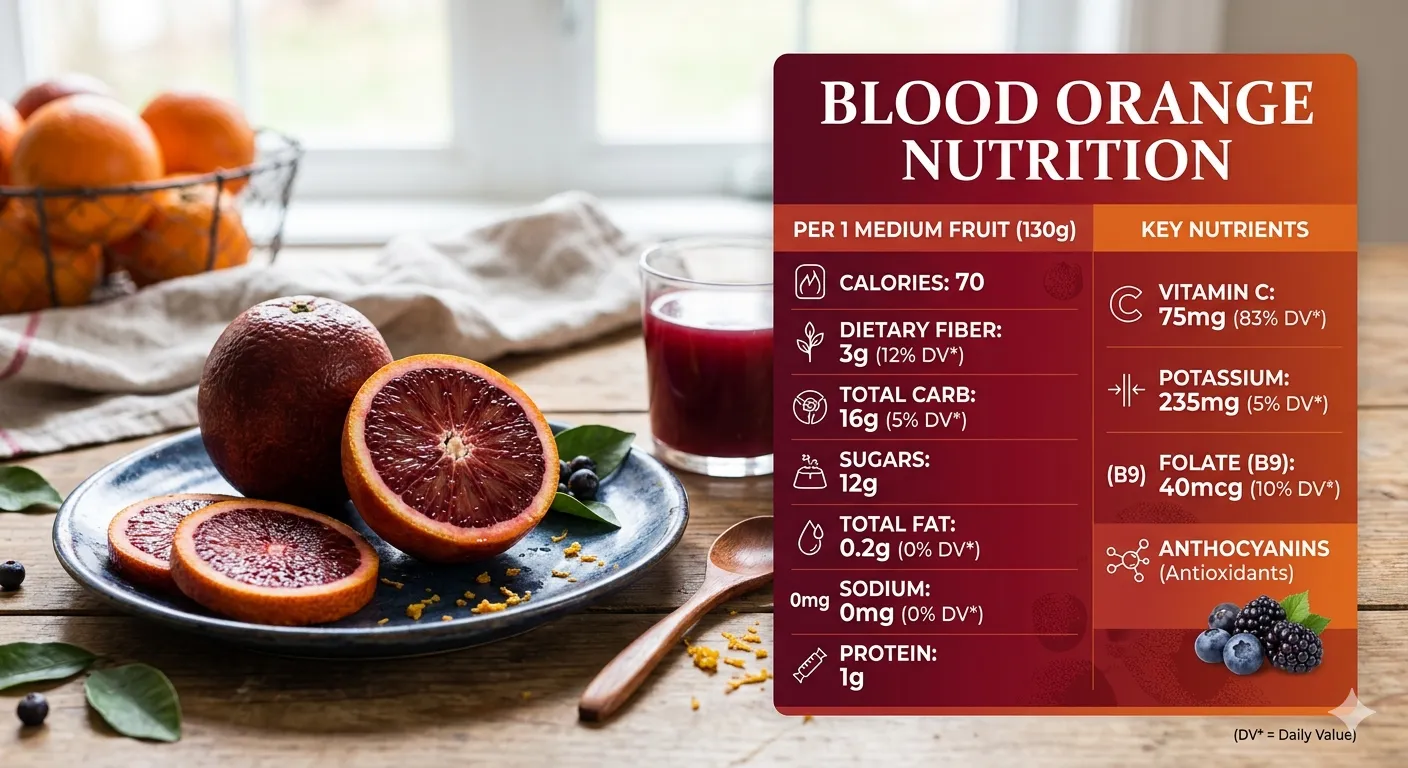
Below is a detailed breakdown of the nutrition facts, health benefits, and nutritional comparisons for blood oranges.
Nutrition Facts Panel (Per 100g & Medium Fruit)
The table below outlines the basic macronutrients and key micronutrients found in raw blood oranges. Note: Data is approximate and can vary slightly by variety (Moro, Tarocco, Sanguinello) and growing conditions.
| Nutrient | Per 100 grams (~3.5 oz) | Per 1 Medium Fruit (~130g–140g) | % Daily Value (DV)* |
| Calories | ~43–47 kcal | ~60–70 kcal | – |
| Total Carbs | ~11g–12g | ~15g–16g | 5% |
| Dietary Fiber | ~2.0g–2.4g | ~3.0g | 12% |
| Sugars | ~8.0g–9.0g | ~12g | – |
| Protein | ~0.9g | ~1.2g | 2% |
| Total Fat | ~0.1g | ~0.2g | 0% |
| Cholesterol | 0 mg | 0 mg | 0% |
| Sodium | 0 mg | 0 mg | 0% |
| Key Vitamins | |||
| Vitamin C | ~50–60 mg | ~70–80 mg | ~80–90% |
| Folate (B9) | ~30 mcg | ~40 mcg | 10% |
| Vitamin A | ~150 IU | ~200 IU | 4% |
| Key Minerals | |||
| Potassium | ~180 mg | ~230 mg | 5% |
| Calcium | ~30 mg | ~40 mg | 3% |
3. The Vitamin Powerhouse: Vitamin C and Beyond
The most celebrated part of blood orange nutrition information is the high concentration of Vitamin C. A single blood orange can provide nearly 100% of your daily required intake of Vitamin C.
Vitamin C (Ascorbic Acid)
Vitamin C is essential for collagen synthesis, which keeps your skin firm and your joints healthy. It also plays a vital role in immune function by supporting various cellular functions of the immune system.
Vitamin A
Blood oranges contain significant amounts of Vitamin A (in the form of beta-carotene). This is crucial for maintaining healthy vision, especially in low-light conditions, and for supporting the health of the lining of your respiratory and digestive tracts.
Folate (Vitamin B9)
Essential for DNA synthesis and the formation of red blood cells, folate is a key component of the blood orange nutrition information profile, making it a great fruit for pregnant women and those looking to support heart health.
The Unique “Red” Component: Anthocyanins
The defining characteristic of blood oranges is the presence of anthocyanins. These are the same water-soluble pigments responsible for the red, purple, and blue colors in blueberries, blackberries, and red cabbage.
Antioxidant Power: While standard oranges rely primarily on Vitamin C and carotenoids for their antioxidant profile, blood oranges add a potent dose of anthocyanins. These compounds help neutralize free radicals, reducing oxidative stress and inflammation.
Health Association: Higher dietary intake of anthocyanins has been linked by various studies to a reduced risk of cardiovascular disease, type-2 diabetes, and neurodegenerative conditions.
Major Health Benefits
1. Robust Immune Support
A single medium blood orange can provide nearly your entire day’s required intake of Vitamin C. Vitamin C is critical for stimulating the production and function of white blood cells, the body’s primary defense against infection.
2. Powerful Antioxidant Defense
The combination of high Vitamin C and anthocyanins creates a formidable antioxidant synergy. These compounds protect cells from damage that can lead to chronic diseases, including certain types of cancer and heart disease.
3. Heart Health
Blood oranges contribute to heart health through multiple pathways:
Anthocyanins & Flavonoids: These help lower “bad” LDL cholesterol and reduce inflammation in the blood vessels.
Potassium: Helps regulate blood pressure by counteracting the effects of sodium.
Fiber: Soluble fiber can help manage cholesterol levels.
4. Digestive Health
With roughly 3 grams of dietary fiber in one medium fruit, blood oranges promote healthy digestion, prevent constipation, and feed beneficial gut bacteria.
5. Skin Health and Wound Healing
Vitamin C is an essential cofactor for the synthesis of collagen, the main structural protein in skin, tendons, and ligaments. Consuming adequate Vitamin C supports skin elasticity and helps the body repair tissue after injury.
6. Healthy Pregnancy
Blood oranges provide a modest amount of folate (Vitamin B9). Folate is crucial in the early stages of pregnancy to prevent neural tube defects in the developing fetus.
Nutritional Comparison: Blood Orange vs. Other Citrus
When comparing 100g of raw fruit:
| Feature | 🩸 Blood Orange | 🍊 Navel Orange | 🍋 Grapefruit (Pink) |
| Color Source | Anthocyanins | Carotenoids | Lycopene |
| Calories | ~45 | ~47 | ~42 |
| Vitamin C | High (53mg) | High (53mg) | Medium-High (31mg) |
| Folate | Medium (~30mcg) | Medium (~30mcg) | Low (~10mcg) |
| Distinct Flavor | Tart-Sweet, Raspberry notes | Pure Sweet | Tart, Slightly Bitter |
| Peak Season | Winter (Dec–Apr) | Winter/Spring (Nov–June) | Winter/Spring |
Key Takeaway: You should choose blood oranges specifically if you are seeking a diverse range of antioxidants, particularly the anthocyanins associated with colored berries, in a familiar citrus package.
Potential Considerations
Acidity: Like all citrus, blood oranges are acidic. Individuals suffering from acid reflux or GERD might find that consuming them worsens symptoms.
Sugar Content: While natural, the sugar in a blood orange can still impact blood glucose. People with diabetes should factor the carbohydrate content into their meal planning.
Juice vs. Whole Fruit: Drinking blood orange juice provides the same vitamins and antioxidants but removes almost all the dietary fiber. Fiber is crucial for slowing sugar absorption and promoting satiety; therefore, whole fruit is generally the healthier choice.
4. The Antioxidant Edge: Anthocyanins and Flavonoids
This is where the blood orange nutrition information truly shines. While all oranges contain flavonoids (like hesperidin), only blood oranges contain high levels of anthocyanins.
Anthocyanins: These pigments help protect the body from oxidative stress and inflammation. Studies suggest they may help lower LDL (bad) cholesterol and improve the strength of blood vessels.
Hesperidin: This flavonoid has been linked to lower blood pressure and anti-inflammatory effects in the cardiovascular system.
5. Dietary Fiber and Gut Health
One medium blood orange contains about 3 grams of dietary fiber. Fiber is an essential part of blood orange nutrition information because it:
Slows Sugar Absorption: The fiber prevents a rapid spike in blood sugar, making the fruit a better choice than fruit juice.
Supports Digestion: Fiber acts as a prebiotic, feeding the healthy bacteria in your gut.
Promotes Satiety: Eating the whole fruit helps you feel full longer, which is beneficial for weight management.
6. Health Benefits of Blood Oranges
Given the blood orange nutrition information we’ve covered, let’s look at the functional benefits for your body.
Cardiovascular Support
The combination of fiber, potassium, and anthocyanins makes blood oranges a heart-healthy choice. Potassium helps regulate heart rhythm and counteract the effects of sodium on blood pressure.
Enhanced Iron Absorption
If you eat blood oranges alongside plant-based iron sources (like spinach, lentils, or beans), the high Vitamin C content significantly increases the amount of iron your body can absorb. This is vital for preventing anemia.
Skin Health and Anti-Aging
The antioxidants in blood oranges fight free radical damage caused by UV rays and pollution. By supporting collagen production, the nutrients in this fruit help reduce the appearance of fine lines and improve skin elasticity.
7. How to Use Blood Oranges in Your Diet
To get the most out of the blood orange nutrition information, it is best to consume the fruit raw and whole.
Salads: Add slices to a spinach or arugula salad with goat cheese and walnuts.
Salsas: Dice blood oranges with red onion, jalapeño, and cilantro for a vibrant topping for grilled fish or chicken.
Breakfast: Top your Greek yogurt or oatmeal with fresh segments.
Zest: Don’t throw away the peel! The zest contains concentrated aromatic oils and flavonoids. Use it to flavor baked goods or marinades.
8. Blood Orange Juice vs. Whole Fruit
When looking at blood orange nutrition information, many people wonder if juice is a good substitute.
The Downside: Juicing removes the fiber. This causes the natural sugars to enter your bloodstream much faster.
The Upside: Blood orange juice is still packed with Vitamin C and anthocyanins. If you choose juice, ensure it is 100% pure and limit your portion to 4-6 ounces.
9. Potential Considerations
While the blood orange nutrition information is overwhelmingly positive, there are a few things to keep in mind:
Acidity: Like all citrus, blood oranges are acidic. Those with severe acid reflux or GERD may need to limit their intake.
Medication Interference: Citrus can sometimes interact with certain medications (like statins). If you have been told to avoid grapefruit, check with your doctor before consuming large amounts of blood oranges.
Conclusion
The blood orange nutrition information confirms that this fruit is much more than just a pretty face in the produce aisle. With its unique blend of anthocyanins, high Vitamin C, and heart-healthy fiber, it is a superior choice for anyone looking to boost their antioxidant intake. Whether you eat them as a snack or toss them into a gourmet salad, blood oranges are a delicious way to support your immune system and overall vitality in 2026. Also Read – Nutritional Value of Graham Crackers: Calories, Carbs all Facts
Frequently Asked Questions (FAQ)
Q: Are blood oranges higher in sugar than regular oranges?A: No, the sugar content is very similar. A medium blood orange has about 12g of sugar, which is comparable to a standard Navel orange.
Q: Why are some blood oranges redder than others?A: The intensity of the color depends on the temperature changes during the growing season. The colder the nights, the more anthocyanins the fruit produces.
Q: Can I freeze blood oranges?A: Yes. You can freeze the segments for smoothies or freeze the zest and juice for later use in recipes without losing the core blood orange nutrition information.
Q: Are blood oranges genetically modified?A: No. The red color is a natural mutation that was discovered and cultivated in Italy hundreds of years ago.


2 thoughts on “Blood Orange Nutrition Information: Health Benefits & Facts”
Comments are closed.