
Paleo vs Whole30: Key Differences
Paleo vs Whole30: Decoding the Diets to Find Your Perfect Fit
Navigating the world of popular diets can be confusing, especially when two well-known plans like Paleo and Whole30 seem so similar at first glance. Both emphasize whole foods and promise transformative health benefits, but their core philosophies and applications differ significantly. Understanding these differences is crucial because it empowers you to choose a sustainable path aligned with your personal health objectives, whether that’s weight management, identifying food sensitivities, or simply adopting a cleaner way of eating.
This comprehensive guide will dissect the Paleo and Whole30 diets, comparing their rules, goals, and practicalities. Consequently, you’ll gain the clarity needed to make an informed decision.
What is the Paleo Diet? 🥩
The Paleo diet, short for Paleolithic diet, is inspired by the presumed eating patterns of our hunter-gatherer ancestors. Its fundamental premise is that modern humans are genetically mismatched to the contemporary diet that emerged with farming practices. Therefore, it advocates for a return to foods that could be hunted or gathered, eliminating processed items, grains, legumes, and dairy.
The diet is often viewed as a long-term lifestyle rather than a short-term program. Its proponents suggest it can lead to improved energy, better digestion, and weight loss by reducing inflammation and stabilizing blood sugar.
Core Paleo Diet Rules: What You Can and Cannot Eat
| Food Category | Paleo-Approved (Eat) | Paleo-Restricted (Avoid) |
|---|---|---|
| Proteins | Grass-fed meats, poultry, wild-caught fish, eggs | Processed meats (e.g., hot dogs, deli meats) |
| Vegetables | All vegetables are encouraged. | None, but starchy vegetables like potatoes are sometimes limited. |
| Fruits | All fruits in moderation. | None, but high-sugar fruits are often eaten sparingly. |
| Fats & Oils | Avocado, olive oil, coconut oil, nuts, seeds. | Vegetable oils (soybean, corn, canola), trans fats. |
| Dairy | Generally avoided. Some “Primal” versions allow grass-fed butter or ghee. | Milk, cheese, yogurt. |
| Grains & Legumes | None. | All grains (wheat, rice, oats) and legumes (beans, peanuts, lentils). |
| Sweeteners | Small amounts of natural sweeteners like honey or maple syrup are sometimes used. | Refined sugar, artificial sweeteners. |
What is the Whole30 Program? ✨
The Whole30 is a 30-day elimination diet designed to “reset” your body. Created by Melissa and Dallas Hartwig, it is a strict, short-term nutritional program with very clear rules. The primary goal is not weight loss (though it’s a common side effect) but to identify potential food sensitivities and change your relationship with food. After the 30 days, you systematically reintroduce eliminated food groups to observe their effects on your digestion, energy, and overall well-being.
It is explicitly not a lifelong diet. The founders call it a “short-term reset, not a long-term solution.” The program eliminates foods that are commonly associated with inflammation, gut issues, and hormonal imbalances.
Core Whole30 Program Rules: The Strict Elimination
| Food Category | Whole30-Approved (Eat) | Whole30-Restricted (Avoid) |
|---|---|---|
| Proteins | Meat, poultry, fish, eggs. | No processed meats with sugar/sulfites. |
| Vegetables | All vegetables are encouraged. | None. |
| Fruits | All fruits are allowed. | None, but the program advises mindful consumption. |
| Fats & Oils | Cooking fats like coconut oil, olive oil, ghee, avocado oil. | No seed oils (soy, canola), no peanuts or peanut butter. |
| Dairy | All dairy is eliminated, including butter (ghee is allowed as it’s milk-protein-free). | Milk, cheese, yogurt, butter. |
| Grains & Legumes | All are eliminated. This includes all grains, beans, lentils, soy, and peanuts. | Everything in this category. |
| Sweeteners | Absolutely none, not even natural ones like honey, maple syrup, or stevia. | All sweeteners, real or artificial. |
| Recreated “Treats” | Not allowed. You cannot make Paleo pancakes, muffins, or “nice cream” even with approved ingredients. | Any food that mimics a baked good, dessert, or junk food. |
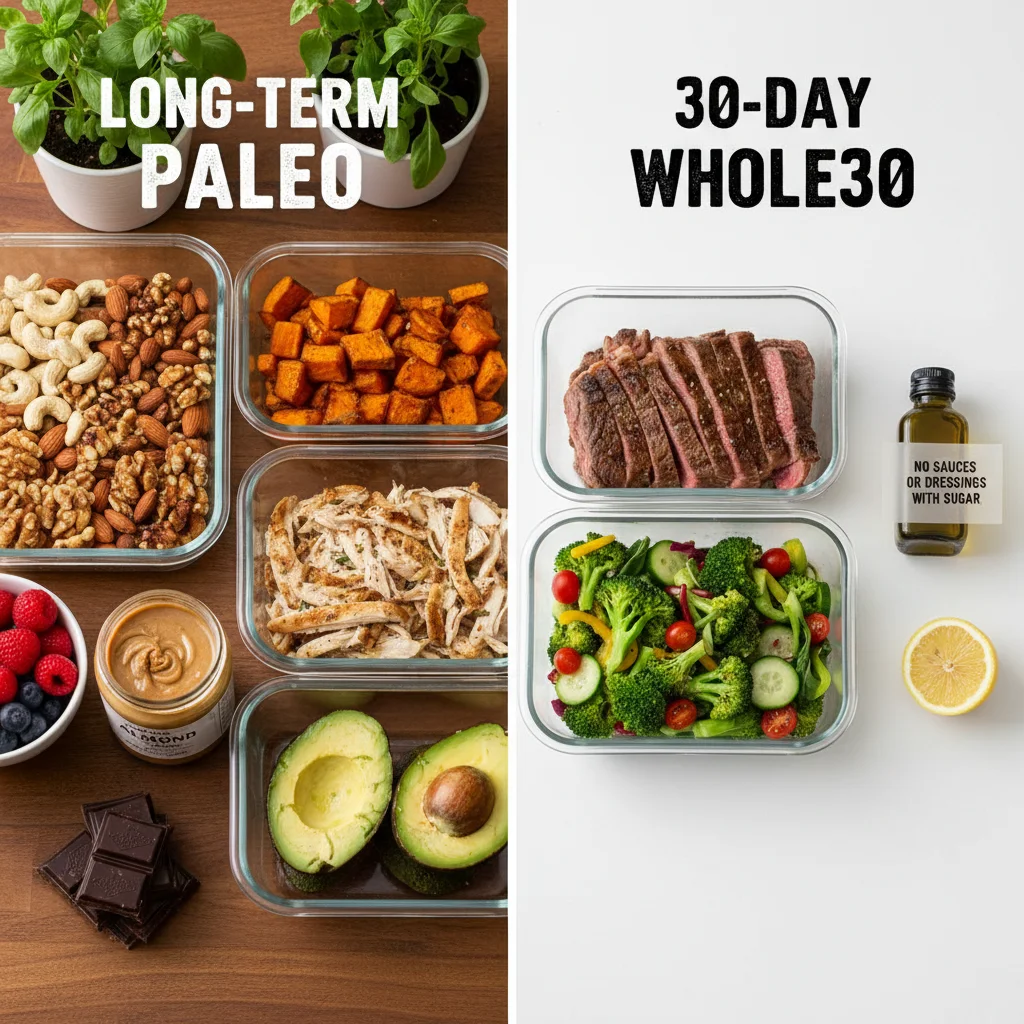
Key Differences: Paleo vs Whole30 Head-to-Head
While they share a common foundation of whole foods, the distinctions between Paleo and Whole30 are profound. Here’s a direct comparison of their critical aspects.
1. Primary Purpose and Duration
- Paleo: A long-term dietary lifestyle focused on sustainable health and eating like our ancestors. It’s adaptable for life.
- Whole30: A 30-day elimination reset designed for discovery and breaking unhealthy habits. It is a strict, temporary protocol.
2. Flexibility and “Cheating”
- Paleo: Offers more flexibility. Many followers use natural sweeteners, and some include dairy or white rice (the “Primal” or “80/20” approach). Occasional deviations are generally accepted as part of a sustainable lifestyle.
- Whole30: Has a zero-tolerance policy. If you consciously eat a restricted food, you must start the 30 days over from day one. The rules are non-negotiable, which is central to its “reset” philosophy.
3. Approach to “Paleo-fied” Foods
- Paleo: Actively encourages creative recipes using compliant ingredients to make pancakes, breads, and desserts. This helps with long-term adherence.
- Whole30: Explicitly forbids recreating treats or junk food with approved ingredients (like banana-egg pancakes). This rule aims to break psychological dependencies on certain food textures and experiences.
4. Dairy and Sweeteners
- Paleo: Dairy is generally excluded, but high-quality butter or ghee is common. Natural sweeteners are often used.
- Whole30: All dairy (except clarified ghee) and all sweeteners, without exception, are eliminated for the full 30 days.
5. Reintroduction Phase
- Paleo: Does not have a formal reintroduction schedule. Foods are typically avoided indefinitely.
- Whole30: The reintroduction phase is a mandatory and critical component of the program. It’s how you learn which foods negatively affect your energy, digestion, skin, and symptoms of strep throat or other inflammatory responses.
Which One is Right for You? How to Decide
Choosing between Paleo and Whole30 depends entirely on your goals, personality, and timeline.
Choose the Whole30 Program if:
* You suspect you have food sensitivities but don’t know the culprits.
* You want to break strong cravings for sugar, carbs, or junk food.
* You need a strict, rule-based structure to succeed.
* You are committed to a short-term, intense reset to kickstart healthier habits.
* You are willing to follow a meticulous reintroduction process to gather data about your body.
Choose the Paleo Diet if:
* You are looking for a sustainable, long-term way of eating.
* You prefer a flexible framework that can be adapted to your life.
* You don’t necessarily need to identify specific food triggers but want to eat cleaner.
* You enjoy cooking and creating healthy versions of your favorite meals.
* You want a diet that supports general wellness and may help manage blood sugar levels.
Can You Combine Them?
Absolutely. Many people use the Whole30 as a jumpstart to the Paleo lifestyle. Firstly, you complete the 30-day reset to eliminate cravings and identify problem foods. Subsequently, you transition into a more flexible, long-term Paleo diet, incorporating the lessons learned during your Whole30. This combined approach can be incredibly powerful for establishing lasting healthy habits.
The Bottom Line: Two Paths to Wellness
Both the Paleo diet and the Whole30 program champion the power of unprocessed, nutrient-dense foods. However, their paths diverge in purpose and practice. The Whole30 is a disciplined, short-term investigative tool, whereas Paleo is a customizable, lifelong nutritional template.
Therefore, if your goal is discovery and a hard reset, begin with Whole30. Conversely, if you seek a gradual, permanent shift toward ancestral eating, Paleo may be your ideal choice. Regardless of your decision, focusing on whole foods will benefit your health. Moreover, for those interested in supporting their journey with supplements, exploring options like the best powder supplements for gut health can be a logical next step after establishing a solid dietary foundation.