
High-Volume, Low-Calorie Foods for Fullness
The Ultimate Guide to High-Volume, Low-Calorie Foods for Lasting Fullness
Struggling with hunger while trying to manage your weight can feel like an impossible battle. Consequently, understanding the principle of high-volume, low-calorie foods can be a game-changer. This approach focuses on consuming larger quantities of food that are low in energy density (calories per gram), thereby allowing you to feel physically full and satisfied while staying within your caloric goals. Moreover, this strategy is not about deprivation; it’s about smart, strategic eating that supports both satiety and nutrition.
What Are High-Volume, Low-Calorie Foods?
Firstly, let’s define the core concept. High-volume, low-calorie foods are typically rich in water, fiber, and air. These components add bulk and weight to your meals without contributing significant calories. For example, compare a small handful of nuts (high calorie density) to a large bowl of spinach (low calorie density). You can eat a much larger portion of the spinach for far fewer calories, which helps stretch your stomach and trigger satiety signals. Therefore, incorporating these foods is a foundational tactic for anyone interested in sustainable weight management or simply eating more mindfully.
The Science Behind Satiety and Volume
Your stomach has stretch receptors that send signals to your brain when it’s full. By eating foods with high volume, you activate these receptors more effectively. Additionally, fiber-rich foods slow down digestion, promoting a steady release of energy and keeping hunger pangs at bay. Research from authoritative sources like the National Institutes of Health (NIH) supports the role of dietary fiber and low-energy-dense foods in weight control. Understanding this mechanism is crucial because it shifts the focus from calorie counting alone to the physical experience of fullness.
Top High-Volume, Low-Calorie Food Categories
To make this practical, here is a breakdown of the best food categories to prioritize. Including a variety from each group ensures you get a broad spectrum of nutrients.
1. Non-Starchy Vegetables (The Volume Champions)
These are arguably the most powerful tools in your arsenal. You can eat them in very large quantities.
- Examples: Spinach, kale, lettuce, cucumbers, celery, zucchini, bell peppers, broccoli, cauliflower, tomatoes, mushrooms.
- Why They Work: Extremely high in water and fiber, very low in calories. They form the perfect base for salads, stir-fries, and snacks.
2. Fruits (Nature’s Sweet Volume)
Fruits provide volume, sweetness, and essential vitamins, but portion awareness is key due to natural sugars.
- Examples: Berries (strawberries, blueberries, raspberries), watermelon, cantaloupe, oranges, apples, peaches.
- Why They Work: High water content. Berries, in particular, are exceptionally high in fiber and antioxidants. For more on the nutritional profile of specific fruits, you can explore our guide on blood orange nutrition information.
3. Lean Proteins (For Sustained Fullness)
Protein is the most satiating macronutrient. Combining it with high-volume vegetables creates a powerful, satisfying meal.
- Examples: Skinless chicken breast, turkey breast, white fish (cod, tilapia), shrimp, egg whites, tofu, and legumes like lentils.
- Why They Work: Protein increases feelings of fullness and helps preserve muscle mass during weight loss. Legumes also add significant fiber.
4. Broth-Based Soups and Stews
Liquids can contribute to fullness. Starting a meal with a broth-based soup is a classic strategy for reducing overall intake.
- Examples: Vegetable broth, chicken noodle soup (broth-heavy), miso soup, gazpacho.
- Why They Work: The combination of liquid and vegetables provides volume that takes up space in your stomach.
Strategic Meal Building with High-Volume Foods
Knowing which foods to eat is one thing; knowing how to combine them is another. Here is a simple framework for constructing satisfying meals:
- Start with a Vegetable Base: Fill at least half your plate with non-starchy vegetables (e.g., a massive salad or steamed broccoli).
- Add a Lean Protein: Allocate a quarter of your plate to a protein source like grilled chicken or baked fish.
- Incorporate a Complex Carb (Optional): Use the remaining quarter for a high-fiber carb like quinoa, sweet potato, or beans, which also contribute to volume.
- Use Flavor Wisely: Season with herbs, spices, citrus juice, vinegar, or hot sauce instead of high-calorie dressings and sauces.
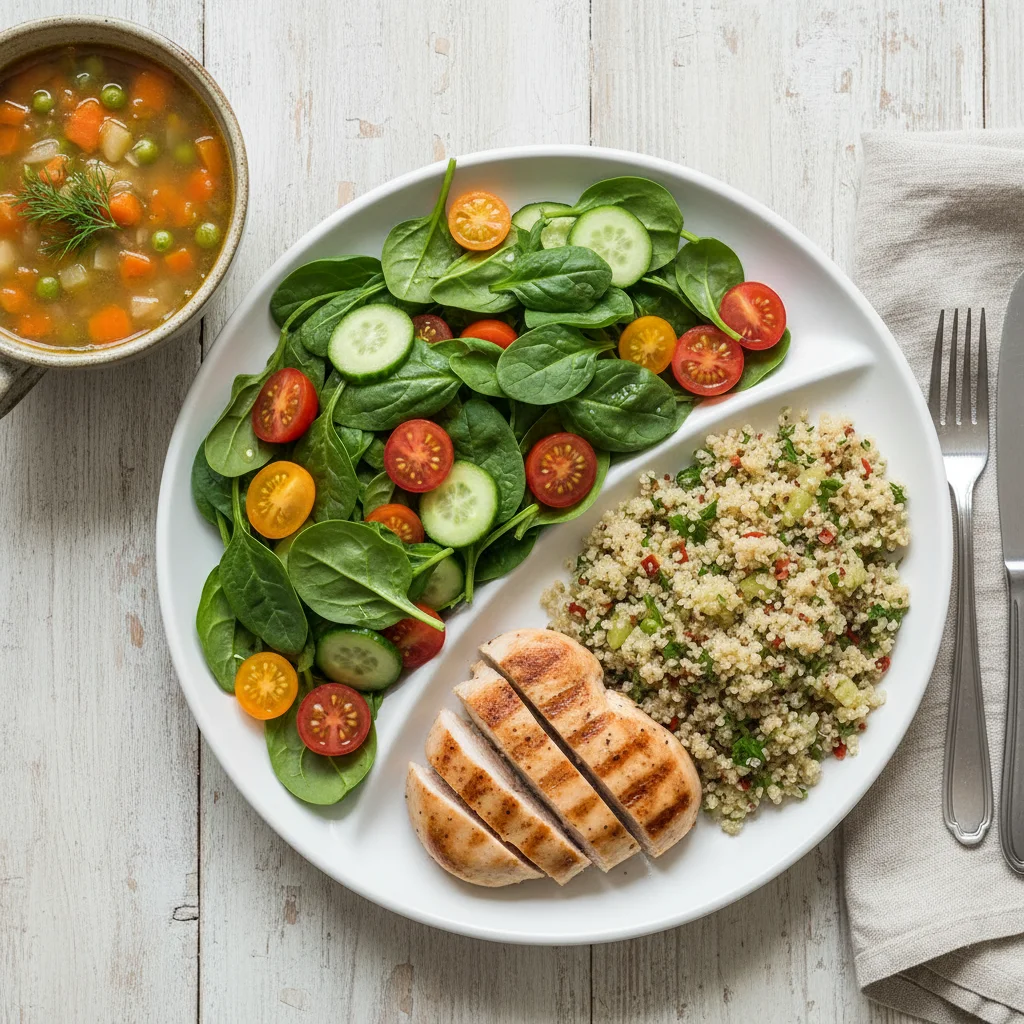
Sample High-Volume, Low-Calorie Foods Comparison Table
The following table illustrates the dramatic difference in portion size you can enjoy for a similar caloric cost.
| Food Item | Approximate Volume for ~100 Calories | Key Satiety Components |
|---|---|---|
| Air-Popped Popcorn | 3 large cups | Fiber, Air |
| Strawberries | 2 full cups (about 20 medium berries) | Water, Fiber |
| Spinach (raw) | 10 cups (yes, ten!) | Water, Fiber, Micronutrients |
| Broccoli (steamed) | 3.5 cups (florets) | Fiber, Water, Protein |
| Cucumber | 3 medium cucumbers | Water |
| Plain Rice Cakes | 4 cakes | Air, Carbohydrate |
| Dark Chocolate (70%) | 2 small squares (approx. 20g) | Fat, Flavor Satisfaction |
Note: This table highlights why focusing on vegetables and fruits is so effective. For instance, you would need to eat a truly massive bowl of spinach to reach 100 calories, whereas a small serving of a calorie-dense food like chocolate reaches that count quickly.
Pro Tips for Maximizing the Strategy
- Hydrate First: Often, thirst is mistaken for hunger. Drink a glass of water before meals.
- Eat Mindfully: Slow down. It takes about 20 minutes for your brain to register fullness.
- Plan Ahead: Having pre-cut vegetables and washed fruit readily available makes it easier to choose high-volume options when hungry. For those tracking their nutrition, using a tool like a Google Sheets budget planner can be adapted to monitor food volume and calorie intake.
- Beware of Calorie-Dense Add-ons: A healthy salad can become high-calorie quickly with cheese, croutons, and creamy dressing. Opt for volume-enhancing toppings like more vegetables, salsa, or a vinegar-based dressing.
Conclusion: A Sustainable Path to Fullness
Ultimately, embracing high-volume, low-calorie foods is a sustainable and psychologically rewarding approach to eating. It empowers you to eat satisfying portions without fear, supports overall health with micronutrients and fiber, and aligns with long-term weight management goals. Remember, this is not a short-term diet but a fundamental shift in how you view your plate. Start by adding one extra serving of vegetables to your next meal, and notice the difference in how full and energized you feel. Your journey to better satiety begins with that first, larger bite.


2 thoughts on “High-Volume, Low-Calorie Foods for Fullness”
Comments are closed.