
Lowest Calorie Alcohol Options
Your Guide to the Lowest Calorie Alcohol Choices
Navigating social events or enjoying a quiet evening often involves a drink, but for those mindful of their calorie intake, this can pose a dilemma. Alcoholic beverages are famously sneaky sources of “empty” calories, which provide energy but little to no nutritional value. Consequently, understanding which drinks have the lowest kcal alcohol content is crucial for anyone looking to maintain their health goals without complete abstinence. This guide will break down your best options, explain the science behind alcohol calories, and provide practical tips for smarter sipping.
Why Alcohol Contains Calories
Firstly, it’s essential to understand where the calories in your drink originate. Alcohol itself is energy-dense, containing 7 calories per gram. This is nearly double the calories of carbohydrates or protein (both 4 kcal per gram) and only slightly less than fat (9 kcal per gram). Therefore, the alcohol (ethanol) content is the primary driver of calories in any beverage. Additionally, many drinks contain residual sugars from their production process or are mixed with high-calorie sodas, juices, and syrups, which can significantly increase the total calorie count. For a deeper dive into beverages with minimal carbs and sugars, you might explore our guide to zero carb drinks.
The Lowest Calorie Alcohol by Type
To make an informed choice, you need to compare options within each category of alcohol. Here is a detailed breakdown of some of the lowest kcal alcohol choices available.
Distilled Spirits (Hard Alcohol)
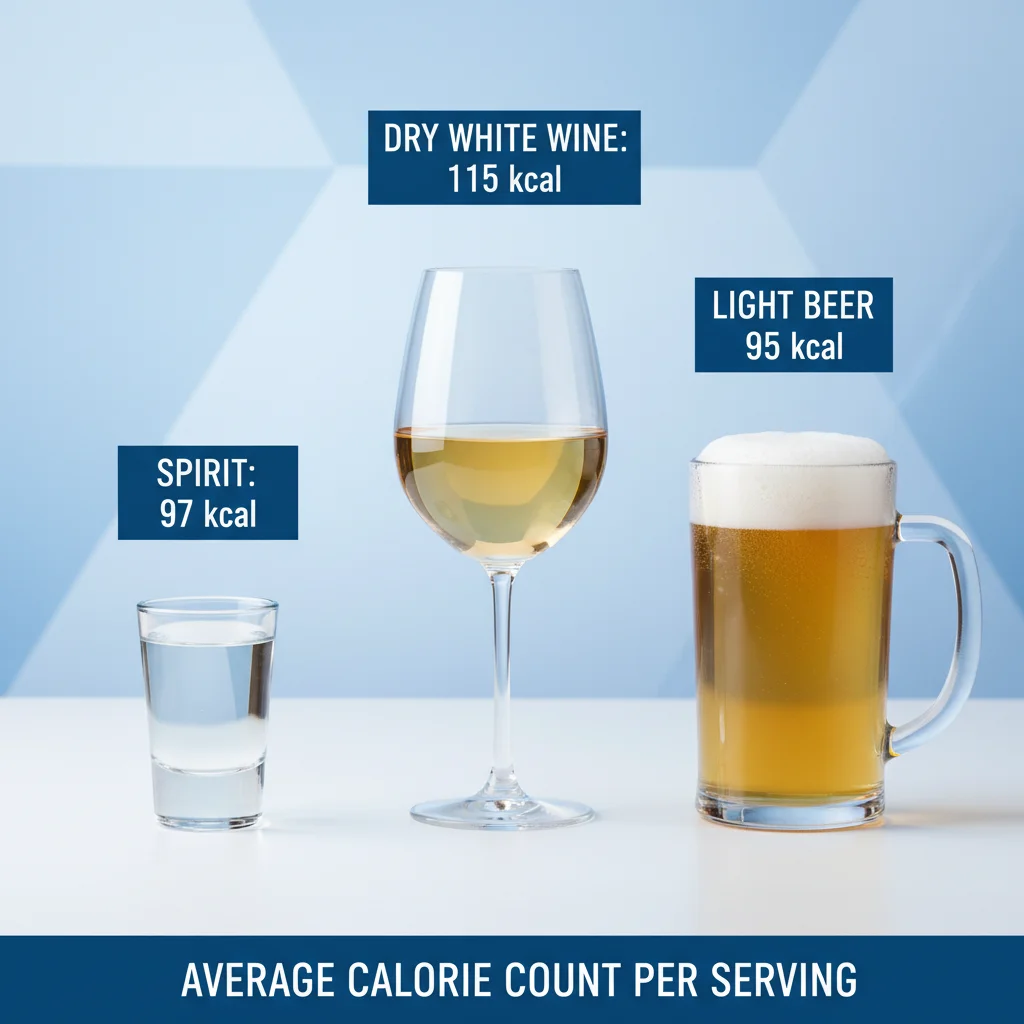
Spirits like vodka, gin, rum, tequila, and whiskey are the most calorie-efficient sources of alcohol by volume. A standard 1.5-ounce (44ml) shot of 80-proof (40% alcohol) spirit contains approximately 97 calories, almost all from the alcohol itself. They contain virtually no carbs or sugars when unflavored. However, the calorie count skyrockets once you add mixers.
Wine
Dry wines are a better choice than sweet varieties. The fermentation process consumes most of the natural sugars, leaving a lower calorie count.
* Dry Sparkling Wine (Brut): ~80-100 calories per 5oz glass.
* Sauvignon Blanc, Pinot Grigio (Dry White): ~110-120 calories per 5oz glass.
* Pinot Noir, Cabernet Sauvignon (Dry Red): ~120-125 calories per 5oz glass.
Conversely, dessert wines or sweet Rieslings can contain 50-100% more calories due to their high residual sugar content.
Beer
Traditional beers are higher in calories due to their carbohydrate content from grains. Light beers are specifically brewed to reduce both alcohol and carbs.
* Ultra-Light Beers: ~80-95 calories per 12oz bottle.
* Standard Light Beers: ~100-110 calories per 12oz bottle.
* Regular Lager/IPA: ~150-200+ calories per 12oz bottle.
For a visual comparison of popular options, refer to the table below.
Lowest Calorie Alcohol Comparison Table
| Beverage (Serving Size) | Average Calories (kcal) | Key Considerations |
|---|---|---|
| Vodka/Gin/Tequila (1.5 oz shot, 80-proof) | 97 | Pure alcohol calories. Crucially, mix with zero-calorie soda water. |
| Brut Champagne/Sparkling Wine (5 oz) | 80-100 | Naturally dry; a celebratory low-cal option. |
| Sauvignon Blanc (5 oz) | 110-120 | A dry, crisp white wine with minimal residual sugar. |
| Ultra-Light Beer (12 oz) | 80-95 | Lowest in both alcohol and carbohydrate content. |
| Rosé (Dry, 5 oz) | 110-120 | Choose “dry” rosé, not sweet white zinfandel. |
| Pinot Noir (5 oz) | 120-125 | One of the lightest-bodied and lowest-calorie red wines. |
How to Drink Alcohol Without Derailing Your Diet
Choosing a low-calorie base is only the first step. Moreover, your consumption habits and mixers play an equally important role. Here are actionable strategies:
- Dilute with Zero-Calorie Mixers: This is the single most effective tip. Always mix spirits with soda water, diet tonic (check for sugar), or plain water with a squeeze of citrus. Avoid regular soda, juice, and pre-made sugary mixers.
- Practice Mindful Pouring: A standard drink serving is often smaller than you think. Use a measuring shot for spirits and pay attention to wine pour sizes.
- Hydrate Diligently: Alternate every alcoholic drink with a full glass of water. This slows your consumption, reduces total intake, and mitigates dehydration, which is a primary cause of hangovers.
- Avoid “Cocktail” and “Liqueur” Labels: These are typically sugar bombs. Drinks like margarita mixes, amaretto, or Irish cream can contain 150-250 calories in a small serving.
- Eat Before You Drink: Having a meal, particularly one with protein and healthy fats, before consuming alcohol can slow its absorption and help you feel fuller, naturally leading to drinking less.
The Bottom Line on Low-Calorie Drinking
Ultimately, the lowest kcal alcohol options are straight spirits consumed neat or with zero-calorie mixers, followed by dry wines and ultra-light beers. However, it’s vital to remember that “lowest calorie” does not mean “healthy.” Alcohol consumption should always be moderate, as defined by guidelines such as those from the National Institute on Alcohol Abuse and Alcoholism (NIAAA). Furthermore, the metabolic priority your body gives to processing alcohol can temporarily halt fat burning.
If your goal is weight management or overall wellness, the most effective strategy is to limit frequency and quantity. For those nights you do choose to drink, applying the principles in this guide will help you make smarter, more calorie-conscious choices without feeling deprived. Additionally, supporting your body’s overall health with proper nutrition is key; for instance, understanding the role of antioxidants for prostate health can be part of a broader wellness strategy.