
Lexapro vs Zoloft: SSRI Comparison
Lexapro vs Zoloft: A Detailed Comparison of Two Leading SSRIs
When facing depression or anxiety, finding the right medication is a crucial step toward recovery. Two of the most commonly prescribed options are Lexapro (escitalopram) and Zoloft (sertraline). Both belong to a class of antidepressants known as Selective Serotonin Reuptake Inhibitors (SSRIs), which work by increasing levels of serotonin in the brain. This neurotransmitter plays a key role in regulating mood, sleep, and appetite. Consequently, many patients and doctors consider these medications first-line treatments.
However, despite their similarities, Lexapro and Zoloft have distinct differences in their approved uses, side effect profiles, and chemical structures. Understanding these nuances is essential for making an informed decision with your healthcare provider. This comprehensive guide will break down the critical factors in the Lexapro vs Zoloft debate.
What Are Lexapro and Zoloft?
Firstly, it’s important to establish what these medications are. Lexapro (escitalopram) is often considered a refined version of an older SSRI, Celexa (citalopram). It contains only the active “S-enantiomer” of the molecule, which is believed to contribute to its efficacy and potentially fewer drug interactions.
Zoloft (sertraline) was one of the earliest SSRIs introduced and has a broad spectrum of FDA-approved uses. It is known for its reliable efficacy and extensive clinical history.
Both are prescription-only medications and require careful medical supervision when starting, adjusting, or discontinuing.
Head-to-Head Comparison: Key Differences
The table below outlines the primary distinctions between these two antidepressants.
| Feature | Lexapro (Escitalopram) | Zoloft (Sertraline) |
|---|---|---|
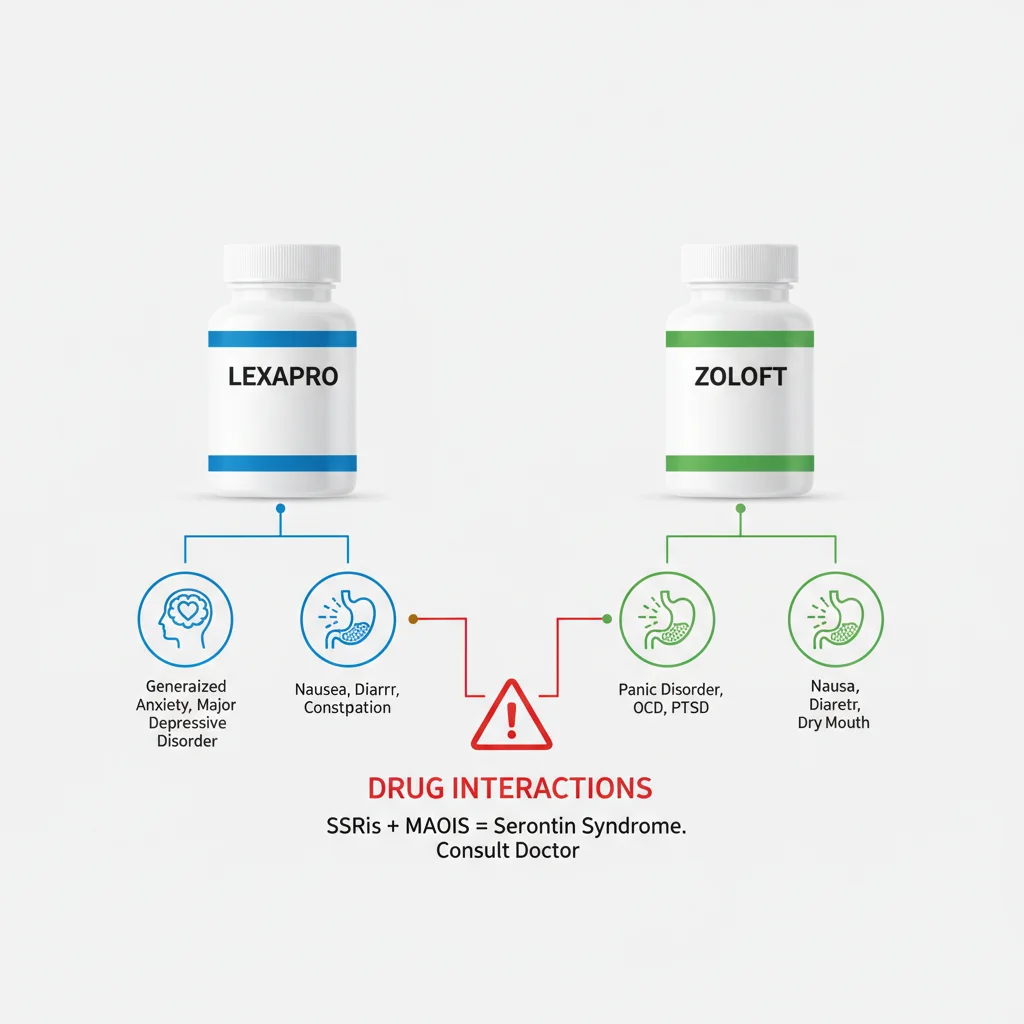
| FDA-Approved Uses | Major Depressive Disorder (MDD), Generalized Anxiety Disorder (GAD) | MDD, GAD, Panic Disorder, OCD, PTSD, Social Anxiety Disorder, PMDD |
| Typical Starting Dose | 10 mg once daily | 50 mg once daily |
| Dosage Range | 10 mg to 20 mg daily | 50 mg to 200 mg daily |
| Half-Life | 27-32 hours | 26 hours |
| Key Potential Side Effects | Nausea, insomnia, fatigue, sexual dysfunction | Diarrhea, nausea, insomnia, sexual dysfunction, potential for more initial agitation |
| Notable Considerations | May have fewer drug interactions; often preferred for its “cleaner” profile. | Has a broader range of approved uses; may be more activating initially for some. |
Effectiveness for Depression and Anxiety
Clinical studies generally show that both Lexapro and Zoloft are effective for treating Major Depressive Disorder and Generalized Anxiety Disorder. A meta-analysis published in the Journal of Clinical Psychiatry found both to be superior to placebo, with similar overall efficacy rates for depression.
However, the choice often comes down to the specific diagnosis. For instance, Zoloft has a clear advantage for conditions like Obsessive-Compulsive Disorder (OCD) and Post-Traumatic Stress Disorder (PTSD), as it is FDA-approved for these uses. Lexapro, on the other hand, is specifically approved for MDD and GAD. Therefore, your doctor’s recommendation will heavily depend on your primary symptoms.
Side Effects and Tolerability
All SSRIs carry a risk of side effects, especially during the first few weeks of treatment. Common side effects for both include nausea, headache, insomnia, drowsiness, and sexual dysfunction (like decreased libido or difficulty achieving orgasm).
Lexapro is frequently noted for having a relatively mild side effect profile, which can lead to better initial tolerability for some patients. Moreover, its simpler metabolic pathway can mean fewer interactions with other medications.
Zoloft is more likely to cause gastrointestinal issues like diarrhea. Additionally, some individuals find it to be more “activating,” which can be beneficial for those with low energy but problematic for those with high anxiety. It’s crucial to monitor your body’s response; for example, managing anxiety might also involve exploring natural sore throat remedies if stress leads to physical tension, but always consult your doctor about any new symptoms.
Important Considerations Before Choosing
Selecting between these medications is not a one-size-fits-all decision. Here are critical factors to discuss with your physician:
- Your Specific Diagnosis: As highlighted, Zoloft has a wider range of approved indications.
- Other Health Conditions & Medications: Your medical history, including liver or kidney issues, and other drugs you take (including supplements) will influence the choice. Lexapro may be preferred in complex medication regimens.
- Personal and Family History: How you or a family member has responded to SSRIs in the past is a strong predictor.
- Cost and Insurance: Generic versions of both are available, but your insurance formulary may favor one over the other.
- Withdrawal Symptoms: Discontinuing any SSRI must be done gradually under medical guidance to avoid withdrawal effects like dizziness, “brain zaps,” and flu-like symptoms.
The Bottom Line: Which One is Right for You?
Ultimately, there is no universally “better” medication. Lexapro might be an excellent choice for someone with pure MDD or GAD seeking a medication with a potentially gentler introduction. Conversely, Zoloft could be the ideal option for someone with comorbid OCD or panic disorder, or for a patient who does not respond to other SSRIs.
The journey to mental wellness often extends beyond medication. A holistic approach that includes therapy, lifestyle changes, and stress management is most effective. For instance, supporting your overall health with proper nutrition is vital; you can learn more about specific dietary components in our guide to antioxidants for prostate health, which discusses principles applicable to general cellular health.
The most critical step is to have an open, detailed conversation with a qualified healthcare professional. They can weigh your unique health profile against the clinical evidence to guide you toward the most suitable treatment path. Remember, finding the right medication can take time and patience, but it is a powerful step toward reclaiming your well-being.

