
Mouth Bump on Roof: Causes & Worry
What Does a Bump on the Roof of Your Mouth Mean?
Discovering a new bump on the roof of your mouth can be an unsettling experience. Is it a minor irritation or a sign of something more serious? This guide will help you understand the common causes, symptoms, and appropriate steps to take. While most oral bumps are harmless and resolve on their own, it’s crucial to know when professional evaluation is necessary.
Common Causes of a Bump on the Palate
The hard palate (roof of your mouth) can develop bumps for various reasons, ranging from minor injuries to infections. Understanding the potential cause is the first step toward proper management.
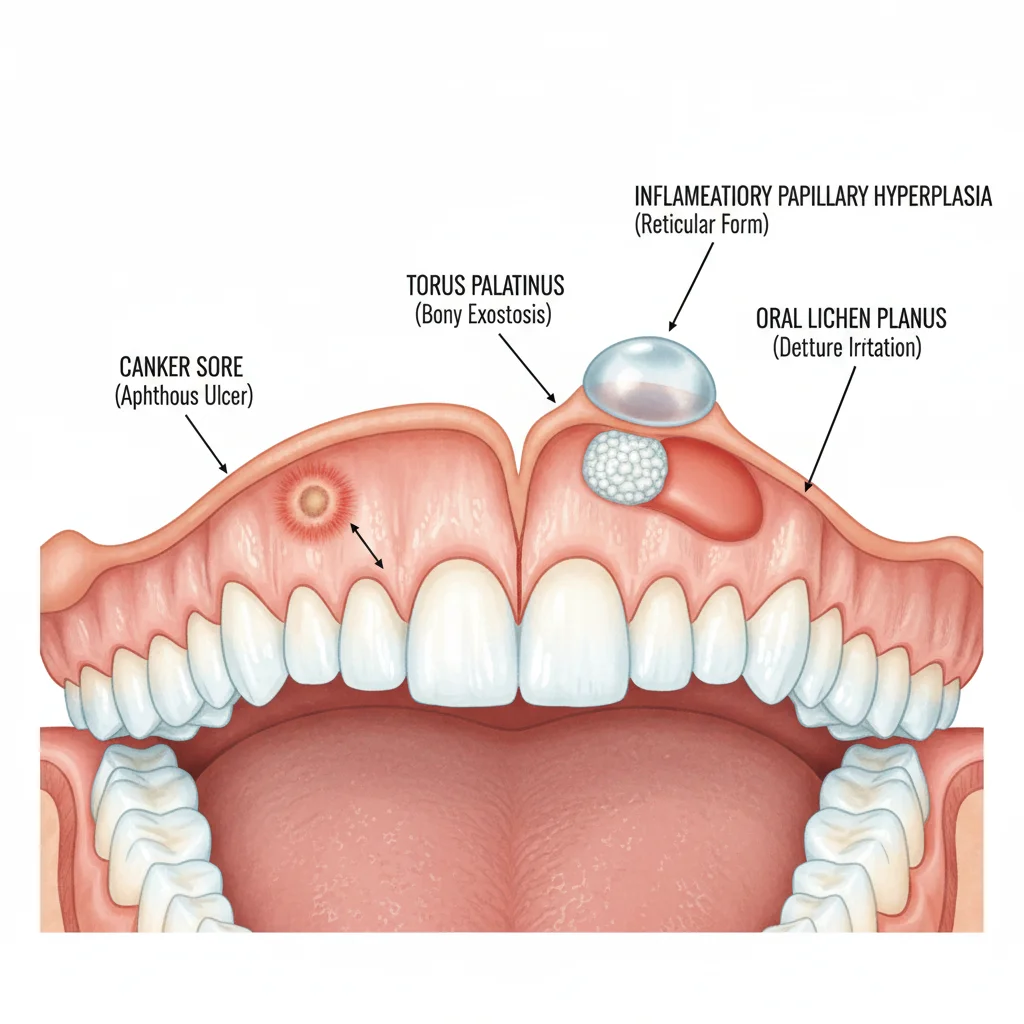
1. Canker Sores (Aphthous Ulcers)
Canker sores are among the most frequent culprits. These small, painful ulcers have a white or yellowish center with a red border. They are not contagious and often appear due to stress, minor injury (like from a sharp food), or certain food sensitivities. They typically heal within one to two weeks without scarring.
2. Torus Palatinus
This is a harmless, bony growth that develops along the midline of the hard palate. It is not a bump that appears suddenly; rather, it’s a slow-growing, hard lump that is actually a normal anatomical variation for many people. It usually requires no treatment unless it interferes with dentures or eating.
3. Mucocele
A mucocele is a fluid-filled cyst that forms when a salivary gland duct becomes blocked or injured. It often appears as a soft, bluish, dome-shaped bump. While they can occur on the roof of the mouth, they are more common on the lower lip. They may rupture and heal on their own, but persistent ones might need minor surgical removal.
4. Cold Sores (Fever Blisters)
Caused by the herpes simplex virus (HSV-1), cold sores are contagious, fluid-filled blisters. They more commonly appear on the lips, but the initial infection or a recurrence can sometimes manifest on the hard palate. They often tingle or burn before they appear.
5. Oral Candidiasis (Thrush)
This is a fungal infection caused by Candida yeast. It can create creamy white lesions that may be slightly raised and can be scraped off, sometimes leaving a red, bumpy base. It’s more common in infants, the elderly, and those with weakened immune systems.
6. Injury or Burn
A common cause is a simple burn from hot food or drink (often called “pizza palate”). Additionally, a sharp food like a tortilla chip can cause a minor injury that swells. These traumatic bumps are usually red, painful initially, and heal quickly.
7. Other Potential Causes
Less commonly, a bump could be related to a papilloma (a benign wart-like growth), a salivary gland tumor (usually benign), or, in rare cases, a sign of oral cancer. This is why persistent, changing, or painless lumps need professional assessment.
Symptoms and Identification Table
Use this table to help correlate your bump’s characteristics with potential causes. Remember, this is for informational purposes only and is not a substitute for a professional diagnosis.
| Bump Characteristic | Possible Cause | Typical Sensation | Common Duration |
|---|---|---|---|
| Small, white/yellow center, red border | Canker Sore | Painful, especially when eating | 1-2 weeks |
| Hard, bony, midline of palate | Torus Palatinus | Painless, firm to the touch | Permanent (non-growing) |
| Soft, bluish, fluid-filled | Mucocele | Usually painless, may feel full | Weeks to months |
| Cluster of small fluid blisters | Cold Sore | Tingling, burning, then painful | 7-10 days |
| Creamy white patches that scrape off | Oral Thrush | Can be sore or cause cottony feeling | Until treated |
| Red, inflamed area | Burn or Injury | Sharp pain initially, then soreness | A few days |
| Persistent, growing, painless lump | Requires Medical Evaluation | Varies | Does not resolve |
When to See a Doctor or Dentist
While many palatal bumps are benign, certain signs warrant a professional visit. You should schedule an appointment if your bump:
* Does not heal within two weeks.
* Grows in size or changes in appearance.
* Is persistently painless (paradoxically, this can be more concerning than a painful one).
* Bleeds easily or ulcerates.
* Is accompanied by other symptoms like unexplained weight loss, numbness, or a persistent sore throat.
* Makes it difficult to swallow, speak, or wear dental appliances.
Early evaluation is key for peace of mind and effective treatment. Regular dental check-ups are excellent for monitoring oral health, much like how understanding broader health metrics, such as blood sugar levels, is vital for overall wellness.
Treatment and Home Care
Treatment depends entirely on the underlying cause. Consequently, a proper diagnosis is essential.
* Canker/Cold Sores: Over-the-counter topical gels or mouth rinses can reduce pain. Doctors may prescribe antiviral medication for severe cold sore outbreaks.
* Mucoceles: Small ones may drain spontaneously. Larger or recurrent ones may require cryotherapy, laser treatment, or minor excision.
* Oral Thrush: Antifungal medications, such as lozenges or mouthwash, are the standard treatment.
* Burns/Injuries: Rinsing with cool water or salt water can soothe the area. Avoiding hot, spicy, or sharp foods will promote healing.
* Torus Palatinus: No treatment is needed unless it causes functional issues, in which case surgical removal may be considered.
For general oral soreness, a saltwater rinse (1/2 teaspoon salt in a cup of warm water) several times a day can aid healing and reduce discomfort. Moreover, maintaining excellent oral hygiene is a fundamental preventive step.
Prevention Tips
You can reduce your risk of developing common irritating bumps by:
* Eating slowly to avoid burning your palate.
* Being mindful of sharp-edged foods.
* Managing stress, which can trigger canker sores.
* Maintaining a strong immune system through a balanced diet, adequate sleep, and regular exercise. Supporting your body’s foundational health can help it resist infections; for instance, some explore supplements for prostate health or gut balance as part of a holistic approach.
* Seeing your dentist regularly for check-ups and cleanings.
The Bottom Line
Finding a bump on the roof of your mouth is usually not a cause for immediate alarm. Most often, it results from a minor, self-limiting issue like a canker sore or burn. However, because persistent or unusual lumps can rarely indicate a condition requiring intervention, it is wise to monitor them closely.
If your bump shows any warning signs or simply doesn’t go away, consult a healthcare professional or dentist for a definitive diagnosis and appropriate care. Prioritizing your oral health is a critical component of your overall well-being.

