
Can Dandruff Cause Hair Loss? Truth
Can Dandruff Cause Hair Loss? Separating Fact from Fiction
That persistent, itchy scalp and the tell-tale white flakes on your shoulders can be frustrating and embarrassing. But if you’ve also noticed more hair in your brush or shower drain, a worrying question likely arises: Can dandruff cause hair loss?
The relationship is complex. While dandruff itself is not a direct cause of permanent hair loss, the intense itching and inflammation it creates can lead to temporary shedding. Consequently, understanding this connection is the first step toward a healthier scalp and fuller hair.
Understanding Dandruff: More Than Just Dry Skin
Firstly, it’s crucial to define what dandruff actually is. Dandruff, or seborrheic dermatitis when more severe, is a common scalp condition characterized by flaking and often itching. It’s frequently linked to an overgrowth of a naturally occurring yeast on the scalp called Malassezia. This overgrowth can irritate the skin, accelerating the rate at which skin cells are shed.
Common triggers include:
* Sebum Production: Oily scalps provide an ideal environment for Malassezia.
* Sensitivity: Individual skin sensitivity to byproducts of the yeast.
* Stress and Hormones: These can exacerbate symptoms.
* Climate: Cold, dry weather can worsen flaking.
The Direct Link: Itching, Inflammation, and Breakage
So, how does a flaky scalp potentially lead to hair loss? The mechanism is typically indirect but significant.
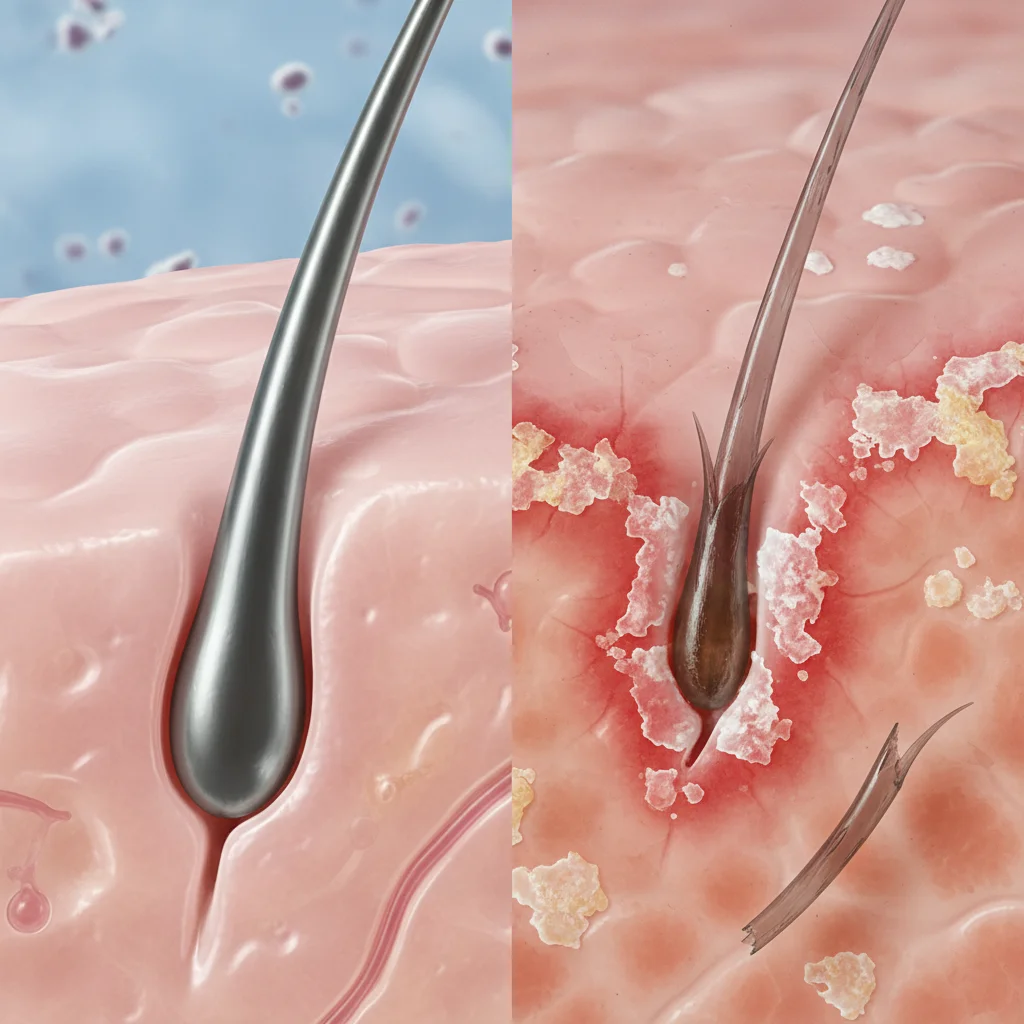
- The Itch-Scratch Cycle: The inflammation caused by dandruff leads to relentless itching. Frequent, vigorous scratching can physically damage hair follicles, weakening the hair shaft and causing strands to break off at the scalp. This type of hair loss is mechanical, not follicular.
- Follicle Inflammation: In more severe cases like seborrheic dermatitis, the inflammation can extend into the hair follicles. This inflamed environment can disrupt the normal hair growth cycle, potentially pushing more hairs into the shedding (telogen) phase prematurely. This condition is known as telogen effluvium.
- Blocked Follicles: A buildup of dead skin cells and sebum could theoretically clog hair follicles, potentially hindering new hair growth, though this is a less common primary cause.
Crucially, this type of hair loss is usually temporary. Once the scalp inflammation is controlled and the itching stops, hair often regrows normally, provided the follicles haven’t been permanently scarred from extreme damage.
Dandruff vs. Other Hair Loss Causes: A Diagnostic Table
Because hair loss has many potential causes, it’s vital not to automatically blame dandruff. The table below helps distinguish dandruff-related shedding from other common conditions.
| Condition | Primary Cause | Key Symptoms | Link to Hair Loss |
|---|---|---|---|
| Dandruff/Seborrheic Dermatitis | Yeast overgrowth, inflammation | White or yellow flakes, itchy scalp, redness | Indirect. Caused by scratching or severe inflammation. |
| Androgenetic Alopecia | Genetics, hormones | Gradual thinning at crown/temples, receding hairline | Direct. Miniaturization of follicles over time. |
| Alopecia Areata | Autoimmune disorder | Sudden, smooth, circular bald patches | Direct. Immune system attacks hair follicles. |
| Telogen Effluvium | Stress, illness, medication | Diffuse, overall thinning & increased shedding | Direct. Shock to system pushes hairs into shed phase. |
| Tinea Capitis (Scalp Ringworm) | Fungal infection | Scaly patches, black dots (broken hairs), inflammation | Direct. Fungus invades the hair shaft. |
If your hair loss is patchy, rapidly progressing, or accompanied by burning or pain, consult a dermatologist immediately to rule out other causes. For instance, symptoms like a severe sore throat could indicate an unrelated systemic issue; learn more about common infections in our guide on symptoms of strep throat.
Effective Strategies to Treat Dandruff and Protect Hair
The good news is that by managing dandruff effectively, you can halt the cycle of itching and breakage, thereby creating an optimal environment for hair retention and regrowth. Here is a practical action plan:
1. Use Medicated Shampoos Correctly:
* Look for Active Ingredients: Zinc pyrithione, selenium sulfide, ketoconazole, salicylic acid, or coal tar.
* Method Matters: Lather and leave the shampoo on your scalp for 3-5 minutes before rinsing to allow active ingredients time to work.
* Rotate Products: If one type loses effectiveness, switch to another with a different active ingredient to prevent resistance.
2. Adopt a Scalp-Friendly Hair Care Routine:
* Wash Regularly: Frequent washing removes excess oil and flakes. Contrary to myth, it does not cause hair loss.
* Be Gentle: Avoid aggressive scrubbing with nails. Use fingertips to massage shampoo in.
* Limit Heat & Harsh Styles: Tight ponytails and high heat can cause traction alopecia and breakage, compounding any dandruff-related shedding.
3. Consider Lifestyle and Dietary Support:
* Manage Stress: High stress can worsen both dandruff and hair loss. Practices like meditation can help.
* Review Diet: While direct links are complex, a balanced diet rich in antioxidants supports overall skin and hair health. For insights on nutrient-rich foods, explore our comparison of blueberries vs raspberries.
* Stay Hydrated: Adequate water intake is fundamental for skin cell health.
When to See a Doctor
You should seek professional medical advice if:
* Over-the-counter shampoos provide no relief after several weeks.
* Your scalp is extremely red, swollen, or painful.
* Hair loss is severe, in distinct patches, or continues after dandruff clears.
* You notice signs of infection (oozing, crusting).
A dermatologist can provide prescription-strength treatments, such as topical steroids or antifungal solutions, and accurately diagnose any underlying hair loss condition.
The Final Verdict
Therefore, to answer the pressing question: dandruff does not directly cause permanent hair loss. However, the secondary effects of intense scratching and inflammation can absolutely lead to noticeable, temporary hair shedding and breakage. The cornerstone of prevention is proactive and consistent dandruff management. By treating the root cause of the scalp irritation, you eliminate the trigger for mechanical hair damage, thereby allowing your hair to grow in a healthy, undisturbed environment.
For more information on the scientific understanding of hair and scalp conditions, you can refer to resources like the American Academy of Dermatology. Remember, a calm scalp is the foundation for a full head of hair.

