
Strangulated Hernia: Emergency Signs & Care
Strangulated Hernia: A Life-Threatening Surgical Emergency
A hernia occurs when an organ or tissue pushes through a weak spot in the surrounding muscle or connective tissue. While many hernias are manageable, a strangulated hernia represents a dire medical crisis. This condition arises when the herniated tissue becomes trapped and its blood supply is cut off. Consequently, this leads to tissue death (gangrene) and can cause severe, life-threatening infection within hours. Understanding the signs and acting with urgency is paramount.
What is a Strangulated Hernia?
Firstly, it’s crucial to distinguish a strangulated hernia from a more common, reducible one. A reducible hernia can often be pushed back into the abdomen, at least temporarily. In contrast, a strangulation means the protruding tissue is tightly constricted by the opening it passed through, severing its blood flow. This ischemic tissue quickly begins to die, releasing toxins and creating a risk for perforation and peritonitis—a severe abdominal cavity infection.
The Path to Strangulation: How It Happens
Typically, strangulation is a complication of an untreated or incarcerated hernia. An incarcerated hernia is one that is trapped and cannot be pushed back but is not yet strangulated. However, because the blood supply is compromised at this stage, it can rapidly progress to strangulation. This process underscores why any sudden change in a known hernia demands immediate medical evaluation.
Critical Symptoms and Warning Signs
Recognizing the symptoms of a strangulated hernia can be the difference between a routine surgery and a catastrophic medical event. If you have a hernia and experience any of the following, seek emergency care immediately.
- Sudden, Severe Pain: The pain often intensifies quickly and is typically constant and sharp, unlike the dull ache of a simple hernia.
- Nausea and Vomiting: These are common signs as the bowel becomes obstructed and the body reacts to the crisis.
- Fever and Rapid Heart Rate: These indicate your body is fighting a developing infection or systemic inflammation.
- Hernia Site Changes: The bulge may become firm, tender, and dark red or purplish. It will not reduce (go back in) with gentle pressure.
- Inability to Pass Gas or Have a Bowel Movement: This signals a possible bowel obstruction, a direct consequence of the strangulation.
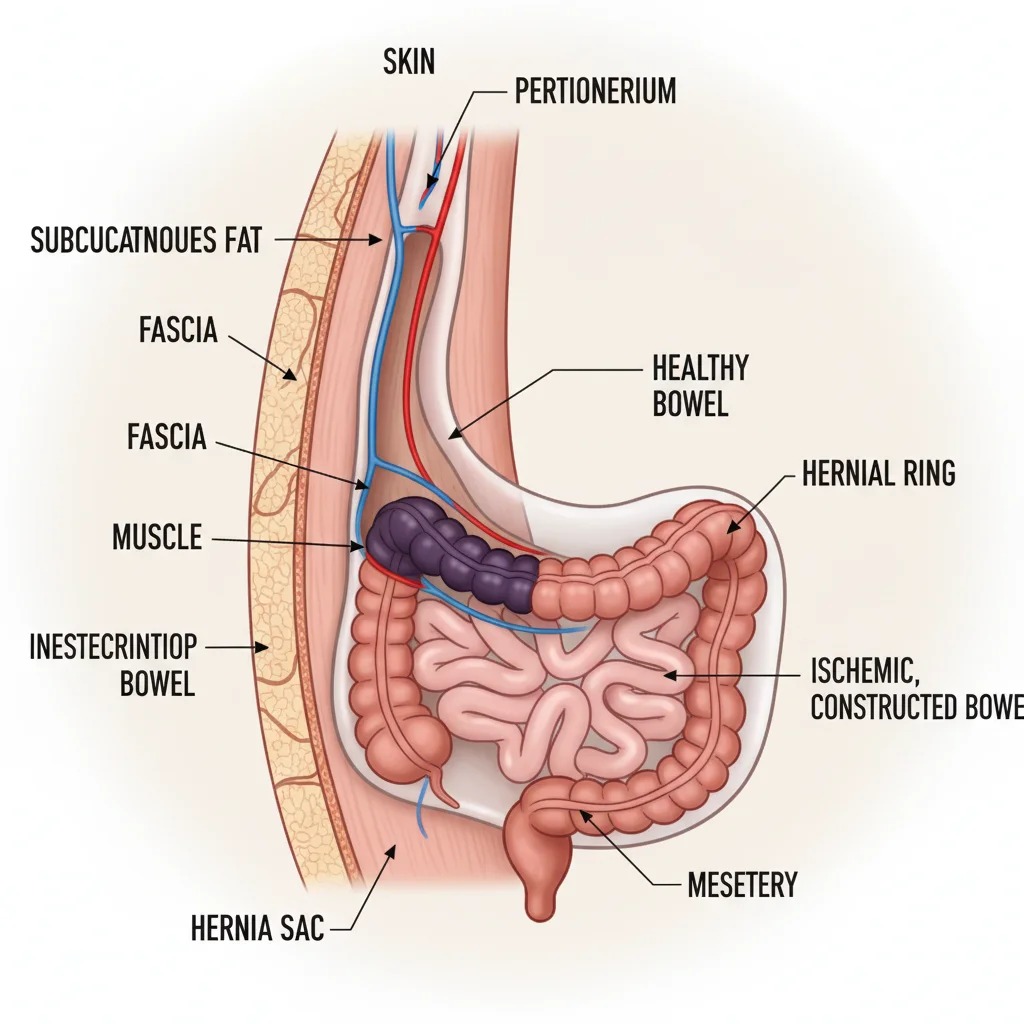
Why Immediate Surgery is Non-Negotiable
A strangulated hernia is a true surgical emergency. There is no medication, diet, or lifestyle change that can reverse it. The only treatment is emergency surgery to:
1. Release the trapped tissue.
2. Restore blood flow.
3. Remove any dead (necrotic) bowel or tissue.
4. Repair the hernia defect.
Delaying surgery drastically increases the risk of sepsis, a body-wide infection that can lead to organ failure and death. The surgical approach may be open or laparoscopic, depending on the patient’s condition and the surgeon’s assessment.
Potential Complications of Delay
If treatment is not sought urgently, the consequences are severe:
* Gangrene: Death of the intestinal tissue.
* Perforation: A hole in the dead bowel wall.
* Peritonitis: Infection of the abdominal lining.
* Sepsis: A life-threatening response to infection.
* Death.
Risk Factors and Prevention
While not all hernias can be prevented, understanding risk factors can guide proactive management. Moreover, maintaining a healthy weight and using proper lifting techniques are key preventive strategies. Notably, chronic constipation and persistent coughing can increase abdominal pressure and hernia risk; therefore, managing conditions like symptoms of strep throat or other illnesses that cause severe coughing is wise.
Common Risk Factors Include:
* A previous hernia or family history of hernias.
* Chronic cough or COPD.
* Chronic constipation or straining.
* Obesity, which increases abdominal pressure.
* Heavy lifting or strenuous physical activity.
* Pregnancy.
If you are diagnosed with a reducible hernia, your doctor will discuss watchful waiting versus elective repair to prevent the future risk of strangulation. Elective surgery is typically far safer and has an easier recovery than emergency surgery for strangulation.
Diagnosis and Treatment Pathway
In the emergency setting, diagnosis is swift. A physical examination revealing a tender, irreducible bulge is often sufficient. However, imaging tests like an abdominal CT scan or ultrasound are frequently used to confirm the diagnosis, assess blood flow, and check for bowel obstruction.
Immediate Treatment Steps:
1. Emergency Department Evaluation: Rapid assessment of vital signs and symptoms.
2. IV Fluids and Antibiotics: Administered to combat dehydration and prevent infection.
3. Surgical Consultation: An emergency general surgeon is called.
4. Emergency Hernia Repair Surgery: The definitive and only curative treatment.
Recovery from emergency hernia surgery is generally longer than from an elective procedure, primarily due to the presence of infection and the potential need for bowel resection.
Strangulated Hernia vs. Other Hernia Types
The table below clarifies the key differences between hernia types, highlighting why strangulation is uniquely dangerous.
| Feature | Reducible Hernia | Incarcerated Hernia | Strangulated Hernia |
|---|---|---|---|
| Definition | Bulge can be pushed back into abdomen. | Bulge is trapped, cannot be pushed back. | Bulge is trapped AND blood supply is cut off. |
| Pain Level | Mild discomfort or ache. | Moderate to severe pain. | Sudden, severe, and constant pain. |
| Tenderness | May be slightly tender. | Tender to touch. | Extremely tender, painful. |
| Color of Bulge | Normal skin color. | May be red. | Dark red, purple, or discolored. |
| Systemic Symptoms | None. | Possible nausea. | Nausea, vomiting, fever, rapid heart rate. |
| Treatment | Elective surgery or watchful waiting. | Urgent surgery required. | EMERGENCY SURGERY REQUIRED. |
Living with a Hernia: When to See a Doctor
If you have a known hernia, monitor it closely. You should seek immediate medical attention if the bulge becomes painful, hard, or cannot be pushed back in, or if you develop nausea or fever. Do not attempt to force it back in, as this can cause further injury.
For general health maintenance, which can indirectly support tissue strength and recovery, exploring topics like the nutritional value of graham crackers or understanding blood sugar levels can be part of a balanced approach to wellness.
Conclusion: Act Fast, Save Lives
In summary, a strangulated hernia is a time-sensitive medical disaster. Its hallmark signs—sudden severe pain, a discolored irreducible bulge, and systemic illness—demand an immediate trip to the emergency room. There is no safe wait-and-see approach. Consequently, knowing these symptoms and acting without delay is the most critical step in preventing severe complications and saving lives. If you suspect a strangulated hernia, every minute counts.