
Does Sunscreen Prevent Tanning? All Truth Full Guide
Does Sunscreen Prevent Tanning? The Truth About SPF and Your Skin
For many, a sun-kissed glow is a coveted summer goal. Consequently, a common question arises: does sunscreen prevent tanning? The answer is more nuanced than a simple yes or no. Sunscreen is designed to protect your skin from harmful ultraviolet (UV) radiation, which is the very same energy that triggers tanning. Therefore, while a high-SPF sunscreen significantly reduces tanning, it does not completely block it if you are exposed to intense or prolonged sunlight.
Understanding this requires a look at how tanning and sunscreen actually work. Moreover, knowing the difference between protection and prevention can help you make smarter, healthier choices for your skin in the sun.
How Tanning Works: Your Skin’s Defense Mechanism
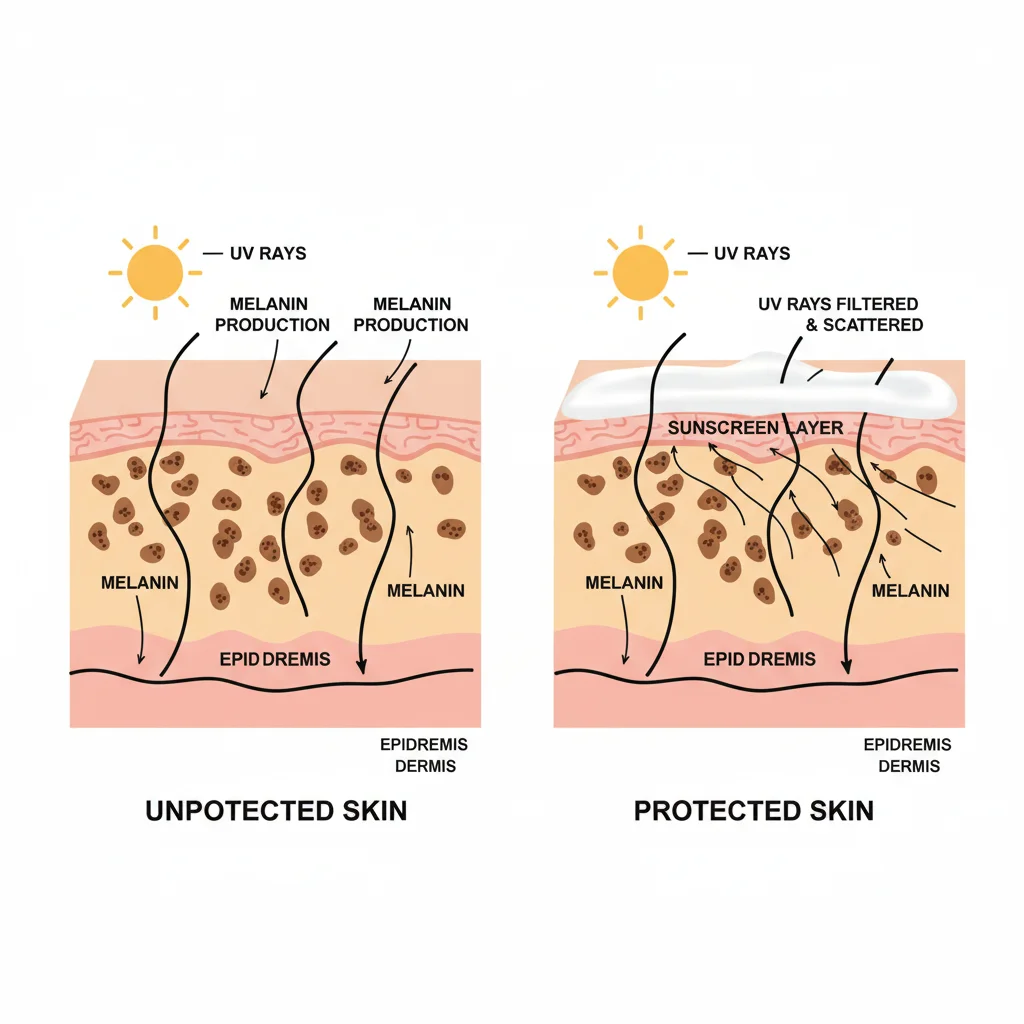
Firstly, it’s crucial to understand that a tan is a sign of skin damage. When your skin is exposed to UV rays, it produces more melanin—the pigment that gives skin its color—in an attempt to shield deeper layers from harm. This process is your body’s natural defense against further injury.
- UVB Rays: Primarily responsible for sunburn. They affect the skin’s outer layers.
- UVA Rays: Penetrate deeper into the skin. They are the primary drivers of tanning, skin aging, and contribute to skin cancer risk.
A tan, therefore, indicates that your skin cells have been injured by UV radiation. This is a critical point, because seeking a “base tan” is not a safe practice.
How Sunscreen Interferes with the Tanning Process
Sunscreen acts as a protective filter. It contains active ingredients that either absorb, scatter, or reflect UV rays before they can penetrate the skin and trigger melanin production.
The level of tanning prevention depends on several key factors:
- SPF (Sun Protection Factor): This number primarily indicates protection against UVB rays (burning). An SPF 30 filters about 97% of UVB rays, while SPF 50 filters about 98%. No sunscreen blocks 100%.
- Broad-Spectrum Coverage: This is arguably more important for preventing a tan. A “broad-spectrum” label means the product also protects against UVA rays, which cause tanning and aging.
- Application Amount and Frequency: Most people apply only 25-50% of the recommended amount. Insufficient or infrequent application leaves skin vulnerable, allowing tanning to occur.
Sunscreen Efficacy & Tanning Potential
The table below illustrates how proper sunscreen use influences your likelihood of tanning or burning.
| Factor | High Tanning/Burning Risk | Low Tanning/Burning Risk |
|---|---|---|
| SPF Level | SPF 15 or lower | SPF 30 or higher (Broad-Spectrum) |
| Application | Thin, single application | Generous amount (shot glass for body), reapplied every 2 hours |
| Water/Sweat | Not water-resistant | Water-resistant (40-80 minute rating) |
| UV Index | High (6+) exposure | Low to moderate exposure, seeking shade |
| Result | Tanning/Sunburn is likely | Tanning is minimized, protection is high |
Can You Still Tan While Wearing Sunscreen?
Yes, you can. Because sunscreen is not a total sun block, some UV radiation will inevitably reach your skin, especially during long periods outdoors. This is particularly true if you are using a product with low UVA protection (not broad-spectrum) or if you are not reapplying it diligently after swimming, sweating, or towel-drying.
Therefore, if your goal is to avoid a tan completely, you must combine high-SPF, broad-spectrum sunscreen with other protective measures: seeking shade, wearing protective clothing, a wide-brimmed hat, and avoiding peak sun hours (10 a.m. to 4 p.m.).
The Health Implications: Why Preventing Tanning Matters
Choosing to prevent a tan is a health-conscious decision. The Skin Cancer Foundation emphasizes that cumulative UV exposure, including that which causes tanning, significantly increases your risk for skin cancers like melanoma, as well as premature aging (wrinkles, sun spots). Additionally, for those with sensitive skin or conditions like melasma, preventing tanning is a key part of management.
If you’re seeking a glow without the risk, consider sunless tanning products. For holistic health, protecting your skin complements other wellness choices, such as exploring the benefits of a nutrient-rich diet outlined in our guide to the nutritional value of graham crackers or soothing your body with natural remedies like chamomile tea.
Key Takeaways for Smart Sun Protection
- Sunscreen reduces tanning but does not eliminate it. Think of it as a filter, not a force field.
- For maximum tan prevention, use a high-SPF (30+), broad-spectrum sunscreen.
- Apply generously and reapply often. This is the most common failure in sun protection.
- A tan is not a sign of health; it’s a sign of skin injury. The safest tan is one from a bottle.
- Complement sunscreen with shade and clothing for the best possible protection.
Ultimately, sunscreen is your first line of defense. It allows you to enjoy the outdoors while dramatically reducing—though not perfectly preventing—the tanning process. By understanding its limits and using it correctly, you can protect your skin’s health and appearance for years to come.