
Does Rogaine Work with Hair Regrowth Full Guide
Does Rogaine Work? The Science Behind Minoxidil for Hair Loss
If you’re noticing thinning hair or a receding hairline, you’ve likely encountered Rogaine. This over-the-counter treatment is a household name, but the central question remains: does Rogaine work? The answer is nuanced, but grounded in decades of scientific research. In short, yes, Rogaine can be effective for certain types of hair loss, particularly when used correctly and with realistic expectations. This guide will break down how it works, who it helps, and what you need to know before starting.
What is Rogaine and How Does It Work?
Rogaine is the brand name for the drug minoxidil. Originally developed as an oral medication for high blood pressure, researchers discovered a surprising side effect: increased hair growth. Consequently, a topical formulation was created specifically for treating hair loss.
Its exact mechanism isn’t fully understood, but minoxidil is believed to work in several key ways:
* Vasodilation: It widens blood vessels around hair follicles, improving blood flow and delivering more oxygen and nutrients.
* Prolonging Anagen Phase: It may extend the growth phase (anagen) of the hair cycle, allowing hairs to grow longer and thicker.
* Stimulating Follicles: It appears to awaken shrunken (miniaturized) hair follicles and encourage them to produce thicker, terminal hairs.
It’s crucial to understand that Rogaine is a treatment, not a cure. Its effects are sustained only as long as you continue using it.
The Evidence: What Does the Research Say?
Clinical studies and real-world use provide a clear picture of Rogaine’s effectiveness. According to the American Academy of Dermatology, minoxidil is an FDA-approved treatment for androgenetic alopecia (pattern hair loss) in both men and women.
For Men: The 5% foam or solution is typically recommended. Studies show it can stop hair loss in roughly 4 out of 5 men with male pattern baldness and lead to moderate to dense hair regrowth in about 2 out of 5 men after 3-6 months of consistent use.
For Women: The 2% or 5% solution is used. Research indicates it can help stop or slow hair loss in the majority of women and promote regrowth in over 1 in 4 women with female pattern hair loss.
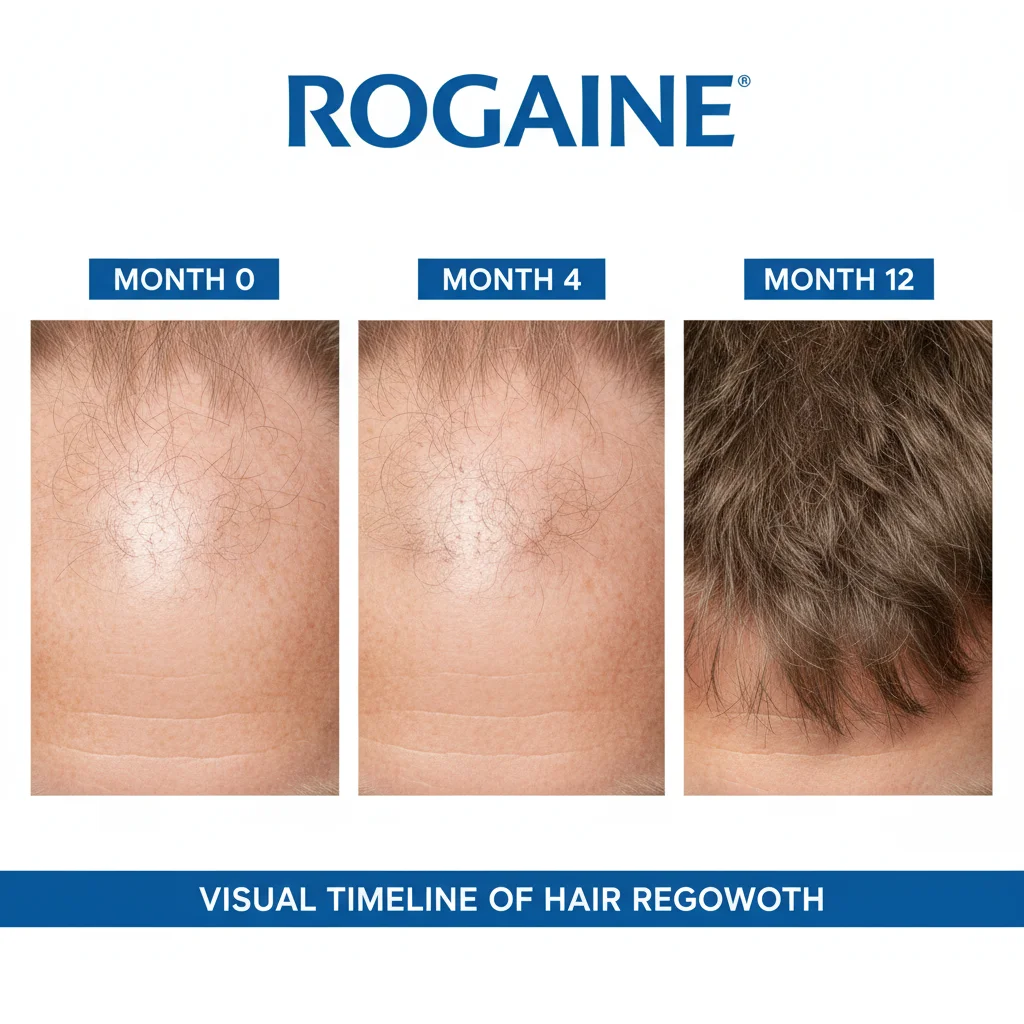
Expected Results Timeline
Managing expectations is critical. Hair growth is a slow process, and results are not immediate.
| Time Period | What to Typically Expect |
|---|---|
| 0-2 Months | Often a “dread shed.” This is actually a positive sign that minoxidil is working, pushing out old, weak hairs to make way for new growth. |
| 4-6 Months | Initial regrowth may become visible. New hairs are often fine and light-colored at first. |
| 8-12 Months | Peak results are usually seen. Hairs should become thicker, darker, and more numerous. |
| Ongoing Use | Continuous application is required to maintain the benefits. Stopping treatment will reverse progress within a few months. |
Who is Rogaine For? (And Who It Might Not Help)
Rogaine is primarily designed for androgenetic alopecia, the common hereditary pattern hair loss that affects the crown and mid-scalp in men and causes diffuse thinning in women. It is less effective for:
* A completely bald scalp (where follicles have been inactive for years).
* Hair loss caused by autoimmune conditions like alopecia areata.
* Hair loss from traumatic stress (telogen effluvium), though it can sometimes be used adjunctively.
* Receding hairlines (frontal baldness) in men, where it shows limited efficacy.
Important: Before starting any new treatment, it’s wise to investigate the root cause of a health concern. For instance, fatigue or other symptoms alongside hair loss could warrant a broader look at wellness, similar to how one might research best brain health supplements for cognitive support.
How to Use Rogaine for Best Results
Effectiveness hinges on correct and consistent application.
1. Apply to a Dry, Clean Scalp: The area must be clean and completely dry for optimal absorption.
2. Use the Recommended Dose: Typically 1mL for liquid or a half-capful of foam, applied directly to the scalp (not the hair).
3. Massage Gently: Use your fingers to spread the solution and lightly massage it in.
4. Be Patient and Consistent: Apply twice daily, every day. Skipping applications reduces efficacy.
5. Avoid Washing: Wait at least 4 hours after application before washing your hair or going to bed.
Potential Side Effects and Considerations
Most users tolerate Rogaine well, but potential side effects include:
* Scalp Irritation: Itching, dryness, flaking, or redness. Using the foam formulation can reduce this risk compared to the liquid, which contains propylene glycol.
* Unwanted Facial Hair: If the solution drips onto the face, it can cause hair growth in those areas.
* Initial Shedding: As mentioned, this is common and usually temporary.
* Heart-Related Effects: Rare, but minoxidil is a vasodilator. Those with heart conditions should consult a doctor first.
For minor scalp irritation, some find relief with natural remedies, much like using chamomile tea for its soothing properties, though for the scalp, a gentle, fragrance-free moisturizer is advised.
The Bottom Line: Is Rogaine Worth Trying?
So, does Rogaine work? Yes, for the right candidate with the right expectations. It is a proven, accessible first-line treatment for hereditary pattern hair loss. However, success requires a long-term commitment of at least 6-12 months of twice-daily use.
For many, it can successfully slow or stop hair loss and stimulate meaningful regrowth. Therefore, if you have early-stage androgenetic alopecia and are prepared for a dedicated regimen, Rogaine is certainly a viable option worth discussing with a dermatologist. Remember, because hair health is multifaceted, a holistic approach that includes good nutrition and stress management will always support your efforts.

