
Chris Craft Runabout: American Icon
The Timeless Allure of the Chris Craft Runabout
For generations, the name Chris Craft Runabout has been synonymous with classic American boating elegance, speed, and craftsmanship. These iconic wooden powerboats represent more than mere vessels; they are floating pieces of art and history. Consequently, understanding their story reveals why they remain coveted collector’s items and symbols of a bygone era of leisure.
A Brief History: From Humble Beginnings to Nautical Icon
The story begins with Christopher Columbus Smith, who started building boats in Michigan in the late 19th century. Initially, his focus was on practical duck hunting skiffs. However, with the advent of the internal combustion engine, Smith and his sons saw a new opportunity. They began crafting fast, elegant runabouts for the burgeoning leisure market. By the 1920s and 1930s, Chris Craft had become the world’s largest producer of motorboats, setting the standard for quality. Moreover, their use during World War II for patrol and utility work cemented their reputation for rugged dependability.
What Defines a Chris Craft Runabout?
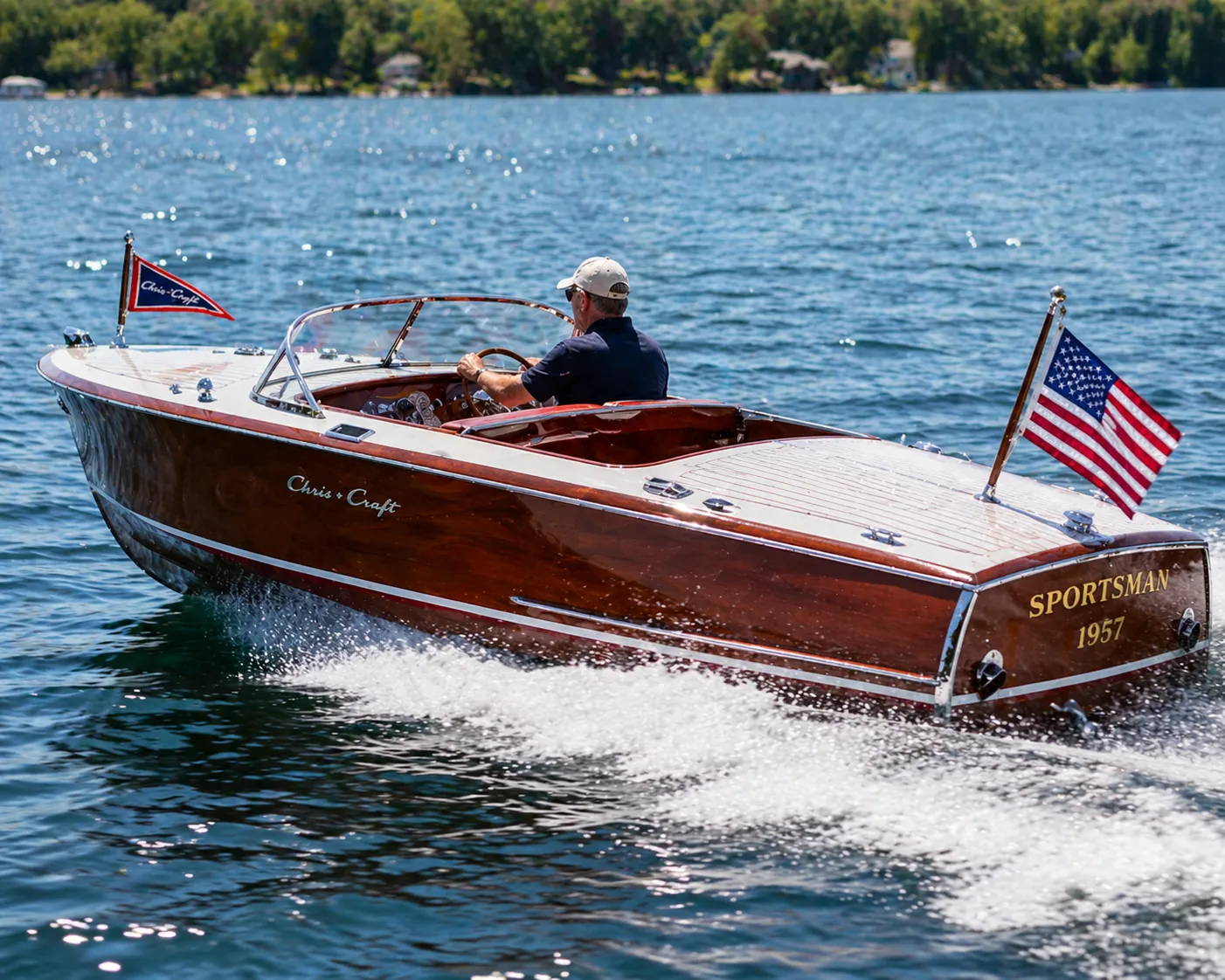
A true classic Chris Craft Runabout is characterized by several distinct features. Firstly, its construction is typically mahogany planking over oak frames, a hallmark of pre-fiberglass boatbuilding. This results in a warm, gleaming finish that is unmistakable. Secondly, the design almost always includes a sleek, varnished deck, a forward cockpit, and a powerful inboard engine. The overall aesthetic balances graceful lines with a sense of robust power. Additionally, the signature chrome hardware and detailed instrumentation complete the luxurious feel.
Iconic Models Through the Decades
To appreciate the evolution, it’s helpful to look at some of the most celebrated models.
| Model Era | Key Characteristics | Why It’s Iconic |
|---|---|---|
| 1930s Barrelback (e.g., 19′ Sportsman) | Rounded, “barrel-shaped” aft hull; Art Deco styling; Triple cockpit layout. | Considered one of the most beautiful boat designs ever; epitomizes pre-war glamour. |
| 1950s “Cobra” (e.g., 20′ Sportsman) | Sleeker, sharper lines; “Cobra” engine options; Two-tone color schemes. | Represented post-war optimism and power; a favorite of celebrities and sportsmen. |
| 1960s Continental (e.g., 23′ Super Sport) | Lapstrake (ribbed) hull; Convertible top; More spacious cockpit. | Marked the transition to more family-friendly, yet still high-performance, luxury runabouts. |
The Legacy and Modern Appeal
The appeal of these classic boats is multifaceted. Primarily, they offer a tangible connection to a romanticized period of American history. Owning and restoring one is a passionate hobby, akin to caring for a classic car. Furthermore, the community of enthusiasts is vast and dedicated, sharing knowledge on preserving these wooden treasures.
Interestingly, the meticulous care required for varnished wood is not unlike the attention needed for specialized natural health products, such as understanding the nuances of raw food nuts or the unique properties of dried dandelion root. Both pursuits demand a deep appreciation for natural materials and traditional methods.
Considerations for Potential Owners
If the dream of owning a Chris Craft Runabout captivates you, several important factors must be considered. Firstly, restoration and maintenance are significant commitments. The wood requires constant care, and sourcing original parts can be a challenge. Secondly, operational costs for fuel and insurance are notable.
Therefore, it is crucial to connect with the classic boating community and potentially hire a marine surveyor expert in wooden boats before purchasing. Ultimately, the reward is the unparalleled experience of piloting a living piece of history.
In conclusion, the Chris Craft Runabout stands as a pinnacle of recreational boat design. Its blend of artistry, engineering, and nostalgia ensures its place in the pantheon of American icons.
Whether seen gliding across a lake at a boat show or meticulously detailed in a boathouse, it continues to capture imaginations and inspire a love for classic craftsmanship on the water.