
Chameleon Craft Ideas & Benefits – Full Guide
The Colorful World of Chameleon Craft: A Creative Guide
Engaging in chameleon craft is a wonderfully creative activity that blends art, education, and fun. This versatile theme is perfect for children’s projects, classroom activities, or even sophisticated adult DIY decor. Consequently, it offers a unique way to explore color theory, animal biology, and artistic expression. This guide will provide you with inspiring ideas and practical steps to bring your own chameleon creations to life.
Why Choose a Chameleon Craft Project? 🦎
Firstly, chameleons are fascinating creatures, known for their ability to change color and their distinctive physical features. Crafting a chameleon, therefore, serves as an excellent educational springboard. Moreover, the project inherently encourages creativity with color and texture. For parents and educators looking for engaging animal-themed activities, a chameleon craft can be a perfect complement to other nature projects, such as our guide to snowman crafts preschool.
Key Educational Benefits
- Fine Motor Skills: Cutting, gluing, and painting develop hand-eye coordination.
- Color Learning: Experimenting with hues teaches color mixing and recognition.
- Biology Introduction: Sparks curiosity about reptiles, habitats, and adaptation.
- Creative Confidence: Following steps to create a unique art piece builds pride and accomplishment.
Simple & Fun Chameleon Craft Ideas
Whether you’re crafting with young children or seeking a more detailed project, there is a chameleon craft for every skill level. Here are some popular ideas to get you started.
1. Paper Plate Chameleon
This is a fantastic, low-mess project ideal for preschoolers and kindergarteners.
You will need:
* One paper plate
* Green, yellow, and blue paint
* Googly eyes
* Pipe cleaner (for the tail)
* Scissors and glue
Instructions:
Firstly, cut the paper plate into a spiral shape, starting from the outer edge and working toward the center—this forms the chameleon’s body. Next, let your child paint it with vibrant colors. After the paint dries, glue on googly eyes and attach a curled pipe cleaner to the innermost part of the spiral to act as the tail. This project is wonderfully simple, yet the result is a dynamic, curly chameleon that seems to move.
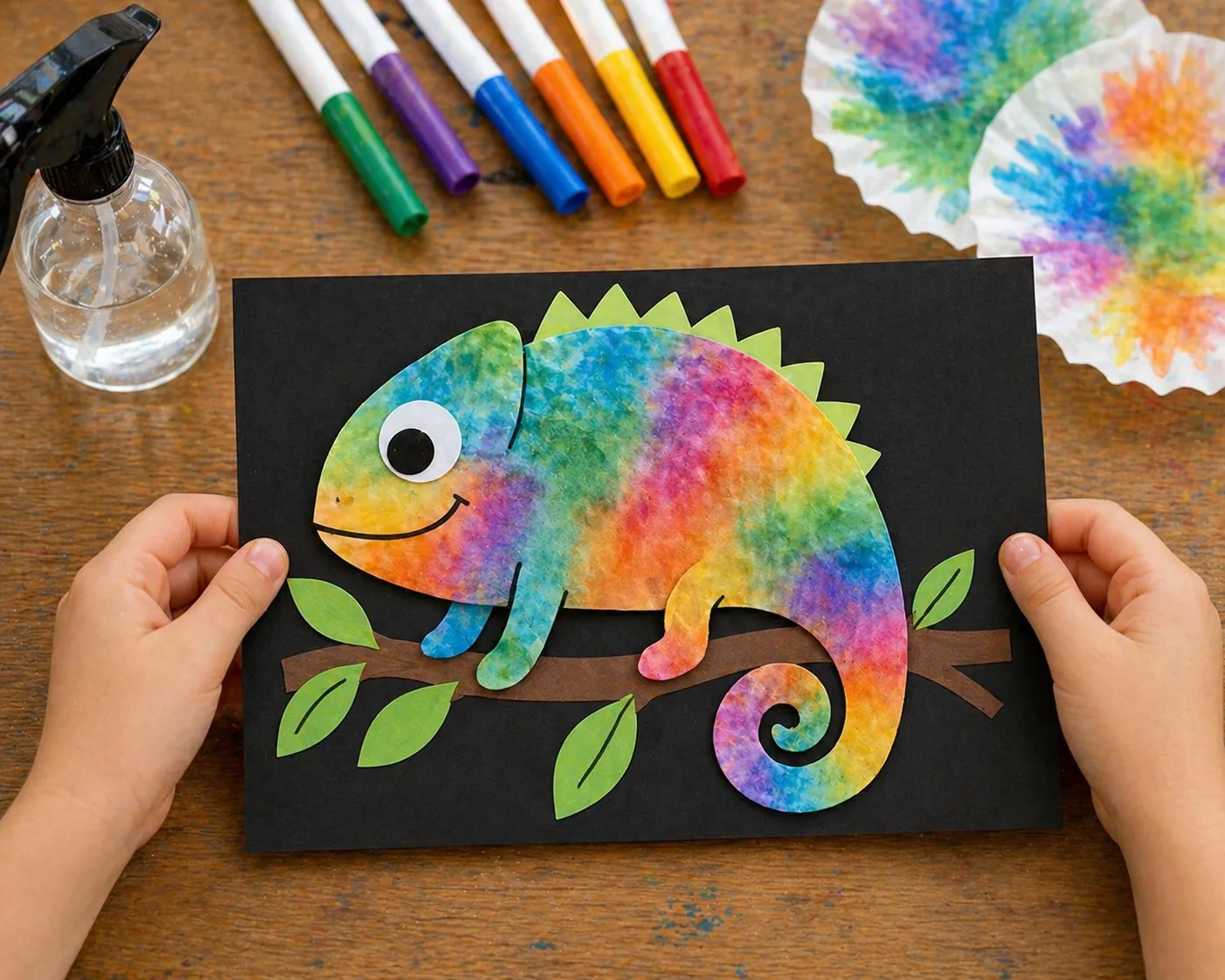
2. Coffee Filter Color-Bleed Chameleon
This craft beautifully demonstrates color mixing, much like the real chameleon’s changing skin.
You will need:
* White coffee filters
* Washable markers
* A spray bottle with water
* Black construction paper
* Glue
Instructions:
Begin by having children color a coffee filter heavily with patches of different colored markers. Subsequently, lightly spray the filter with water and watch the colors bleed and blend in a mesmerizing way—similar to the process in some snowflake crafts for kindergarten.
Once dry, cut the filter into a chameleon body shape and glue it onto black paper for a stunning contrast. Finally, add details like legs and an eye with marker or paper scraps.
Advanced Chameleon Craft: 3D Model for Older Kids
For a more challenging project, creating a 3D chameleon from recycled materials can be incredibly rewarding.
Materials & Steps Overview:
| Material | Purpose | Creative Tip |
|---|---|---|
| Cardboard Egg Carton | To form the chameleon’s textured back and head. | Cut individual cups for the dome-shaped eyes and spine bumps. |
| Acrylic Paints | For a vibrant, long-lasting color. | Use a dry-brush technique to highlight the textured surfaces. |
| Chenille Stems (Pipe Cleaners) | To create bendable legs and a gripping tail. | Twist two stems together for stronger, posable limbs. |
| Hot Glue Gun | For secure assembly. | Adult supervision is required for this step. |
The process involves constructing the body from the egg carton cups, painting with intricate patterns, and then attaching the limbs. This project encourages planning, structural thinking, and detailed artistry.
Incorporating Chameleon Craft into Learning Themes
A chameleon craft isn’t just an isolated art activity; it can be the centerpiece of a broader educational unit. For instance, you can pair it with lessons on:
* Habitats: Discuss the rainforests where many chameleons live.
* Diet: Learn about insects, linking to a discussion on protein sources, similar to exploring can pregnant women eat shrimp for human nutrition.
* Color Science: Explore why chameleons really change color—primarily for communication and temperature regulation, not just camouflage. This is a great opportunity to reference authoritative sources like the Smithsonian National Zoo’s reptile facts.
Frequently Asked Questions (FAQs) – Chameleon Craft
1. What is a chameleon craft?
A chameleon craft is a fun art project where kids create a chameleon using paper, paint, cardboard, or recycled materials.
2. Why are chameleon crafts popular for kids?
They are colorful, creative, and help children learn about animals, camouflage, and nature.
3. What age group can do chameleon crafts?
Chameleon crafts are great for preschoolers, kindergarteners, and elementary school children.
4. What materials are needed for a chameleon craft?
Common materials include colored paper, glue, scissors, markers, googly eyes, paint, and pipe cleaners.
5. What is the easiest chameleon craft for preschoolers?
A paper plate or handprint chameleon craft is one of the easiest options.
6. How do you make a paper chameleon craft?
Cut a chameleon shape from paper, decorate it with colors or patterns, and add eyes and a curly tail.
7. Are chameleon crafts educational?
Yes, they help teach kids about reptiles, habitats, camouflage, colors, and creativity.
8. Can chameleon crafts be used in classrooms?
Yes, teachers often use them for rainforest, reptile, or animal learning themes.
9. How long does a chameleon craft take?
Most simple chameleon crafts take around 15 to 30 minutes.
10. Are chameleon crafts messy?
Paper crafts are usually clean, while paint crafts may be a little messy.
11. Can toddlers do chameleon crafts?
Yes, toddlers can enjoy simple coloring or sticker-based chameleon crafts with help.
12. What skills do children learn from chameleon crafts?
They learn cutting, gluing, color matching, fine motor skills, imagination, and observation.
13. Can I make a moving chameleon craft?
Yes, some crafts use clothespins, paper sliders, or spiral tails for movement.
14. Why do teachers choose chameleon crafts?
They combine fun art with science lessons about camouflage and animal adaptation.
15. How can I display a chameleon craft?
You can hang it on walls, classroom boards, windows, or create a jungle-themed display.
Tips for a Successful Crafting Session
To ensure your chameleon craft activity is enjoyable and stress-free, consider these final tips. Firstly, prepare your space by covering tables and having all materials ready. Secondly, focus on the process, not just the perfect product; the experimentation with color is the real win.
Additionally, display the finished creations proudly to validate the effort. Finally, remember that crafting can be a gateway to other interests, much like how a simple tea can lead to exploring the benefits of manzanilla tea for sore throat.
In conclusion, chameleon craft is a richly rewarding activity that stimulates creativity, learning, and fine motor development. By starting with simple paper designs and progressing to complex models, crafters of all ages can enjoy the process of bringing this remarkable reptile to life.
Therefore, gather your supplies, embrace the vibrant colors, and get ready for a wonderfully creative adventure.

