
10 Worst Foods for Prostate Health You Should Avoid
10 Worst Foods for Prostate Health (Complete Guide)
🔥 Introduction Ten worst foods for prostate health
When it comes to men’s health, prostate care is often overlooked—until problems begin. However, what many people don’t realize is that diet plays a major role in prostate health.
In fact, certain foods can increase inflammation, disrupt hormones, and even worsen prostate-related conditions over time. On the other hand, making smarter food choices can support long-term wellness and reduce risks.
So, if you’re wondering what foods might be harming your prostate, this guide breaks it down clearly and practically.
Why Diet Matters for Prostate Health
To begin with, the prostate is a small gland, but it has a big impact on men’s health—especially as you age.
As a result of poor diet habits, many men experience:
- Frequent urination
- Inflammation
- Hormonal imbalance
- Increased risk of prostate enlargement
Therefore, avoiding harmful foods is just as important as eating healthy ones.
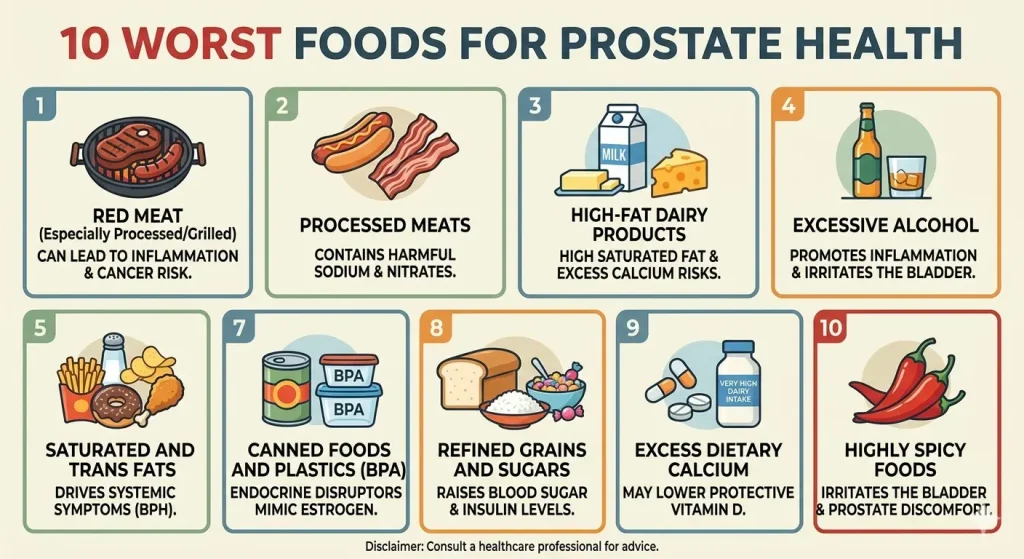
You Can Read the Topic Step By Step Below –
❌ 1. Processed Meats
🥓 Why Processed Meats Are Harmful
First of all, processed meats like bacon, sausages, and hot dogs are loaded with preservatives and unhealthy fats.
Moreover, these foods often contain nitrates and sodium, which can increase inflammation in the body.
👉 Over time, this may contribute to:
- Prostate irritation
- Increased cancer risk
- Poor overall health
❌ 2. Red Meat (Excess Consumption)
🍖 How Red Meat Affects Prostate Health
Although red meat can be part of a balanced diet, eating it too frequently can be harmful.
For instance, high intake of red meat has been linked to:
- Increased inflammation
- Hormonal imbalance
- Higher prostate cancer risk
Therefore, moderation is key.
❌ 3. Dairy Products (High Intake)
🥛 The Problem with Excess Dairy
Interestingly, several studies suggest that high dairy consumption may negatively impact prostate health.
This is because dairy products can:
- Increase calcium levels excessively
- Affect hormone balance
- Potentially raise prostate cancer risk
That said, small amounts are generally fine—but overconsumption should be avoided.
❌ 4. Fried Foods
🍟 Why Fried Foods Are Dangerous
Next, fried foods are another major culprit.
Since they are cooked in unhealthy oils, they can:
- Increase inflammation
- Lead to obesity
- Damage cells over time
As a result, they may worsen prostate-related issues.
❌ 5. Sugary Foods and Drinks
🍩 Sugar and Prostate Problems
In addition, high sugar intake is linked to multiple health issues.
Not only does it cause weight gain, but it also:
- Increases insulin resistance
- Promotes inflammation
- Weakens immune function
Consequently, this can negatively affect prostate health.
❌ 6. Alcohol (Excessive Consumption)
🍺 Alcohol and Prostate Irritation
While occasional drinking may not be harmful, excessive alcohol consumption can lead to problems.
For example, alcohol can:
- Irritate the bladder and prostate
- Disrupt hormone levels
- Increase inflammation
Therefore, limiting alcohol intake is essential.
❌ 7. Caffeine Overload
☕ Too Much Caffeine Is a Problem
Although coffee is widely consumed, too much caffeine can irritate the prostate.
As a result, you may experience:
- Frequent urination
- Increased discomfort
- Sleep disturbances
Hence, moderation is important.
❌ 8. Refined Carbohydrates
🍞 Why Refined Carbs Are Harmful
Refined carbs such as white bread, pasta, and pastries lack essential nutrients.
Moreover, they:
- Spike blood sugar levels
- Increase inflammation
- Promote weight gain
In the long run, this can negatively impact prostate health.
❌ 9. High-Sodium Foods
🧂 Salt and Prostate Issues
Another important factor is sodium intake.
Excess salt can:
- Increase blood pressure
- Cause fluid retention
- Affect urinary function
Consequently, it may worsen prostate symptoms.
❌ 10. Artificially Processed Foods
Ultra-Processed Foods and Health Risks
Finally, ultra-processed foods are among the worst for overall health.
These include:
- Packaged snacks
- Frozen meals
- Fast food
Since they contain additives and unhealthy fats, they:
- Promote inflammation
- Reduce nutrient intake
- Harm long-term health
What Should You Eat Instead?
Now that you know what to avoid, let’s focus on better choices.
🥦 Prostate-Friendly Foods:
- Leafy greens (spinach, kale)
- Tomatoes (rich in lycopene)
- Nuts and seeds
- Fatty fish (salmon, sardines)
- Fruits like berries
In contrast to harmful foods, these options help:
- Reduce inflammation
- Support hormone balance
- Improve overall health
Expert Insight
From a health perspective, many nutrition experts emphasize that chronic inflammation is one of the biggest contributors to prostate issues.
Therefore, reducing inflammatory foods while increasing nutrient-rich options can make a significant difference over time.
Additionally, lifestyle factors such as regular exercise, proper sleep, and hydration also play a crucial role.
Balanced Approach Is Key
It’s important to note that you don’t need to completely eliminate all these foods overnight.
Instead:
- Start reducing harmful foods gradually
- Replace them with healthier alternatives
- Maintain consistency
As a result, your body—and your prostate—will thank you.
Frequently Asked Questions
What foods shrink the prostate naturally?
Foods rich in antioxidants like tomatoes, berries, and green vegetables may support prostate health.
Is coffee bad for prostate health?
Moderate coffee intake is usually fine, but excessive caffeine can cause irritation.
Can diet improve prostate symptoms?
Yes, a balanced diet can help reduce inflammation and improve symptoms over time.
How fast can diet changes help?
Results vary, but improvements can be noticed within a few weeks to months.
Final Thoughts
In conclusion, your daily diet has a powerful impact on your prostate health.
While certain foods can increase inflammation and worsen symptoms, others can support healing and long-term wellness.
Therefore, by making smarter food choices today, you can protect your health for years to come.
Read Another Important Topic- Advanced Mitochondrial Formula Review & Benefits Guide
⚠️ Disclaimer
This article is for informational purposes only and should not be considered medical advice. Always consult a healthcare professional before making dietary changes.


4 thoughts on “10 Worst Foods for Prostate Health You Should Avoid”
Comments are closed.