
Aran Craft Guide: History & Modern Projects
The Timeless Art of Aran Craft: More Than Just a Sweater
Aran craft, most famously associated with the iconic cable-knit sweaters from Ireland’s Aran Islands, represents a profound tradition of textile artistry. This craft is not merely a knitting technique; it is a cultural narrative woven into every twist and cable. Historically, these intricate patterns were more than decoration—they were symbolic, often tied to family clans and local folklore.
Today, the appeal of Aran knitting has surged globally, blending deep-rooted heritage with contemporary design. Consequently, understanding its elements allows crafters to appreciate both its history and its versatile application in modern projects, from home goods to fashion accessories.
The Rich History and Symbolism of Aran Knitting
The origins of Aran knitting are steeped in the rugged, windswept life of the Aran Islands off Ireland’s west coast. While the exact timeline is debated, the craft gained significant recognition in the early 20th century. The sweaters, originally made from unscoured wool that retained its natural lanolin, were famously water-resistant, providing vital protection for fishermen.
Moreover, the intricate stitch patterns are believed to have carried symbolic meanings, though much of this is based on later interpretation. Common motifs included:
* The Cable Stitch: Often said to represent fishermen’s ropes and a wish for safety and good luck at sea.
* The Diamond Stitch: Symbolizing the small fields of the islands or representing wealth and success.
* The Honeycomb Stitch: Signifying hard work and the reward of a sweet harvest, much like the bee’s labor.
This deep connection to livelihood and identity makes Aran craft a fascinating study in how practical need evolves into artistic expression. For another craft with rich symbolic tradition, explore our guide to creating a ladybug paper plate craft with children.
Deconstructing the Classic Aran Stitch Patterns
True Aran craft is characterized by a combination of textured stitches worked simultaneously on a plain background. These patterns create a dense, warm fabric that is remarkably resilient. Below is a breakdown of the foundational stitches that every Aran knitter should master.
| Stitch Pattern | Traditional Symbolism | Visual Character | Common Use in Modern Craft |
|---|---|---|---|
| Cable (Rope) | Safety, Good Luck | Intertwining vertical columns | Sweaters, cardigans, blankets, pillows |
| Diamond (Moss) | Wealth, Success | Diamond shapes filled with texture | Center panel on sweaters, scarf sections |
| Honeycomb | Hard Work, Reward | Repeating hexagonal cells | All-over patterns for hats and cowls |
| Basketweave | The Fisherman’s Basket | Checkered, woven appearance | Borders and alternating panels |
| Zigzag (Tree of Life) | Family, Ancestry | Meandering paths or tree motifs | Statement pieces and heirloom projects |
Mastering these stitches requires patience, but the result is a fabric rich with texture and history. Firstly, beginners should start with a simple cable on a small project before attempting a full sweater. Additionally, using a quality, wool-blend yarn is crucial to achieving the classic definition and warmth.
Aran Craft in the Modern Maker’s World
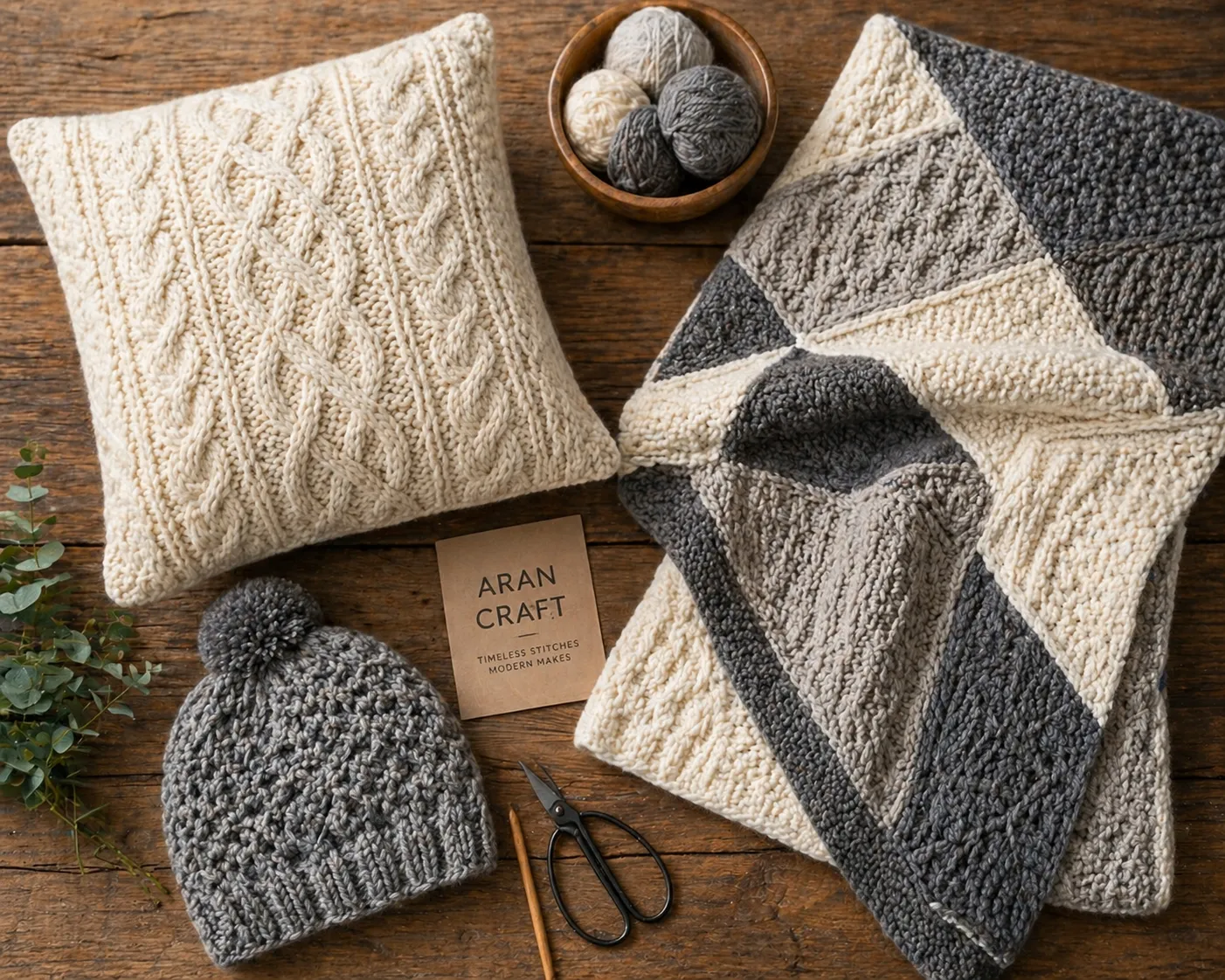
While the classic cream-colored sweater remains iconic, contemporary Aran craft has expanded far beyond its origins. Modern makers are adapting these timeless patterns into a vast array of projects, using diverse colors and yarns. This adaptability is a key reason for its enduring popularity.
For instance, you can find Aran-inspired:
* Home Decor: Cable-knit blanket patterns, textured pillow covers, and even table runners.
* Accessories: Hats, mittens, and scarves featuring isolated cable or honeycomb panels.
* Baby & Children’s Wear: Miniature Aran sweaters that are heirloom-quality gifts.
* Fashion Statements: Cardigans, vests, and even socks incorporating traditional motifs with modern silhouettes.
This evolution shows how a traditional craft can stay vibrant and relevant. Furthermore, the mindful, repetitive process of creating these patterns is often cited for its meditative and stress-relieving benefits, linking it to broader themes of wellness. For those interested in other wellness-focused practices, you might explore the benefits of green tea for hormone imbalance.
Getting Started with Your First Aran Project
Embarking on an Aran project is a rewarding endeavor. Here is a practical guide to begin your journey into this classic craft.
1. Choose the Right Materials:
The traditional material is 100% wool, specifically an oiled “Aran weight” yarn, which is medium-weight and perfect for showing stitch definition. However, for easier care, many modern crafters opt for wool blends or even high-quality acrylic. Ensure you have the correct needle size, typically listed on your yarn label or pattern.
2. Select an Appropriate Pattern:
Do not start with a complex, full-sized sweater. Instead, begin with a small, manageable project to practice the techniques.
* Beginner: A simple cable-knit headband or dishcloth.
* Intermediate: A hat or cowl incorporating two stitch patterns.
* Advanced: The classic Aran sweater or a textured blanket.
3. Master the Fundamental Techniques:
Before casting on your main project, swatch! Practice these core skills:
* Cabling: This requires a cable needle (or double-pointed needle) to hold stitches in front or behind your work. Numerous tutorials are available from authoritative sources like The Craft Yarn Council.
* Reading a Chart: Most Aran patterns use stitch charts. Learning to read them is essential for following complex designs.
* Counting Rows: Maintaining consistent pattern repeats is critical for symmetry.
4. Embrace the Process:
Aran knitting is not a race. The beauty is in the deliberate, rhythmic creation of texture. Take your time, and don’t be afraid to carefully undo rows (“tink” or “frog”) if you make a mistake—it’s part of the learning process.
Frequently Asked Questions (FAQs) – Aran Craft
1. What is Aran craft?
Aran craft is a traditional Irish knitting style famous for cable-knit sweaters and textured stitch patterns from the Aran Islands.
2. Why is Aran knitting so popular?
Aran knitting is loved for its warmth, beautiful texture, rich history, and timeless fashion appeal.
3. Where did Aran craft originate?
Aran craft originated on the Aran Islands located off the west coast of Ireland.
4. What is special about Aran sweaters?
Aran sweaters are known for their thick wool, intricate cable patterns, and symbolic stitch meanings.
5. What does the cable stitch mean in Aran knitting?
The cable stitch often symbolizes fishermen’s ropes, safety, and good luck at sea.
6. What does the diamond stitch represent?
The diamond stitch is believed to represent wealth, success, and the island fields.
7. What does the honeycomb stitch mean?
The honeycomb stitch symbolizes hard work and the sweet rewards of effort.
8. Is Aran knitting difficult for beginners?
Beginners can learn Aran knitting by starting with simple cable projects before making sweaters.
9. What yarn is best for Aran craft?
Traditional 100% wool or Aran-weight wool blends are best because they show stitch detail clearly.
10. What can I make with Aran knitting patterns?
You can make sweaters, hats, scarves, blankets, pillows, mittens, socks, and baby clothes.
11. Is Aran knitting still popular today?
Yes, Aran knitting remains popular worldwide in fashion, handmade gifts, and home décor.
12. Why is Aran knitting considered timeless?
Its classic patterns, durability, comfort, and cultural heritage make it timeless.
13. How do I start learning Aran craft?
Start with a beginner cable-knit headband, scarf, or hat and practice reading stitch charts.
14. Is Aran knitting relaxing?
Yes, many people find the repetitive knitting process calming and stress-relieving.
15. Why should I choose Aran craft?
Aran craft combines tradition, beauty, warmth, and handmade creativity in one timeless skill.
Conclusion: Weaving Tradition into Today
In conclusion, Aran craft is a beautiful bridge between past and present. Its patterns carry the echoes of Irish history while providing a endlessly adaptable framework for contemporary creativity. Whether you are knitting a classic sweater to withstand the elements or a simple cabled blanket for your home, you are participating in a living tradition.
Therefore, pick up your needles, choose a soft skein of yarn, and start creating your own piece of textured history. The journey into this craft is as rich and rewarding as the finished product itself.

