
Arts & Crafts Wallpaper -A Guide to Style & Substance
The Timeless Appeal of Arts & Crafts Wallpaper: A Guide to Style and Substance
The Arts and Crafts movement, which flourished in the late 19th and early 20th centuries, was a profound reaction against the dehumanizing effects of industrialization. It championed handcraftsmanship, natural materials, and honest design. Consequently, one of its most beautiful and enduring legacies is its distinctive wallpaper.
Arts & Crafts wallpaper is not merely a decorative backdrop; it is a statement of philosophy, bringing nature, artistry, and soul into the home.
This guide will explore the history, key characteristics, and practical ways to incorporate this timeless style into your modern living spaces.
Moreover, we will provide insights into choosing the right patterns and even embarking on your own creative projects.
What Defines Arts & Crafts Wallpaper?
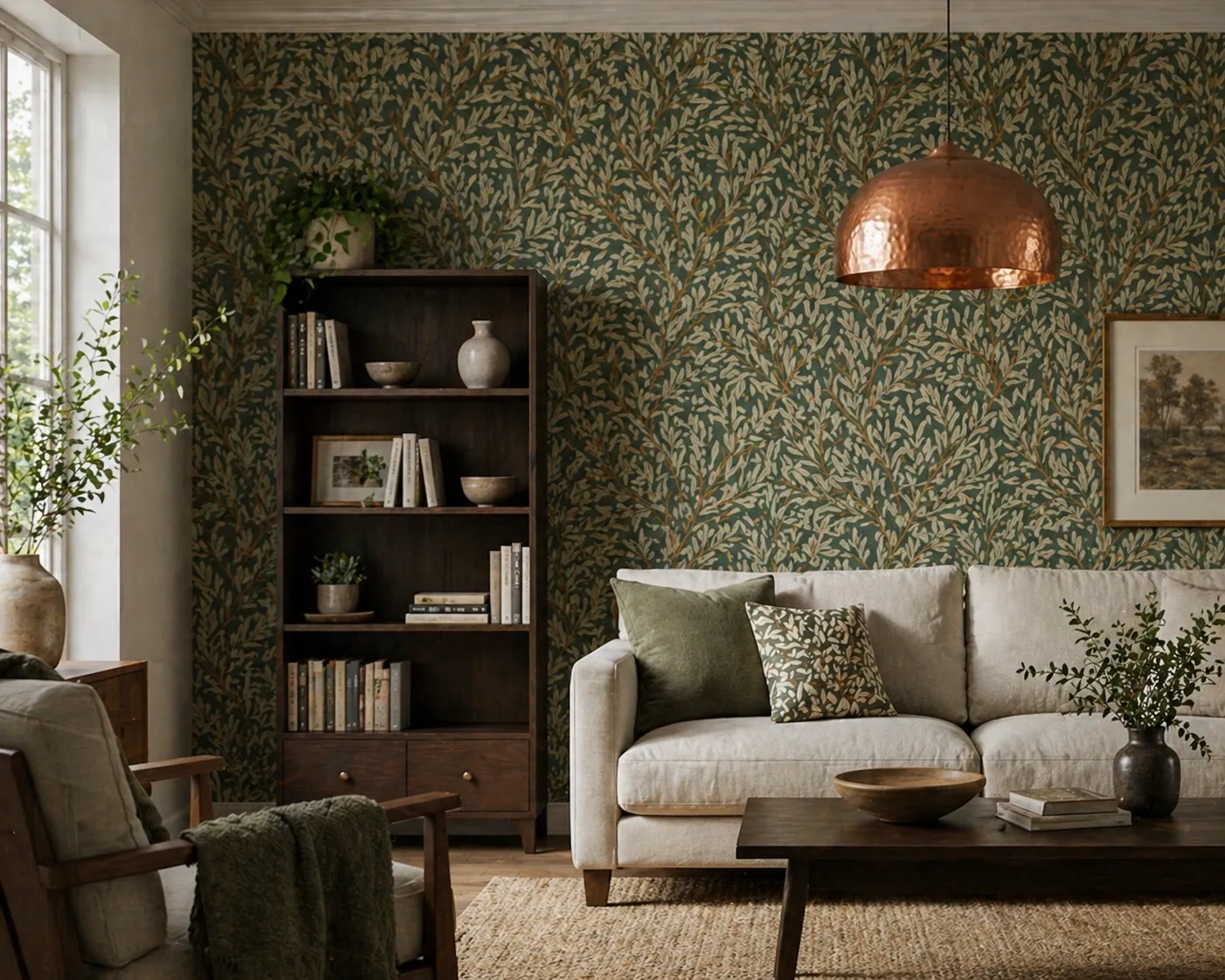
Authentic Arts & Crafts wallpaper is instantly recognizable due to several unifying principles. Firstly, it draws inspiration directly from nature. You will find stylized renditions of flora and fauna—think oak leaves, tulips, roses, birds, and peacocks. Secondly, the designs emphasize flat, two-dimensional patterns with clear outlines, rejecting the overly shaded, three-dimensional realism popular in Victorian times.
Furthermore, these wallpapers often feature rich, earthy color palettes. Mustard yellows, olive greens, terracotta reds, and indigo blues are prevalent, derived from natural dyes. The overall composition is typically orderly and balanced, creating a sense of restful harmony rather than chaotic busyness.
This focus on creating a serene environment aligns with the movement’s ideal of the home as a sanctuary, much like how choosing the best teas for digestion can create a moment of calm and well-being.
Iconic Patterns and Designers
The movement was led by visionary designers whose work remains highly sought-after today.
- William Morris: Undoubtedly the most famous name associated with the movement. His wallpapers, such as “Willow Bough” and “Strawberry Thief,” are masterpieces of intricate, repeating patterns inspired by English gardens and medieval art.
- Charles Voysey: Known for his simpler, more graphic approach. Voysey’s patterns often feature elegant, curving lines and motifs like birds and hearts, set against lighter backgrounds.
- Walter Crane: A key figure who incorporated narrative and symbolic elements into his designs, often drawing from folklore and mythology.
Here is a comparison of some classic pattern types:
| Pattern Style | Common Motifs | Color Palette | Overall Vibe |
|---|---|---|---|
| Dense Floral | Intertwining stems, leaves, blossoms (e.g., Morris) | Deep greens, blues, reds | Lush, traditional, immersive |
| Graphic & Stylized | Simplified birds, plants, geometric forms (e.g., Voysey) | Earthy tones on cream/light grounds | Airy, modern, restful |
| Narrative & Symbolic | Animals, allegorical figures, story scenes (e.g., Crane) | Rich, varied, often jewel-toned | Whimsical, artistic, detailed |
How to Use Arts & Crafts Wallpaper in Your Home Today
Incorporating this style into a contemporary setting requires a thoughtful approach. The goal is to honor its heritage while avoiding a dated look.
Choose Your Application Wisely: Because these patterns can be bold, consider using them on a single feature wall in a living room, dining area, or behind a bed’s headboard. This provides maximum impact without overwhelming the space. Alternatively, using it in a dedicated library, study, or hallway can create an incredibly atmospheric and intellectual feel.
Pair with Appropriate Furnishings: Arts & Crafts wallpaper sings when complemented by the right decor. Seek out simple, solid wood furniture with clean lines—think Mission or Stickley style. Incorporate natural textiles like linen, wool, and leather. Additionally, handcrafted pottery, hammered metal light fixtures, and stained glass are perfect accessories that enhance the handcrafted ethos.
Balance is Key: If your wallpaper is rich and complex, keep other elements in the room relatively simple. Use solid-colored upholstery and minimal clutter to let the wallpaper be the star. For a more modern twist, try pairing a traditional pattern with sleek, contemporary furniture; the contrast can be strikingly beautiful.
The DIY Spirit: Creating Your Own Arts & Crafts Touches
True to the movement’s core, you can embrace the handmade spirit yourself. If you enjoy crafts, consider hand-stenciling a border or motif on a plain wall using natural, matte paint colors. This is a fantastic way to achieve a custom, artistic look without committing to full wallpaper. For smaller projects, you might find inspiration in creative techniques used for other handmade items, similar to the personalized approach one might take with a name craft project.
For a simpler start, many companies now produce high-quality, removable wall decals featuring Arts & Crafts motifs. These allow you to experiment with the style risk-free. Furthermore, you can channel the aesthetic through your accessories: frame vintage botanical prints, display collected feathers or stones in a glass vase, or weave a simple tapestry.
Frequently Asked Questions (FAQs) – Arts & Crafts Wallpaper
1. What is Arts & Crafts wallpaper?
Arts & Crafts wallpaper is a decorative wall covering inspired by the late 19th-century Arts and Crafts movement, focusing on handmade beauty, natural materials, and nature-based designs.
2. What patterns are common in Arts & Crafts wallpaper?
Popular patterns include leaves, flowers, vines, birds, peacocks, tulips, roses, and other botanical motifs.
3. Who made Arts & Crafts wallpaper famous?
Designers like William Morris, Charles Voysey, and Walter Crane helped make this wallpaper style famous.
4. Why is William Morris wallpaper so popular?
William Morris wallpaper is loved for its timeless floral patterns, rich colors, and detailed craftsmanship such as “Willow Bough” and “Strawberry Thief.”
5. What colors are used in Arts & Crafts wallpaper?
Common colors include olive green, mustard yellow, terracotta red, indigo blue, and other earthy natural tones.
6. Is Arts & Crafts wallpaper suitable for modern homes?
Yes, it can look stunning in modern homes when paired with simple furniture, neutral décor, and balanced styling.
7. Where should I use Arts & Crafts wallpaper in my home?
It works well on feature walls, living rooms, dining rooms, bedrooms, hallways, libraries, and study spaces.
8. Can Arts & Crafts wallpaper make a room look smaller?
Bold patterns may feel strong in small rooms, but using it on one accent wall can add character without overwhelming the space.
9. What furniture matches Arts & Crafts wallpaper?
Solid wood furniture, linen fabrics, leather seating, pottery, stained glass, and handcrafted décor match perfectly.
10. Is Arts & Crafts wallpaper expensive?
Prices vary depending on brand, material, and authenticity. Licensed archival designs are usually more premium than modern reproductions.
11. Can I DIY an Arts & Crafts wall design?
Yes, you can stencil borders, paint motifs, or use removable decals inspired by the style.
12. Where can I buy Arts & Crafts wallpaper?
You can buy it from brands like Sanderson, Morris & Co., Lewis & Wood, and home décor wallpaper stores.
13. Is Arts & Crafts wallpaper timeless?
Yes, its focus on natural beauty and handcrafted design makes it a timeless interior style.
14. How do I style a room with bold wallpaper?
Keep other room elements simple, use plain upholstery, uncluttered spaces, and let the wallpaper become the centerpiece.
15. Why choose Arts & Crafts wallpaper today?
It adds warmth, elegance, history, and artistic charm while creating a peaceful and personal home atmosphere.
Where to Find Arts & Crafts Wallpaper
Fortunately, this historic style is well-preserved and accessible.
* Archival Reproductions: Companies like Sanderson (which holds the William Morris archive), Lewis & Wood, and The Original Morris & Co. produce authentic, licensed reproductions using traditional methods and colorways.
* Modern Interpretations: Many designers create new wallpapers that capture the Arts and Crafts spirit with a contemporary color palette or scale, making them easier to integrate into today’s homes.
* Knowledge Resources: To deepen your understanding of the movement’s history and principles, you can explore resources like the Victoria and Albert Museum’s online collections, which provide excellent context.
In conclusion, Arts & Crafts wallpaper offers far more than surface decoration. It is a design philosophy that brings warmth, nature, and artistry into your home. By understanding its history and key principles, you can confidently use it to create spaces that feel both timeless and deeply personal. Whether you choose an iconic Morris print or a modern interpretation, you are investing in a style built on integrity and beauty—a true sanctuary for the senses.

