
Astronaut Craft Ideas for Kids
Blast Off into Creativity: Fun & Educational Astronaut Craft Ideas for Kids
Is your child fascinated by the vastness of space, the mystery of the moon, or the bravery of astronauts? Channel that stellar curiosity into a hands-on learning adventure with astronaut crafts! These projects are not only incredibly fun but also serve as a fantastic educational tool, sparking interest in science, technology, engineering, and math (STEM).
Moreover, crafting helps develop fine motor skills, patience, and creative problem-solving. Therefore, gather your supplies and prepare for a mission into creativity.
Why Astronaut Crafts Are a Stellar Choice for Learning
Before we launch into the projects, let’s consider why space-themed crafts are so valuable. Firstly, they make abstract concepts about our solar system tangible and exciting. A child who builds their own rocket gains a basic understanding of propulsion and engineering.
Secondly, these activities can complement other learning; for instance, you can pair a craft with a book about space or a documentary. Consequently, the craft becomes a memorable anchor for new knowledge. Additionally, working on a project together fosters quality family time and teamwork, which is always a win.
Essential Supplies for Your Astronaut Craft Mission
You don’t need a NASA budget for these projects! Most items are common household or classroom materials. Here’s a basic checklist to get you started:
- Construction Paper & Cardboard: The foundation for rockets, helmets, and planets.
- Aluminum Foil: Perfect for creating shiny, metallic spacecraft surfaces.
- Glue, Tape, and Scissors: The essential tools for any construction.
- Markers, Crayons, and Paint: For adding colorful details.
- Empty Toilet Paper/Paper Towel Rolls: Ideal for rocket bodies and telescope bases.
- Plastic Cups or Paper Plates: Great for crafting astronaut helmets.
- String and Staplers: For assembling and hanging finished projects.
Now, with our mission control checklist complete, let’s explore some out-of-this-world project ideas.
3 Easy & Engaging Astronaut Craft Projects
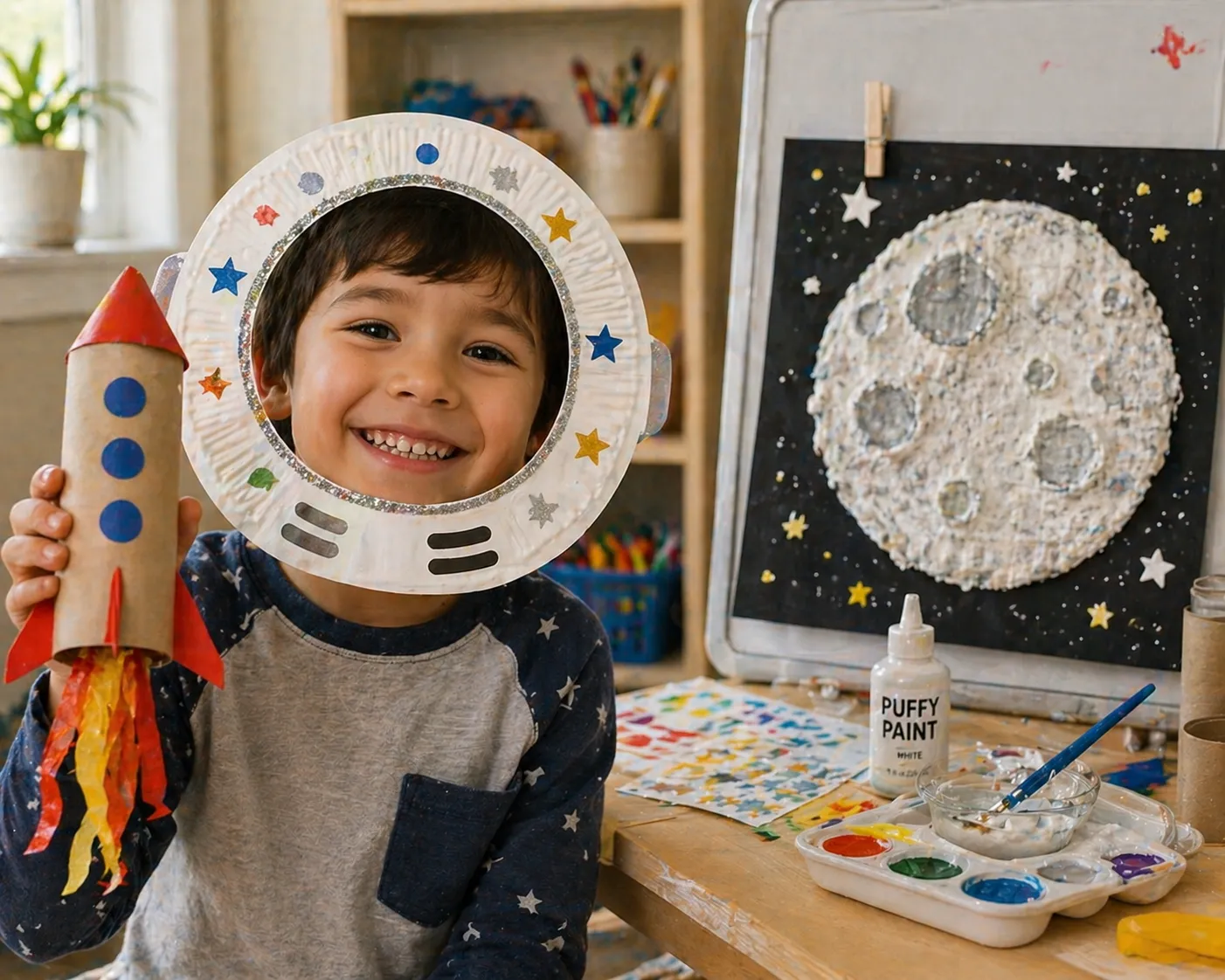
1. The Classic Paper Plate Astronaut Helmet
This is a perfect starter project for younger children, requiring minimal supplies and offering maximum imaginative play value.
What You’ll Need:
* 2 paper plates
* Aluminum foil
* Gray or silver paint/marker
* Elastic string
* Glue, scissors, stapler
Mission Steps:
1. Firstly, cut the center out of one paper plate, leaving a sturdy rim. This will be the front visor frame.
2. Next, cover the second, whole paper plate with aluminum foil to create the “helmet dome.”
3. Then, glue or staple the visor frame onto the foil-covered dome.
4. After that, use paint or markers to add details like control panels, antennae, or a NASA logo to the rim.
5. Finally, staple a piece of elastic string to each side so your young astronaut can wear their new helmet securely. Mission accomplished!
2. Toilet Paper Roll Rocket Ship
Upcycle household items into a fleet of fantastic rockets! This project teaches basic geometry and recycling in a fun way.
What You’ll Need:
* Empty toilet paper roll
* Construction paper
* Aluminum foil
* Cone-shaped party hat or paper to make a cone
* Glue, tape, markers
Mission Steps:
1. Begin by covering the toilet paper roll with construction paper or aluminum foil.
2. Subsequently, create a nose cone. You can tape a party hat to the top or roll construction paper into a cone shape and secure it.
3. Then, cut out flame shapes from red, orange, and yellow paper. Attach them to the bottom opening of the roll.
4. Additionally, cut out small circles or shapes from paper to create windows, portholes, and rocket boosters. Glue these on.
5. Consequently, you’ll have a simple yet impressive rocket ready for display or play. For a more advanced mission, create a whole solar system backdrop!
3. Puffy Paint Moon & Earth Art
Explore planetary surfaces with this sensory-rich painting activity. It’s a wonderful way to discuss the differences between the Moon and Earth.
What You’ll Need:
* Thick paper or cardboard circles (pre-cut)
* Shaving cream
* White school glue
* Acrylic or tempera paint (white, gray, blue, green)
* Mixing bowls and spoons
Mission Steps:
1. To create the puffy paint, mix equal parts shaving cream and white glue in a bowl. Divide the mixture if you want multiple colors.
2. For a Moon surface, add gray paint to one portion of the mixture. Stir gently to create a marbled, crater-like effect.
3. For Earth, you can create separate blue and green puffy paints. First, apply the blue for oceans, then add green continents on top while the paint is still wet.
4. Using a spoon or directly with hands, apply the puffy paint thickly onto the cardboard circles to create a textured, three-dimensional planet.
5. Allow the artwork to dry completely, which may take 24 hours. The result is a fantastic tactile representation of a planet!
Educational Launchpad: Connecting Crafts to Science
To maximize the learning, use the craft activity as a springboard for discussion. For example, while making the rocket, you can talk about real rocket science principles from sources like NASA’s website. Similarly, when creating the moon, discuss the Apollo missions or the composition of lunar soil.
Asking questions like, “Why do you think astronauts need special suits?” can lead to explorations about space vacuums and temperature.
Furthermore, consider pairing your space craft day with other themed activities. You could read a book about the solar system, watch a kid-friendly documentary, or even enjoy some space-themed snacks. For a unique drink that might intrigue parents during craft time, you could explore the differences between water kefir vs kombucha, both fermented beverages with health benefits.
And if you’re looking for more craft inspiration beyond space, check out these creative preschool insect crafts for another thematic adventure.
Mission Debrief: The Lasting Impact of Creative Play
In conclusion, astronaut crafts offer far more than a temporary distraction. They build foundational skills, ignite a passion for discovery, and create lasting memories.
By providing a hands-on connection to the wonders of space exploration, you’re helping to shape the scientists, engineers, and dreamers of tomorrow. So, don’t wait—gather your materials, embrace the potential for a little mess, and launch your own creative mission today. The universe of imagination awaits!

