
Average Shoe Size for Men -3 Key Factors
What is the Average Shoe Size for Men?
Have you ever wondered how your shoe size compares to other men? Whether you’re shopping online or simply curious, understanding the average shoe size for men can provide helpful context.
This measurement, however, isn’t a one-size-fits-all number; it varies significantly by country, age, and genetics. Consequently, this guide will break down the data, explore the factors influencing foot size, and offer practical advice for ensuring a comfortable fit.
Understanding the Numbers: Average Men’s Shoe Size by Region
Globally, the average shoe size for men fluctuates based on population genetics and nutritional trends. For instance, a study published in the journal Annals of Human Biology noted a steady increase in average foot size over the past century, largely due to improvements in nutrition and overall health.
Here is a comparative look at average men’s shoe sizes in several regions:
| Region/Country | Average Men’s Shoe Size (US) | Notes |
|---|---|---|
| United States | 10.5 | Considered the standard baseline for North America. |
| United Kingdom | 9.5 (UK) | Equivalent to a US size 10.5. |
| Europe | 43 (EU) | Roughly translates to a US size 10. |
| Australia | 9.5 (AU) | Equivalent to a US size 10.5. |
| Japan | 8.5 (US) | Generally reflects smaller average stature. |
Source: Data aggregated from anthropometric surveys and footwear industry reports.
As the table illustrates, the United States has one of the larger average sizes. This trend is often linked to the average height of the population. Moreover, within any country, there is a wide range of normal sizes.
Key Factors That Influence a Man’s Shoe Size
Your shoe size is not a random number. It is determined by a combination of genetic and environmental factors. Understanding these can help explain why averages exist and where you might fall on the spectrum.
1. Genetics and Height
Firstly, genetics are the primary determinant of your foot size and shape. Taller individuals typically have larger feet to provide a stable base of support for their frame. Therefore, populations with taller average heights, like those in Northern Europe, often report larger average shoe sizes.
2. Age and Growth
Foot size generally stabilizes in a man’s early twenties. However, feet can lengthen and widen with age due to the loosening of ligaments and tendons, as well as the natural flattening of the arches. Additionally, weight gain can cause feet to spread.
3. Weight and Body Composition
Body weight directly impacts foot size. Increased body mass can cause the plantar fascia (the ligament along the bottom of the foot) to stretch and the arch to flatten, leading to a longer and wider foot. This is one reason why maintaining a healthy weight is crucial for overall foot health, much like how proper nutritional value supports bodily systems.
How to Find Your Correct Shoe Size and Fit
Knowing the average is one thing, but finding your personal perfect fit is essential for comfort and preventing issues like blisters, bunions, and long-term joint pain.
- Measure Both Feet at the End of the Day: Feet naturally swell throughout the day. For the most accurate measurement, always measure in the evening.
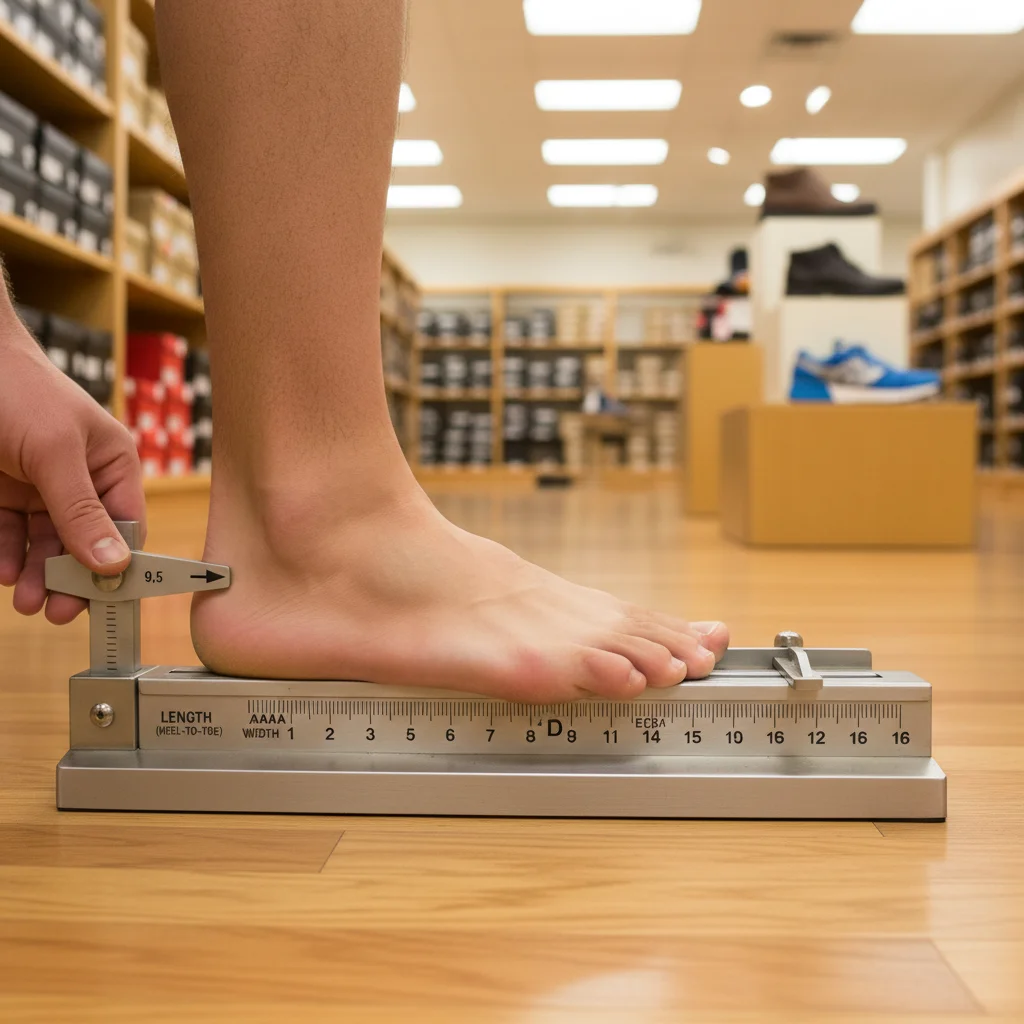
- Use a Brannock Device: This is the metal tool found in shoe stores. It measures both length and width precisely. Stand with your full weight on the device for an accurate reading.
- Consider Sock Thickness: Always try on shoes with the type of socks you intend to wear with them.
- Leave Adequate Space: There should be about a thumb’s width (roughly 3/8 to 1/2 inch) of space between your longest toe and the end of the shoe.
- Prioritize Comfort Immediately: Shoes should not require a “break-in” period. If they aren’t comfortable in the store, they likely never will be.
When Foot Size Raises Concerns
While most size variations are normal, significant deviations can sometimes indicate underlying health conditions. For example, a sudden increase in shoe size could be a sign of acromegaly, a hormonal disorder. Conversely, issues like persistent corns on the pinky toe are often direct results of ill-fitting footwear rather than size itself. If you experience sudden changes in foot size or shape, consulting a podiatrist is advisable.
Frequently Asked Questions (FAQs)
Is a size 13 shoe considered big?
Yes, a US men’s size 13 is considered significantly above the national average of 10.5. It places an individual in the 95th percentile or higher for foot size among American men.
Does shoe size correlate with other body measurements?
There is a general correlation between shoe size and height, but it is not an exact predictor. Other factors like genetics play a substantial role. The myth linking shoe size to other anatomical features is not supported by scientific evidence.
Why do my feet hurt even with the “right” size shoe?
The correct length does not guarantee correct fit. Width, arch support, and shoe shape (last) are equally critical. For instance, a person with a wide foot wearing a standard-width shoe will experience discomfort. Furthermore, general joint health can impact foot comfort; some individuals explore supplements like Joint Genesis for overall musculoskeletal support, though proper footwear remains paramount.
How often should I measure my feet?
It’s a good practice to measure your feet at least once a year. As mentioned, feet can change size due to age, weight fluctuations, and other factors.
Conclusion: Beyond the Average
In summary, the average shoe size for men in the US is a 10.5, but this number is just a statistical midpoint. Your ideal size is uniquely yours, influenced by genetics, age, and lifestyle. Therefore, always prioritize precise measurement and immediate comfort over standard averages when choosing footwear.
After all, well-fitted shoes are a foundation for daily mobility and long-term health. For more insights into how specific health factors interact, you can explore topics like the impact of diet on wellness, such as the benefits of antioxidants for prostate health.

