
Best Time to Take NAC for Benefits
The Best Time of Day to Take NAC for Your Health Goals
N-acetylcysteine (NAC) is a powerful supplement derived from the amino acid L-cysteine. It serves as a precursor to glutathione, your body’s master antioxidant. Because of its versatile roles in supporting liver function, respiratory health, and detoxification, many people wonder about the optimal timing for taking it. Determining the best time of day to take NAC depends significantly on your primary health objective. This guide will break down the science and provide clear recommendations.
Why Timing Your NAC Supplement Matters
Firstly, understanding why timing is important can help you make an informed decision. NAC is known for its bioavailability and its ability to influence glutathione levels. However, it can also cause minor gastrointestinal upset for some individuals. Consequently, aligning your supplement schedule with your body’s needs and daily routine can enhance its effectiveness and improve tolerability.
Key Factors Influencing NAC Timing
- Your Primary Health Goal: Timing for antioxidant support differs from timing for respiratory or liver health.
- Potential Side Effects: Taking NAC with food can mitigate stomach discomfort.
- Dosage Form: Sustained-release formulas offer more flexibility than immediate-release capsules.
- Concurrent Medications: It’s crucial to space NAC apart from certain drugs, notably nitroglycerin.
Optimal NAC Timing for Specific Health Goals
The most effective time to take your NAC supplement is directly tied to why you are taking it. Here is a detailed breakdown.
For General Antioxidant & Liver Support
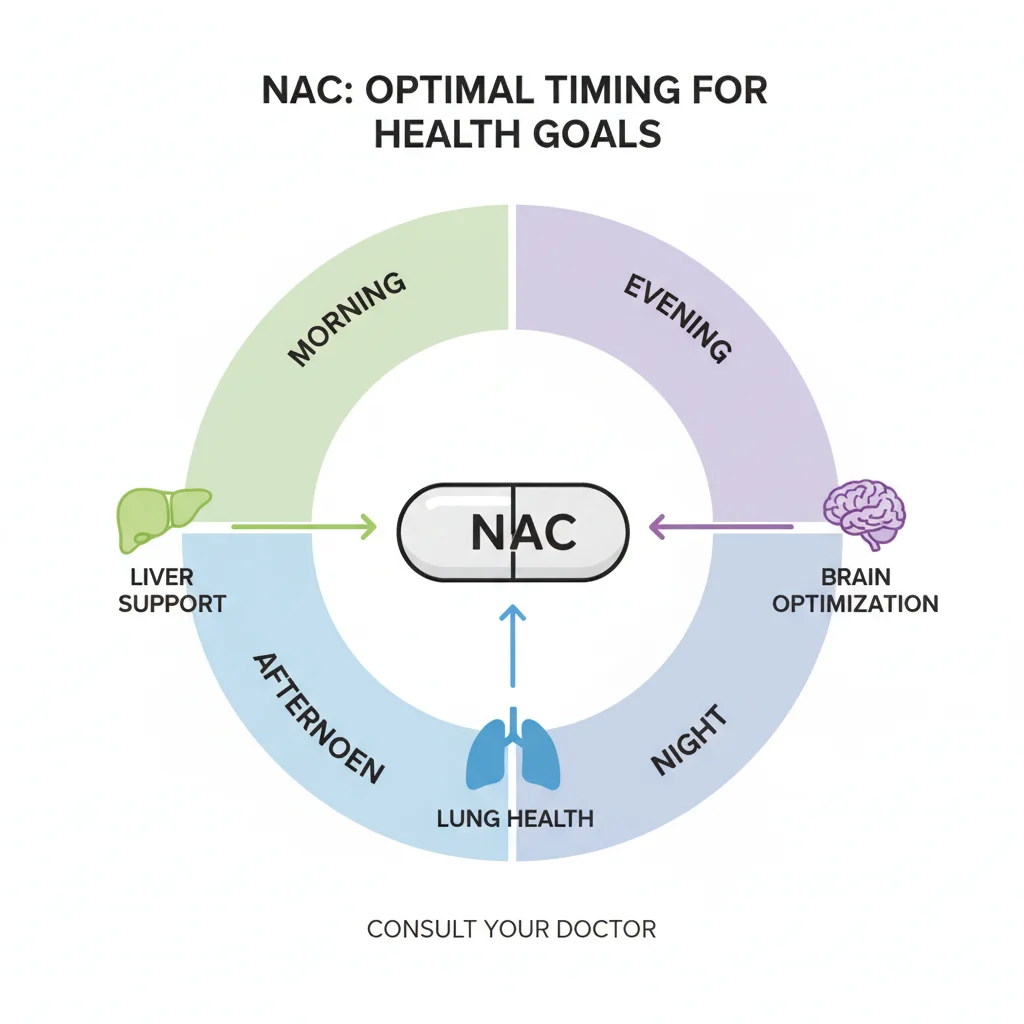
If you are using NAC to boost overall antioxidant levels and support liver detoxification pathways, morning intake is often recommended. This strategy helps elevate glutathione levels early in the day, preparing your body to handle oxidative stress. Moreover, taking it with breakfast can prevent any potential nausea.
Recommended Timing: With your morning meal.
For Respiratory Health & Mucus Clearance
NAC is a well-known mucolytic, meaning it helps thin and break down mucus in the airways. For this purpose, timing is more flexible but should be consistent. Many find that taking a dose in the morning and early afternoon helps maintain clear airways throughout the day. Importantly, avoid taking it too close to bedtime, as the mucus-thinning effect could potentially cause minor coughing.
Recommended Timing: With breakfast and lunch.
For Sleep Quality & Neurological Support
Emerging research suggests NAC may support neurological health and improve sleep quality by modulating glutamate levels in the brain. For these benefits, an evening dose may be advantageous. A small dose taken with dinner or an hour before bed could help promote a calm, restorative state. Always start with a lower dose in the evening to assess your individual tolerance.
Recommended Timing: With dinner or 1 hour before bedtime.
Summary Table: NAC Timing Guidelines
| Primary Health Goal | Best Time to Take NAC | Key Reasoning |
|---|---|---|
| Antioxidant & Liver Support | With morning meal | Elevates glutathione for daytime detox; food improves tolerance. |
| Respiratory / Mucus Clearance | With breakfast and lunch | Maintains airway clearance; avoids potential nighttime coughing. |
| Sleep & Neurological Support | With dinner or before bed | May help modulate brain chemistry for relaxation and sleep. |
| General Wellness / High Dose | Split dose (AM & PM) with food | Maximizes sustained levels; minimizes GI side effects. |
Important Dosage & Safety Considerations
Before adjusting your schedule, it’s vital to consider dosage and safety. The typical supplemental dosage ranges from 600 mg to 1800 mg per day, often split into two or three doses. Always follow the specific instructions on your product label or those given by your healthcare provider.
Critical Interaction & Timing Warning
One of the most important safety rules is to avoid taking NAC with nitroglycerin or other nitrate medications used for heart conditions. NAC can interact with these drugs and cause severe headaches and dangerously low blood pressure. Therefore, if you are on any cardiac medications, consulting your doctor is an absolute necessity before starting NAC.
Furthermore, because NAC supports metabolic processes, it may be a valuable part of a broader wellness strategy that includes monitoring other health markers. For instance, understanding your blood sugar levels can provide a more complete picture of your metabolic health.
Minimizing Side Effects
To minimize the risk of gastrointestinal upset like nausea or diarrhea, take NAC with a meal or a snack. Additionally, staying well-hydrated throughout the day is crucial, as NAC supports detoxification pathways that require adequate water.
Final Recommendations and How to Start
Ultimately, the best time to take NAC is when it aligns with your personal health targets and daily routine. For most people seeking general wellness, a single 600 mg dose with breakfast is an excellent starting point.
If you are taking higher doses (e.g., 1200-1800 mg daily), splitting the dose between morning and afternoon meals is highly advisable. This approach maintains more stable levels in your bloodstream and further reduces the chance of stomach issues.
Always consult with a healthcare professional before beginning any new supplement regimen, especially if you have pre-existing health conditions or are taking other medications. This is particularly relevant for individuals focusing on specific organ health, such as prostate health, to ensure a coordinated and safe approach.
In conclusion, by matching your NAC supplementation time to your specific goal—be it morning for liver support, daytime for respiratory aid, or evening for neurological calm—you can harness its full potential effectively and safely.

