
White vs Sweet Potatoes: Carbs Compared
Carbs in White Potatoes vs Sweet Potatoes: Which Tuber Wins?
When choosing a starchy side dish, the debate between white potatoes and sweet potatoes is a common one. Both are popular, versatile, and packed with carbohydrates, but their nutritional profiles differ significantly. Understanding the carbs in white potatoes vs sweet potatoes is crucial for making informed dietary choices, whether you’re managing blood sugar, aiming for weight loss, or simply seeking optimal nutrition. This guide will break down the carbohydrate content, fiber, glycemic impact, and overall health benefits of each.
A Nutritional Showdown: Macronutrients at a Glance
Firstly, let’s examine the basic carbohydrate and calorie composition of a standard 100-gram serving of each potato, baked with the skin on. This provides a clear, direct comparison.
| Nutrient (per 100g baked, with skin) | White Potato | Sweet Potato |
|---|---|---|
| Calories | 93 kcal | 90 kcal |
| Total Carbohydrates | 21 g | 21 g |
| Dietary Fiber | 2.2 g | 3.3 g |
| Sugars | 1.2 g | 6.5 g |
| Protein | 2.5 g | 2.0 g |
| Fat | 0.1 g | 0.2 g |
As you can see, the total carbohydrate count is remarkably similar. However, the type and composition of those carbs tell a very different story. Consequently, their effects on your body are not the same.
Breaking Down the Carbohydrate Types
The primary distinction lies in the fiber and sugar content. Sweet potatoes contain nearly 50% more fiber and a higher amount of natural sugars, which contributes to their signature sweetness. Conversely, white potatoes have a higher proportion of starch.
- Sweet Potatoes: The higher fiber content slows digestion, leading to a more gradual release of glucose into the bloodstream. Moreover, the sugars present are naturally occurring, not added.
- White Potatoes: They are predominantly starchy. This starch is rapidly broken down into glucose, which can cause a quicker spike in blood sugar levels, especially when consumed without the skin or in processed forms like fries.
Glycemic Index: The Blood Sugar Impact
A critical factor in the carb discussion is the Glycemic Index (GI), a scale that measures how quickly a food raises blood sugar levels. This is particularly important for individuals with insulin sensitivity or diabetes.
- Sweet Potatoes generally have a medium to low GI (typically ranging from 44 to 94, depending on the variety and cooking method, but often around 70 for a standard orange variety). Their high fiber content is a key reason for this.
- White Potatoes tend to have a high GI (often 78-111, with a baked russet potato around 111). This means they can cause a more rapid increase in blood glucose.
However, it’s essential to note that the Glycemic Load (GL), which considers serving size, provides a more practical picture. Additionally, pairing either potato with a source of protein, healthy fat, or vinegar can significantly lower the overall glycemic impact of the meal. For instance, enjoying a baked potato with grilled chicken and a olive oil-based dressing is a much better choice than eating it alone.
Beyond Carbs: Vitamins, Minerals, and Antioxidants
While carbs are our focus, the overall nutrient density is vital. Both tubers offer unique benefits.
Sweet Potato Strengths:
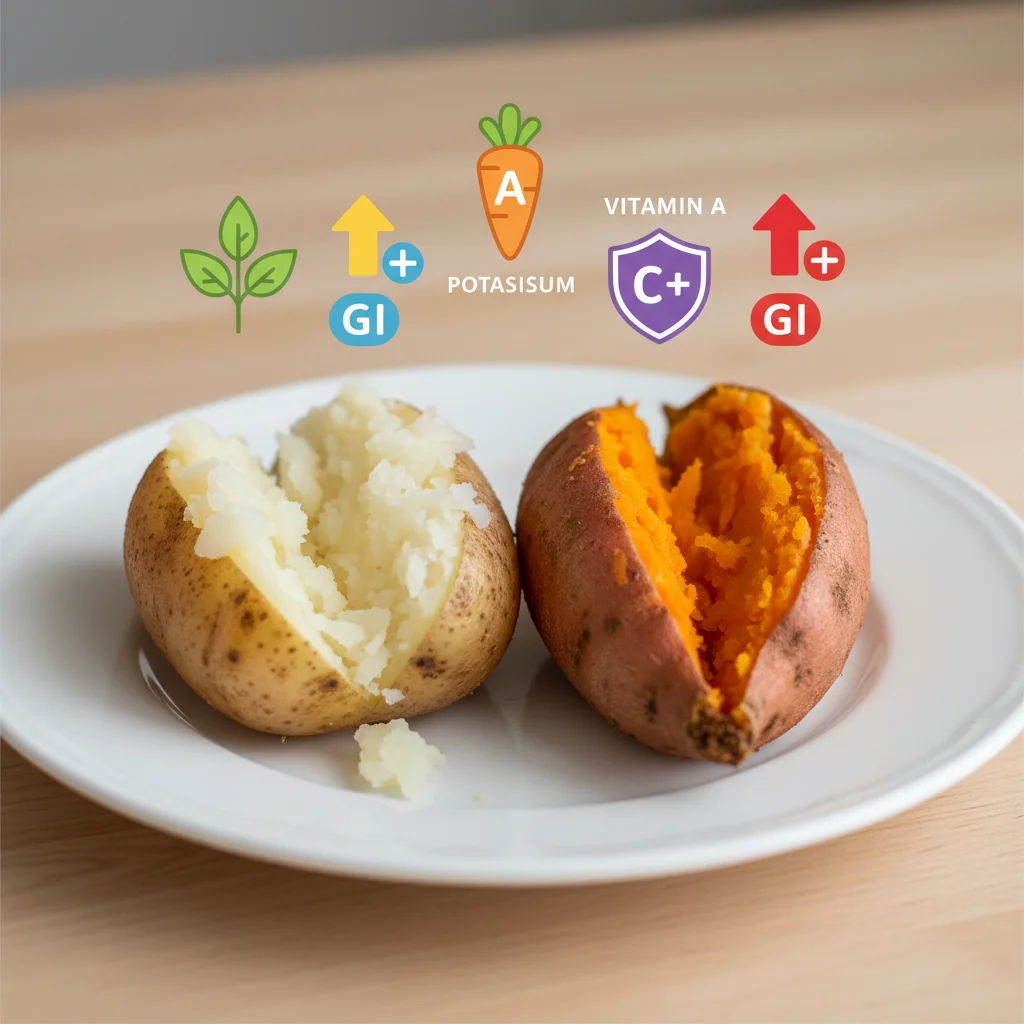
* Vitamin A: Exceptionally high in beta-carotene, which the body converts to Vitamin A. One serving can provide well over 100% of your daily needs, crucial for vision, immunity, and skin health.
* Vitamin C: A good source, supporting immune function and collagen production.
* Antioxidants: Rich in anthocyanins (in purple varieties) and other antioxidants that combat oxidative stress. For more on powerful plant compounds, explore our guide to antioxidants for prostate health.
White Potato Strengths:
* Potassium: Often contains more potassium per serving than a sweet potato or even a banana, which is essential for heart and muscle function.
* Vitamin C & B6: A solid source of Vitamin C and Vitamin B6, which aids in metabolism and brain health.
* Resistant Starch: When cooked and then cooled (as in a potato salad), white potatoes develop resistant starch, which acts like fiber and feeds beneficial gut bacteria.
Which Potato Should You Choose for Your Goals?
The “better” choice depends entirely on your personal health objectives.
- For Blood Sugar Management: Sweet potatoes are generally the safer bet due to their higher fiber and lower average GI. Portion control and food pairing remain essential for both.
- For Weight Loss: The difference is minimal calorie-wise. The higher fiber in sweet potatoes may promote greater satiety, helping you feel fuller longer. Ultimately, your overall diet and preparation method (baked vs. deep-fried) matter far more.
- For General Nutrition: Sweet potatoes have a slight edge due to their extraordinary vitamin A content and antioxidant profile. However, white potatoes are still a nutritious whole food, especially with the skin on, providing valuable potassium.
- For Athletic Fuel: White potatoes can be excellent for quick glycogen replenishment after intense exercise due to their easily digestible carbs and potassium, which is an important electrolyte lost through sweat.
How to Prepare Them for Maximum Health Benefits
Preparation is paramount. The healthiest carbs can be undermined by unhealthy cooking methods.
- Keep the Skin On: A significant portion of the fiber and nutrients is in or just under the skin.
- Opt for Baking, Roasting, or Steaming: Avoid deep-frying. For a crispy alternative, try tossing cubed potatoes with a small amount of oil and air-frying or roasting.
- Mind Your Toppings: Loaded baked potatoes with butter, sour cream, and bacon negate the health benefits. Instead, try Greek yogurt, herbs, salsa, or a drizzle of olive oil.
- Pair Smartly: Combine your potato with a lean protein (chicken, fish, tofu) and non-starchy vegetables to create a balanced, blood sugar-friendly meal.
In conclusion, both white and sweet potatoes are healthy, whole-food sources of carbohydrates when prepared properly. The sweet potato wins in terms of fiber density and vitamin A, making it a superior choice for steady energy and antioxidant support. Meanwhile, the white potato is an excellent source of potassium and can be ideal for post-workout recovery. Therefore, rather than eliminating one, consider incorporating both into a varied diet based on your nutritional needs. For more detailed nutritional breakdowns of other common foods, you can read our article on the nutritional value of graham crackers.
Disclaimer: This information is for educational purposes only and is not a substitute for professional medical advice. Always consult with a healthcare provider or registered dietitian for personalized dietary guidance.

