
Ceylon Cinnamon vs Cassia Differences
Ceylon Cinnamon vs. Cassia: The Essential Guide to Choosing Your Spice
When you reach for that jar of cinnamon in your pantry, you likely think of it as a single, warming spice. However, a significant distinction exists between the two main types: Ceylon cinnamon (“true” cinnamon) and Cassia cinnamon (the common supermarket variety). Understanding their differences is crucial, not just for culinary purposes but for your health. This guide will break down the origins, flavors, health profiles, and key safety considerations to help you make an informed choice.
What Are Ceylon and Cassia Cinnamon?
Firstly, it’s important to establish that both spices come from the inner bark of trees belonging to the Cinnamomum genus. Their processing and botanical origins, however, set them apart.
Ceylon Cinnamon (Cinnamomum verum)
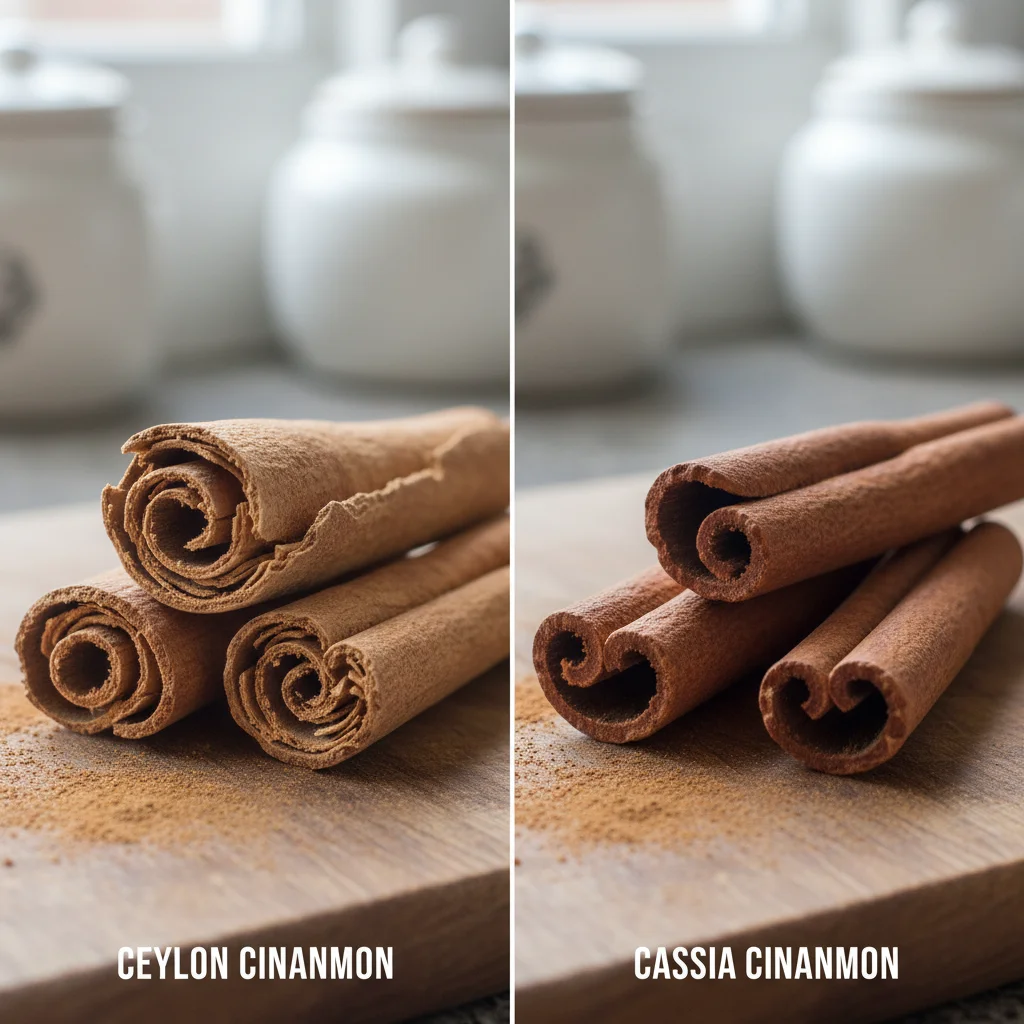
Often called “true cinnamon,” Ceylon cinnamon originates primarily from Sri Lanka. Its bark is thin, fragile, and forms multiple thin layers (quills) that roll into a characteristic “cigar” shape. Consequently, it has a more delicate, complex flavor profile.
Cassia Cinnamon (Cinnamomum cassia)
This is the most common and widely available type globally, frequently sourced from China, Indonesia, and Vietnam. Cassia bark is thicker, harder, and typically rolls into a single, tight quill. Moreover, its flavor is stronger, more pungent, and sharply sweet—the classic “cinnamon” taste most people recognize.
Key Differences: A Detailed Comparison
The table below summarizes the fundamental distinctions between these two popular spices.
| Feature | Ceylon Cinnamon (“True” Cinnamon) | Cassia Cinnamon (Common Cinnamon) |
|---|---|---|
| Scientific Name | Cinnamomum verum | Cinnamomum cassia (and related species like C. burmannii) |
| Primary Origin | Sri Lanka | China, Indonesia, Vietnam |
| Bark Appearance | Thin, layered, fragile; multiple quills | Thick, hard, single hollow roll |
| Flavor & Aroma | Delicate, subtly sweet, complex, citrusy notes | Strong, pungent, sharply sweet, woody |
| Coumarin Content | Very Low (approx. 0.004%) | Very High (approx. 1% on average, can be up to 5%) |
| Common Uses | Desserts, delicate sauces, tea, raw consumption | Baking, robust curries, spiced drinks, general cooking |
| Price Point | Generally more expensive | Widely available and inexpensive |
The Critical Health Factor: Coumarin Content
The most significant difference from a health perspective is the coumarin content. Coumarin is a naturally occurring compound that can cause liver damage and other health issues when consumed in large amounts over time.
- Cassia Cinnamon contains high levels of coumarin. Regular, high consumption (such as daily in large quantities) poses a potential risk, especially for sensitive individuals or those with pre-existing liver conditions.
- Ceylon Cinnamon contains only trace amounts of coumarin, making it a much safer choice for regular or therapeutic use.
Therefore, if you consume cinnamon frequently—for example, adding a teaspoon daily to your oatmeal or smoothie for its potential benefits in supporting healthy blood sugar levels—opting for Ceylon is the prudent choice. You can learn more about managing metabolic health in our dedicated guide on blood sugar levels.
Culinary and Usage Recommendations
Your choice between Ceylon and Cassia should depend on your intended use.
Choose Ceylon Cinnamon when:
* You plan to consume it regularly in significant quantities.
* The recipe calls for a subtle, nuanced flavor that won’t overpower other ingredients.
* You’re making a delicate custard, pastry cream, or a light fruit dessert.
* You’re brewing a soothing cup of chamomile tea and want a gentle spice note.
Choose Cassia Cinnamon when:
* You desire that bold, classic cinnamon punch in baked goods like cinnamon rolls or apple pie.
* You’re making a hearty, spiced dish like a curry or mulled wine.
* The recipe only requires a small amount for seasoning.
* Cost and strong flavor are primary factors.
How to Identify and Source Ceylon Cinnamon
Because “cinnamon” on a label almost always means Cassia, you need to look for specific indicators to find true Ceylon cinnamon.
- Check the Label: Look for “Ceylon cinnamon,” “Cinnamomum verum,” or “True Cinnamon.”
- Examine the Sticks: Ceylon sticks are layered like a cigar, are brittle, and can be easily ground with a coffee grinder. Cassia sticks are hard, often in a single thick curl, and difficult to powder.
- Consider the Source: Purchase from reputable spice merchants or health food stores that specify the cinnamon type.
Final Verdict: Which One Should You Use?
For daily, therapeutic use: Ceylon cinnamon is the unequivocal winner due to its negligible coumarin content. If you’re using it as a supplement for its antioxidant properties or potential metabolic benefits, this is the only safe choice for consistent intake.
For occasional culinary use: Cassia cinnamon is perfectly acceptable and delivers the familiar, robust flavor expected in many recipes. The key is moderation.
Ultimately, having both in your spice cabinet allows for flexibility. Use Ceylon for your daily wellness routines and Cassia for those special baking projects where its powerful aroma is essential. By understanding these differences, you can enjoy the wonderful world of cinnamon both safely and deliciously.

