
Ultimate Chest and Tricep Workout: Build Size and Strength
The Ultimate Chest and Tricep Workout: Your Guide to a Powerful Upper Body
Building a thick chest and horseshoe-shaped triceps is a cornerstone of a classic powerhouse physique. In the world of fitness, training these two groups together is known as a push-day split. Because the triceps are the secondary movers in almost every chest exercise, hitting them in the same session allows for maximum stimulation and efficient recovery.
In this comprehensive guide, we will break down the science, the exercises, and the ultimate chest and tricep workout routine to help you break through plateaus and pack on serious muscle mass.
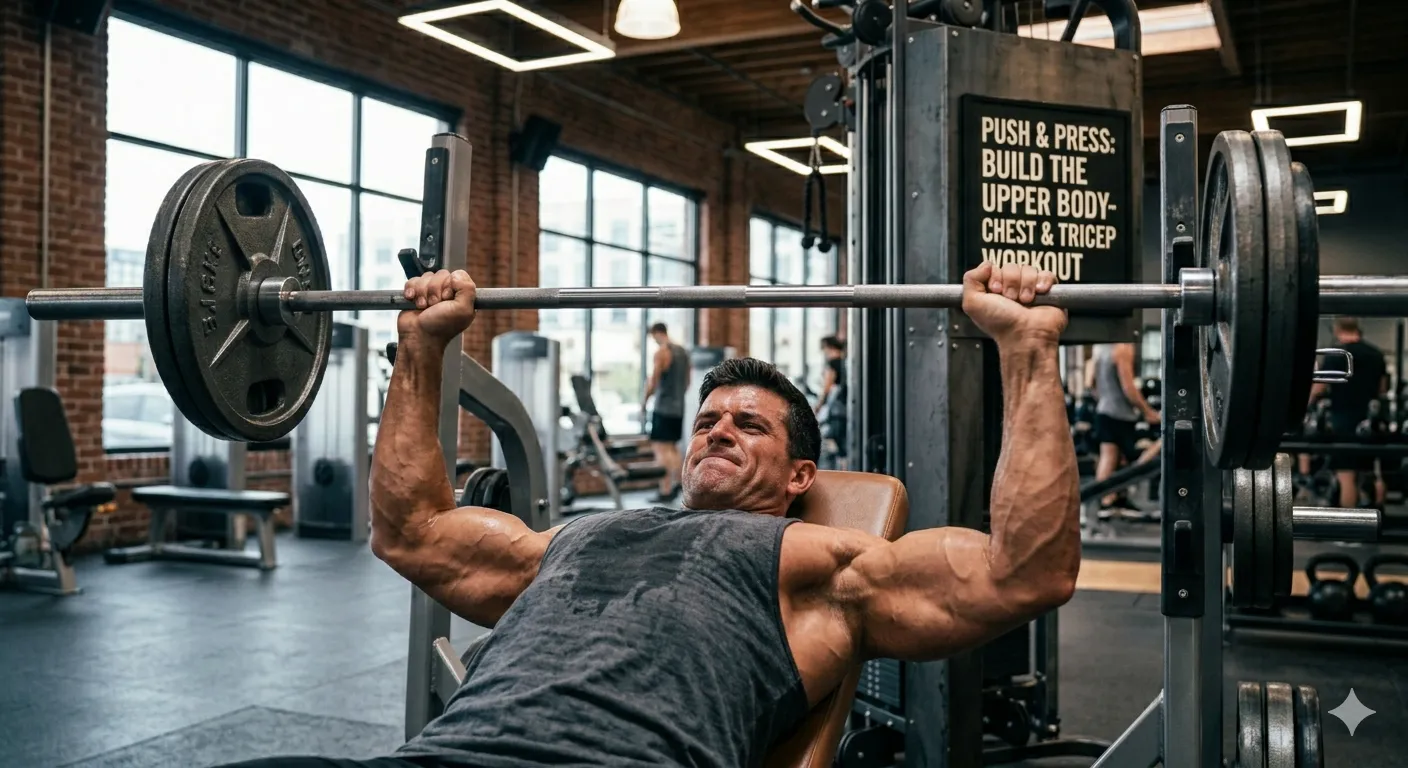
Why Train Chest and Triceps Together?
The “Push” philosophy relies on synergy. When you perform a Bench Press, your pectoralis major is the primary driver, but your triceps are essential for the “lockout” phase of the movement.
Efficiency: By the time you finish your chest exercises, your triceps are already warmed up and partially fatigued. This allows you to finish them off with high-intensity isolation moves.
Recovery: If you train chest on Monday and triceps on Tuesday, your triceps are working two days in a row, which can lead to overtraining. Combining them ensures they get dedicated rest days.
The Anatomy of the Push Muscles
To train effectively, you need to understand what you are hitting.
1. The Chest (Pectoralis Major)
Upper Chest (Clavicular Head): Targeted by incline movements.
Mid-Chest (Sternal Head): Targeted by flat pressing.
Lower Chest (Costal Head): Targeted by declines and dips.
2. The Triceps (Triceps Brachii)
Long Head: The inner part that adds the most mass.
Lateral Head: The outer part that creates the “horseshoe” look.
Medial Head: The deep muscle that provides stability.
The Best Chest and Tricep Workout Routine
This workout is designed for hypertrophy (muscle growth). We will start with heavy compound movements and transition into high-volume isolation work.
Phase 1: Heavy Compound Chest Movements
| Exercise | Sets | Reps | Focus |
| Barbell Bench Press | 4 | 6–8 | Overall Chest Power |
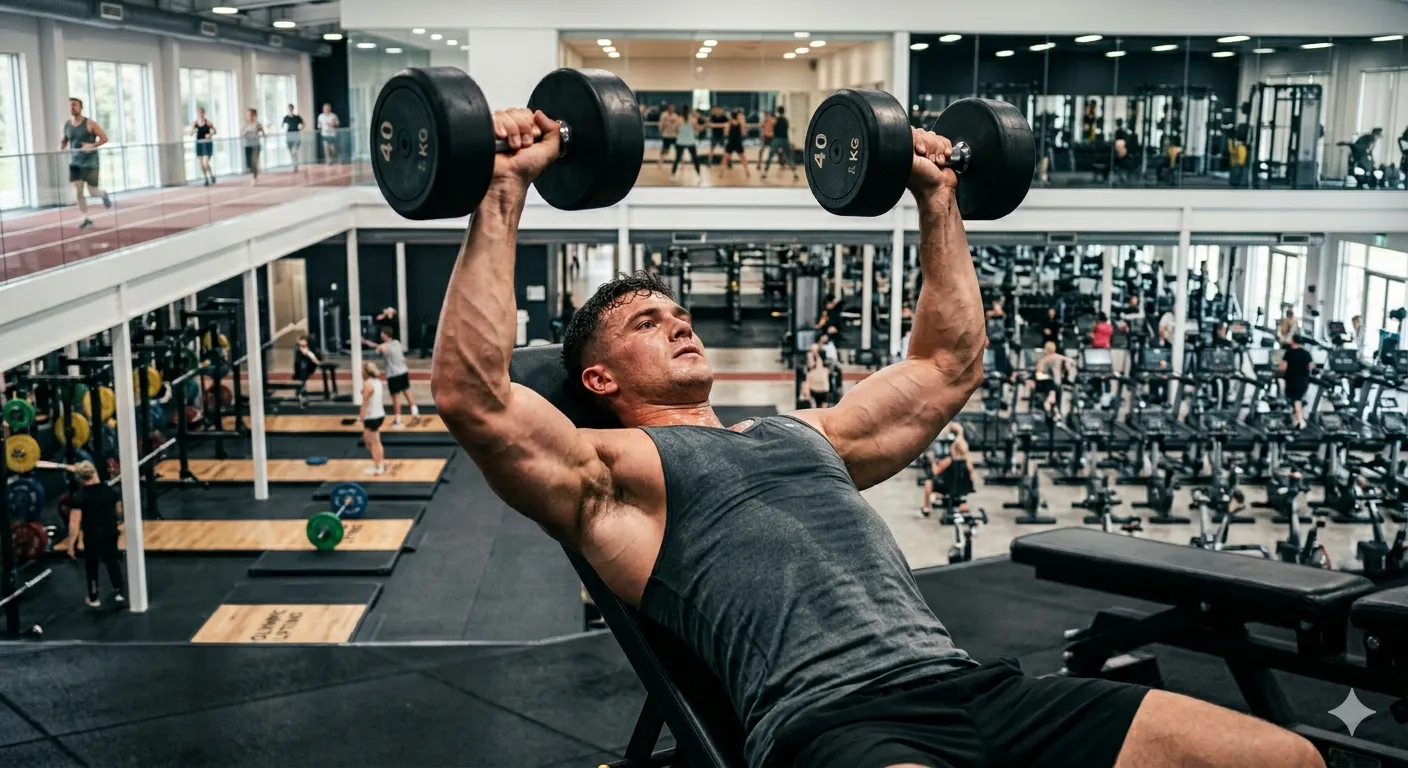
| Incline Dumbbell Press | 3 | 8–10 | Upper Chest Volume |
| Weighted Chest Dips | 3 | 10–12 | Lower Chest & Triceps |
1. Barbell Bench Press
The king of chest exercises. Ensure your shoulder blades are retracted (pinched back) to protect your rotators and keep the tension on your pecs.
Pro Tip: Don’t bounce the bar off your chest. Use a controlled eccentric (lowering) phase of about 2 seconds.
2. Incline Dumbbell Press
The incline angle (roughly 30–45 degrees) shifts the load to the clavicular head. Using dumbbells allows for a greater range of motion compared to a barbell.
Phase 2: Chest Isolation & Tricep Integration
| Exercise | Sets | Reps | Focus |
| Cable Flyes (High-to-Low) | 3 | 12–15 | Inner/Lower Chest Squeeze |
| Close-Grip Bench Press | 3 | 8–10 | Tricep Strength & Mid-Chest |
3. Close-Grip Bench Press
This is the bridge between chest and tricep training. By bringing your hands closer (shoulder-width), you shift the mechanical advantage from the pecs to the triceps.
Phase 3: Targeted Tricep Destruction
Now that the chest is finished, we focus entirely on the arms.
4. Overhead Dumbbell Extension (Long Head Focus)
To get big arms, you must target the long head of the triceps. Since the long head attaches above the shoulder joint, it is only fully stretched when your arms are overhead.
5. Tricep Rope Pushdowns (Lateral Head Focus)
The “finisher.” Use a rope attachment and pull the ends apart at the bottom of the movement to maximize the contraction in the lateral head. For Ultimate Back and Bicep Workout Guide for Muscle Growth read now.
Science-Backed Tips for Maximum Growth
1. Progressive Overload
You cannot grow if you don’t challenge your muscles. Aim to increase the weight, the number of reps, or decrease the rest time every single week.
2. Mind-Muscle Connection
Don’t just move the weight from point A to point B. In a chest and tricep workout, you need to feel the “squeeze.” On cable flyes, imagine you are trying to touch your elbows together, not just your hands.
3. The Role of Nutrition
A solid workout is useless without the right fuel.
Pre-Workout: Fast-digesting carbs (like a banana) to fuel the session.
Post-Workout: 25–40g of high-quality protein to begin muscle protein synthesis.
Common Mistakes to Avoid
Flaring the Elbows: In both bench presses and tricep extensions, flaring the elbows too wide puts immense pressure on the shoulder capsule. Keep them tucked at a 45-degree angle.
Neglecting the Upper Chest: Many lifters focus too much on the flat bench, resulting in a “droopy” chest look. Prioritize incline work.
Overtraining: Your triceps are small muscles. You don’t need 20 sets of triceps. 6 to 9 high-intensity sets after your chest work is more than enough.
Recovery and Frequency
Muscle isn’t built in the gym; it’s built in the kitchen and the bedroom.
Sleep: Aim for 7–9 hours of quality sleep. This is when Growth Hormone (GH) is released.
Frequency: For optimal results, hit this chest and tricep workout twice a week, allowing at least 48–72 hours between sessions.
Sample Weekly Split
Monday: Chest and Triceps (Push A)
Tuesday: Back and Biceps (Pull A)
Wednesday: Legs and Shoulders
Thursday: Rest
Friday: Chest and Triceps (Push B – higher reps)
Saturday: Pull B / Legs B
Sunday: Rest
Conclusion
Mastering the chest and tricep workout requires a balance of heavy lifting and focused isolation. By starting with compound movements like the bench press and finishing with targeted tricep extensions, you create the perfect environment for hypertrophy.
Consistency is the secret sauce. Stick to this routine for 8–12 weeks, track your lifts, eat in a slight caloric surplus, and you will see a dramatic transformation in your upper body strength and aesthetics.
Ready to hit the gym? Focus on form, embrace the burn, and build the chest and triceps you’ve always wanted.

