
Top 4 Craft Ideas- Fun & Easy 1st Grade Crafts
Fun & Easy Crafts for 1st Graders to Boost Creativity
Crafting is a cornerstone of early childhood development, offering a perfect blend of fun and foundational learning. For first graders, engaging in hands-on art projects is not just about creating something colorful; it’s a critical activity that builds fine motor skills, enhances problem-solving abilities, and fosters immense creative confidence.
Consequently, selecting the right crafts—those that are simple, safe, and satisfying—is key to a positive experience. This guide provides a curated list of fantastic craft ideas that are perfectly suited for six- and seven-year-olds.
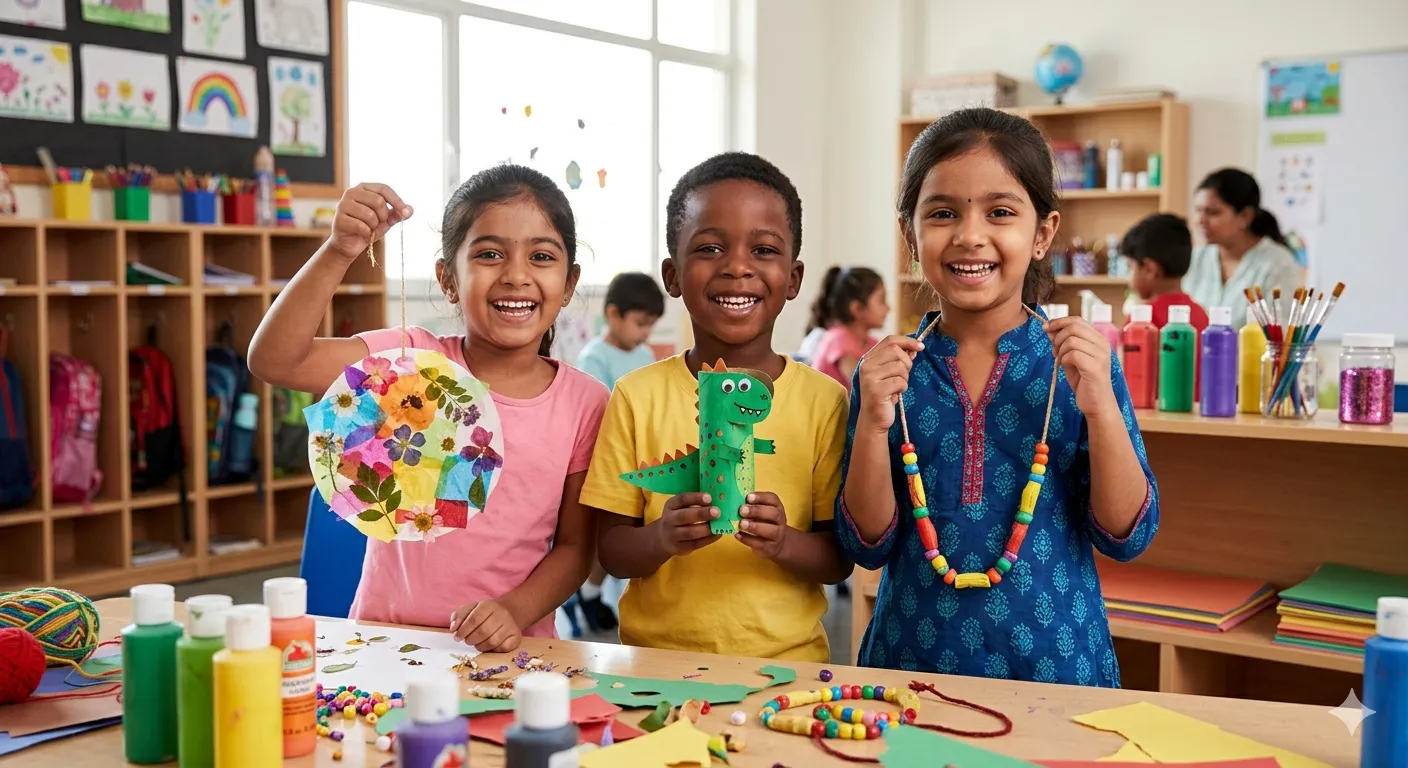
Why Crafting is Essential for First Graders
Before diving into the projects, it’s important to understand the “why.” Crafting provides multifaceted benefits for young learners. Firstly, it strengthens the small muscles in their hands and fingers, which is crucial for developing writing skills.
Moreover, following step-by-step instructions for a craft enhances their ability to listen, sequence events, and follow directions—a vital skill in the classroom. Additionally, the creative process allows children to express emotions and ideas they might not yet have the words for, thereby supporting emotional development.
Ultimately, the sense of pride and accomplishment from completing a project is a powerful confidence booster.
Top Craft Ideas for Your First Grader
Here is a selection of crafts categorized by the primary skills they help develop. Each uses common, inexpensive materials you likely already have at home.
1. Nature Collage Suncatchers
This craft connects children with the outdoors and encourages observation.
* Skills Developed: Observation, patterning, fine motor skills.
* Materials Needed: Clear contact paper, leaves, flower petals, small feathers, yarn.
* Basic Instructions: Cut two identical frames from construction paper. Peel backing from one sheet of contact paper, stick the frame to its edges, and press natural items onto the sticky surface. Then, seal with the second sheet of contact paper and hang in a window.
2. Cardboard Tube Characters
A superb way to upcycle household items into imaginative play toys.
* Skills Developed: Imagination, 3D construction, character design.
* Materials Needed: Empty toilet paper or paper towel tubes, paint, markers, yarn, googly eyes, glue.
* Basic Instructions: Let your child paint or color the tube as a base. Afterwards, they can glue on features to create animals, people, or fantastical creatures. This project is excellent for storytelling later.
3. Pasta Jewelry
A classic craft that is fantastic for practicing patterns and dexterity.
* Skills Developed: Pattern recognition, hand-eye coordination, patience.
* Materials Needed: Dyed pasta (use vinegar and food coloring), string or yarn, child-safe needles (plastic).
* Basic Instructions: Create colored pasta tubes a day ahead. Then, have your child thread the pasta onto string to make necklaces or bracelets, encouraging them to create color patterns.
4. Paper Plate Masks
Transforms a simple paper plate into a portal for imaginative play.
* Skills Developed: Creative expression, spatial reasoning, cutting skills.
* Materials Needed: Paper plates, paint, craft sticks, assorted decorations (buttons, ribbons, etc.), scissors.
* Basic Instructions: Cut eye holes in the plate. Then, let your child decorate it as their favorite animal, superhero, or emotion. Finally, attach a craft stick as a handle.
Crafting Success: Tips for Parents & Educators
To ensure crafting is a joy and not a frustration, a little preparation goes a long way. Firstly, always cover your workspace with newspaper or a cheap tablecloth. Secondly, prioritize non-toxic, washable materials—glue sticks are often easier for small hands than liquid glue.
Moreover, focus on the process, not the perfect product. Encourage your child’s choices and celebrate their unique creation. Most importantly, keep sessions age-appropriately short, around 20-30 minutes, to match their attention span.
If you’re looking for healthy snack ideas to fuel these creative sessions, consider exploring our guide on keto-friendly nuts for energy-packed options.
Frequently Asked Questions (FAQs) – Crafts for 1st Graders
1. What are crafts for 1st graders?
Crafts for 1st graders are simple, fun, age-appropriate creative activities designed for children around ages 6 to 7.
2. Why are crafts important for 1st graders?
Crafts help develop fine motor skills, creativity, confidence, and problem-solving abilities.
3. What are easy craft ideas for 1st graders?
Popular ideas include paper plate masks, pasta jewelry, cardboard tube characters, and nature collage suncatchers.
4. What supplies are needed for 1st grade crafts?
Common supplies include paper, glue, crayons, markers, paint, scissors, yarn, beads, and recycled materials.
5. Are crafts good for classroom activities?
Yes, crafts are excellent for classrooms because they support learning and creativity.
6. How long should craft time last for 1st graders?
Many children do well with sessions around 20 to 30 minutes.
7. Are crafts safe for 1st graders?
Yes, when using child-safe scissors, non-toxic materials, and adult supervision.
8. Can crafts improve school skills?
Yes, crafting can help with listening, following directions, sequencing, and hand control for writing.
9. What are good recycled crafts for 1st graders?
Cardboard tube animals, bottle cap art, paper box castles, and carton projects are great choices.
10. Can shy children benefit from crafts?
Yes, crafts can help children express feelings and ideas creatively.
11. Are seasonal crafts good for 1st graders?
Yes, holiday and seasonal crafts make learning fun and engaging.
12. Should parents focus on perfect results?
No, it is better to focus on creativity, effort, and enjoyment rather than perfection.
13. Can first graders do crafts independently?
Some simple crafts can be done independently, while others may need guidance.
14. What skills do kids learn through crafting?
They learn patience, creativity, coordination, planning, and confidence.
15. Why do kids enjoy crafts?
Crafts are hands-on, colorful, fun, and let children create something of their own.
Building a Foundation for Healthy Habits
Crafting can also be a gentle gateway to conversations about health and nature. For instance, while making a nature collage, you might discuss the plants you’re using. Similarly, this can lead to an interest in natural wellness. While crafts are for fun, understanding natural products is for lifelong learning.
If your child asks about the honey in your pantry, you can learn more about its properties by reading our article on what is raw and unfiltered honey. Additionally, for a deeper dive into the healthiest varieties, our resource on the healthiest honey provides excellent information.
In conclusion, providing first graders with simple, engaging craft projects is one of the best gifts you can give their developing minds. These activities build essential academic and life skills while creating cherished memories. Therefore, gather some basic supplies, embrace the potential mess, and get ready to be amazed by what your young creator can imagine and build.

