
Creatine Cycles: Benefits & Safety Guide
Creatine Cycles: A Strategic Guide to Timing Your Supplementation
Creatine monohydrate stands as one of the most researched and effective supplements for enhancing athletic performance and supporting muscle growth. While many users adopt a simple daily intake, some athletes and bodybuilders explore structured creatine cycles.
This approach involves alternating periods of higher and lower intake, aiming to maximize benefits or manage tolerance. Understanding the rationale, protocols, and evidence behind cycling can help you make an informed decision for your fitness goals.
What is a Creatine Cycle?
A creatine cycle refers to a planned pattern of supplementation that alternates between distinct phases: a loading phase and a maintenance phase, often followed by a period of discontinuation or reduced intake. The core idea is to rapidly saturate the muscles with creatine and then maintain that saturation, potentially followed by a break. This method contrasts with a non-cycling approach, where a consistent daily dose is consumed indefinitely.
The primary goal of cycling is to accelerate the initial benefits. Without a loading phase, it can take 3-4 weeks of consistent supplementation to fully saturate muscle creatine stores. A loading phase aims to achieve this saturation in about 5-7 days.
Common Creatine Cycling Protocols
There are several established protocols for cycling creatine. The most traditional method involves two clear phases.
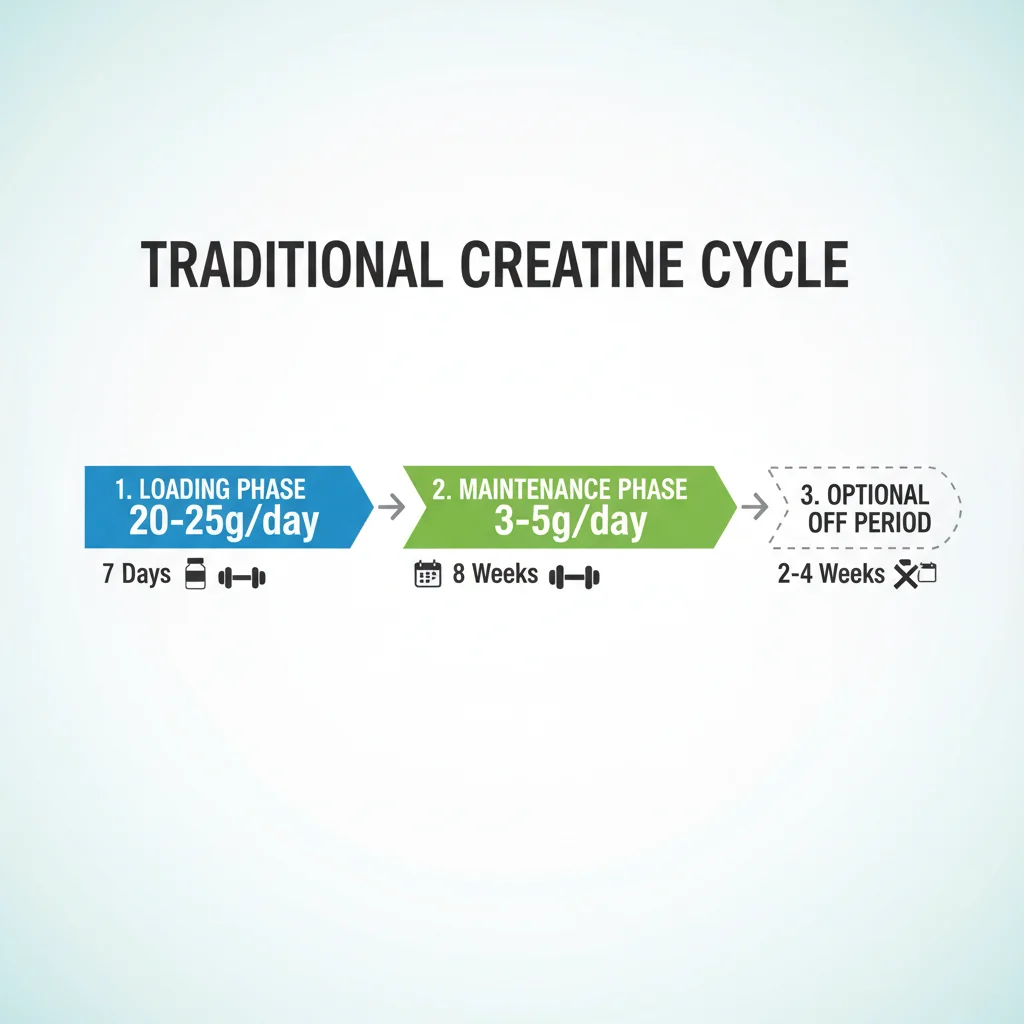
The Traditional Loading & Maintenance Cycle
This is the classic and most widely recognized cycling protocol.
- Loading Phase: Typically lasts 5-7 days. During this period, you consume 20-25 grams of creatine monohydrate daily, usually split into 4-5 equal servings of 5 grams each. This high dose is designed to rapidly increase the creatine phosphate stores in your muscles.
- Maintenance Phase: Following the loading phase, you reduce the dose to 3-5 grams per day. This standard dose is sufficient to maintain the elevated creatine levels in your muscles. This phase can last anywhere from 3 to 12 weeks, depending on individual goals and cycle plans.
- Off-Period (Optional): Some protocols recommend taking a break from supplementation for 2-4 weeks after the maintenance phase before starting a new cycle. The theory is this may help reset the body’s sensitivity.
Alternative Cycling Approaches
Beyond the traditional method, other patterns exist:
* No-Load Cycle: You skip the loading phase entirely and simply take a maintenance dose of 3-5 grams daily from the start. This is simpler and avoids potential digestive discomfort from high doses but delays full saturation.
* Performance-Based Cycle: Athletes might time their loading phase to coincide with the start of a competition season or intensive training block, using the maintenance phase throughout, and then discontinue use in the off-season.
Potential Benefits and Drawbacks of Cycling
Is cycling creatine superior to taking it consistently? The scientific consensus offers clarity, but individual experiences may vary.
Proposed Benefits
- Rapid Results: The main advertised benefit is achieving peak muscle creatine saturation much faster, which could lead to quicker noticeable improvements in strength and power output during high-intensity training.
- Cost-Effective: Some argue that by taking a break, you use less supplement over a year, making it more economical. However, creatine monohydrate is already one of the most cost-effective supplements available.
- Managing Tolerance: Anecdotally, some users believe cycling prevents the body from adapting and diminishing the supplement’s effects over time, though strong scientific evidence for this is lacking.
Key Drawbacks and Considerations
- Digestive Issues: The high doses during a loading phase can cause bloating, stomach cramps, or diarrhea in some individuals.
- Unnecessary Complexity: For most people, the benefits of creatine are derived from consistent, long-term use. Cycling adds a layer of complexity that may not provide any additional advantage for general fitness enthusiasts.
- Lack of Scientific Superiority: Robust clinical research, including studies cited by authorities like Examine.com, indicates that while loading speeds up saturation, the long-term outcomes (over several months) are identical whether you load or not. The body maintains creatine stores effectively on a steady maintenance dose.
Safety and Best Practices for Creatine Use
Creatine is overwhelmingly considered safe for long-term use in healthy individuals. Whether you choose to cycle or not, adhering to best practices is crucial.
- Stay Hydrated: Creatine draws water into muscle cells. Therefore, increasing your water intake is essential, especially during a loading phase, to support this process and avoid dehydration.
- Pair with Carbohydrates: Taking creatine with a carbohydrate source (like a fruit juice or a meal) can enhance its uptake into muscles due to the accompanying insulin response.
- Monitor Your Body: Pay attention to how you feel. If a loading phase causes significant discomfort, simply switch to a standard 5-gram daily dose. Consistency is more important than the initial loading speed.
- Consult a Professional: If you have pre-existing kidney conditions or concerns, consult a healthcare provider before beginning any new supplement regimen. For insights on managing other aspects of health through supplementation, you might explore our guide on blood sugar levels.
Who Should Consider a Creatine Cycle?
Cycling may hold specific appeal for certain individuals:
* Competitive Athletes: Those needing to rapidly peak for a competition or event might use a loading phase to ensure creatine stores are maximized at the right time.
* Experienced Users Seeking a Change: Long-term users who feel their response has plateaued might experiment with a cycle (including an off-period) to see if it renews perceived effects.
* Those on a Tight Budget: While the savings are minimal, the logic of using less product over time by incorporating off-periods can be a factor.
Conversely, for the average gym-goer seeking steady strength and muscle gains, a simple, consistent daily dose of 3-5 grams is perfectly sufficient and often recommended.
The Verdict: To Cycle or Not to Cycle?
The evidence suggests that creatine cycling is not necessary for most people to achieve the supplement’s well-documented benefits. The long-term results from consistent daily supplementation are equivalent. The loading phase primarily offers a shortcut to full saturation, which is useful in specific, time-sensitive scenarios but comes with a higher risk of minor side effects.
Therefore, your choice should align with your personal goals, tolerance, and preference for simplicity. If you want the fastest possible start and don’t mind the protocol, a traditional cycle is fine. If you prefer a “set it and forget it” approach that is equally effective over months, stick with a daily maintenance dose from day one.
Ultimately, the most critical factor is consistency and pairing your supplementation with a proper training and nutrition plan. For those interested in foundational nutrition that supports overall wellness, understanding components like antioxidants for prostate health can be a valuable part of a holistic approach. Remember, supplements are meant to complement a solid foundation, not replace it.

