
Dates vs Figs: Nutrition & How to Choose
Dates vs Figs: A Nutritional Showdown
When you’re looking for a natural, sweet snack, dates and figs are two of the most popular and ancient choices. Both are celebrated for their rich flavor and dense nutrient profiles, but they have distinct differences. Choosing between them can be confusing, therefore, this comprehensive guide will break down the key comparisons in nutrition, health benefits, and culinary uses to help you decide.
Nutritional Profiles: A Side-by-Side Look
Firstly, understanding the basic nutritional composition is essential. The values below are typical for a 100-gram serving of each dried fruit, which is a standard comparison point.
| Nutrient (per 100g) | Dates (Medjool) | Figs (Dried) |
|---|---|---|
| Calories | 277 kcal | 249 kcal |
| Carbohydrates | 75 g | 64 g |
| Dietary Fiber | 7 g | 10 g |
| Sugars | 66 g | 48 g |
| Protein | 2 g | 3 g |
| Fat | 0.2 g | 1 g |
| Potassium | 696 mg (15% DV) | 680 mg (14% DV) |
| Calcium | 64 mg (5% DV) | 162 mg (12% DV) |
| Magnesium | 54 mg (13% DV) | 68 mg (16% DV) |
| Iron | 0.9 mg (5% DV) | 2 mg (11% DV) |
Note: DV = Daily Value based on a 2,000-calorie diet. Values are approximate and can vary by variety and processing.
Consequently, we can see that figs generally provide more fiber, calcium, and iron per serving, while dates are significantly higher in natural sugars and calories, making them a more concentrated energy source.
Health Benefits Compared
Both fruits offer impressive health advantages, but their strengths differ.
Key Benefits of Dates
- Rapid Energy Boost: Due to their high simple sugar content (primarily glucose and fructose), dates are excellent for a quick pre-workout snack or to combat fatigue.
- Natural Sweetener: Their caramel-like flavor and sticky texture make them a perfect whole-food substitute for refined sugar in baking and smoothies.
- Digestive Support: They contain soluble fiber, which aids digestion. Interestingly, for other natural digestive aids, you can explore options like peppermint tea or chamomile tea.
- Rich in Potassium: This mineral is crucial for heart health and maintaining healthy blood pressure levels.
Key Benefits of Figs
- Superior Fiber Source: Figs, especially dried ones, are exceptionally high in fiber, which promotes sustained digestive health, regularity, and feelings of fullness.
- Bone Health: They are a notable non-dairy source of calcium and magnesium, both vital for bone density.
- Antioxidant Properties: Figs contain antioxidants like phenols and flavonoids, which help combat oxidative stress in the body.
- Iron Content: They provide more iron than dates, which is beneficial for supporting healthy blood and preventing anemia.
Taste, Texture, and Culinary Uses
This is where personal preference plays a major role.
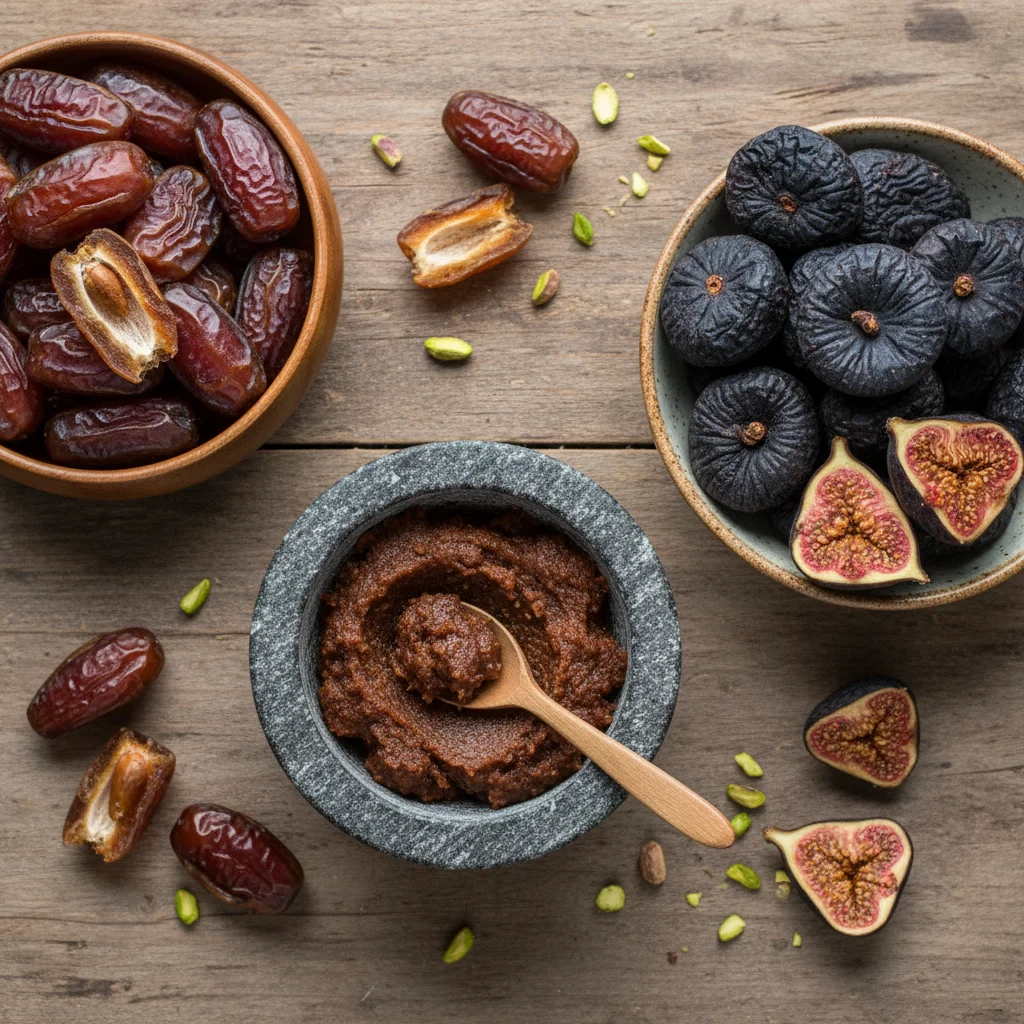
Dates (like Medjool or Deglet Noor) have a deep, rich, almost caramel-like sweetness with a chewy, sticky, and dense texture. They are often pitted and stuffed with nuts or cheese. Moreover, they are blended into “date paste” for sweetening, added to energy balls, and are a staple in Middle Eastern cuisine.
Figs offer a more complex flavor profile: mildly sweet with a subtle honey-like taste and a hint of berry. Dried figs have a uniquely chewy texture with crunchy seeds inside. They are delicious sliced on cheese boards, baked into breads, stewed in jams, or simply eaten whole as a snack.
Which One Should You Choose?
Your choice depends on your specific health and lifestyle goals.
- Choose DATES if: You need quick energy, want a natural sugar alternative for baking, or prefer a sweeter, richer flavor. They are the go-to for athletes and as a pre-workout fuel.
- Choose FIGS if: Your priority is boosting fiber intake for digestion, you want to support bone health with plant-based calcium, or you enjoy a more nuanced, less intensely sweet flavor.
Ultimately, there’s no need to declare a single winner. Incorporating both into a balanced diet allows you to reap a wider array of nutrients. For instance, you might use dates in a morning smoothie for energy and enjoy figs as an afternoon fiber-rich snack.
Final Verdict
In the battle of dates vs figs, both are nutritional powerhouses worthy of pantry space. Dates are the ultimate natural energy bar, while figs are a fiber and mineral champion. By understanding their unique profiles, you can make an informed choice that best supports your dietary needs and satisfies your taste buds.
Therefore, consider keeping both on hand to diversify your nutrient intake and culinary creations.