
Fig vs Date: Nutrition, Taste, Uses
Fig vs Date: A Complete Nutritional and Culinary Showdown
When you’re looking for a natural, sweet snack or a wholesome baking ingredient, figs and dates are two of the most popular choices. Both are ancient fruits celebrated for their sweetness and nutritional value, yet they are distinctly different.
Consequently, choosing between them can be confusing. This comprehensive guide will break down the fig vs date debate across all key categories, from nutrition and health benefits to taste and culinary uses.
What Are Figs and Dates?
Firstly, it’s essential to understand their origins. Figs are the fruit of the Ficus carica tree and are technically an inverted flower. They have a unique, chewy texture filled with tiny, edible seeds. Dates, on the other hand, are the fruit of the date palm (Phoenix dactylifera).
They are often sold dried and are known for their intensely sweet, caramel-like flavor and sticky, dense texture.
Nutritional Face-Off: Fig vs Date
While both are nutrient-dense, their profiles differ significantly. The table below compares a standard 100-gram serving of dried figs and dried dates, as this is the most common form for both.
| Nutrient (per 100g) | Dried Figs | Dried Dates (Deglet Noor) |
|---|---|---|
| Calories | 249 kcal | 282 kcal |
| Total Carbohydrates | 63.9 g | 75 g |
| Dietary Fiber | 9.8 g | 8 g |
| Sugars | 47.9 g | 63 g |
| Protein | 3.3 g | 2.5 g |
| Fat | 0.9 g | 0.4 g |
| Potassium | 680 mg (14% DV) | 656 mg (14% DV) |
| Calcium | 162 mg (16% DV) | 39 mg (4% DV) |
| Magnesium | 68 mg (16% DV) | 43 mg (10% DV) |
Note: DV = Daily Value based on a 2,000-calorie diet. Source data from the USDA FoodData Central.
Key Nutritional Takeaways
- Sugar & Calories: Dates are significantly higher in natural sugars and calories, making them a more concentrated energy source. Figs, therefore, are slightly lower in calories and sugar.
- Fiber: Both are excellent for digestion, but figs have a slight edge in fiber content, which is crucial for gut health and managing blood sugar levels.
- Minerals: Figs are a surprisingly excellent source of calcium, providing more than many other fruits. Dates are also rich in potassium, which is vital for heart and muscle function.
Health Benefits Compared
Both fruits offer impressive health advantages, though their strengths vary.
Benefits of Figs
- Bone Health: Because of their high calcium and magnesium content, figs are a great fruit for supporting bone density.
- Digestive Health: The high fiber content acts as a natural laxative, promoting regular bowel movements and feeding beneficial gut bacteria. For more on supporting your digestive system, explore our guide on the best powder supplements for gut health.
- Antioxidant Power: Figs contain antioxidants like phenols and flavonoids, which help combat oxidative stress.
Benefits of Dates
- Rapid Energy Boost: The high simple sugar content (glucose and fructose) makes dates a perfect pre-workout snack or a quick pick-me-up.
- Natural Sweetener: They are a healthier alternative to refined sugar in recipes, providing sweetness along with fiber and nutrients.
- Pregnancy: Traditionally, dates are recommended for pregnant women, as some studies suggest they may ease late-stage labor.
Taste, Texture, and Culinary Uses
This is where the choice becomes highly personal and recipe-dependent.
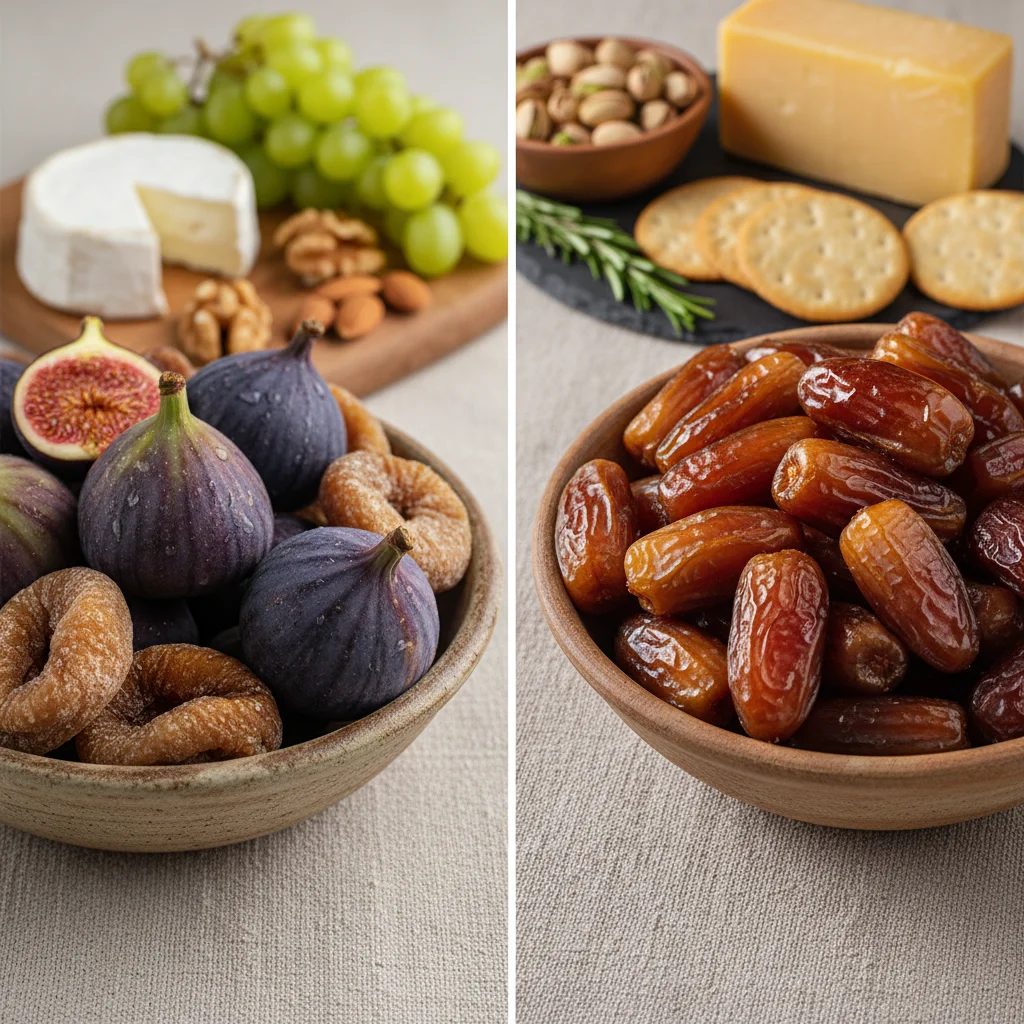
Fresh Figs are delicate, mildly sweet, and have a soft, jam-like texture with a subtle crunch from the seeds. Dried Figs are much sweeter, chewier, and have a more concentrated, honey-like flavor.
Dates (almost always consumed dried) are intensely sweet with deep caramel, almost toffee-like notes. Their texture is sticky, dense, and syrupy.
How to Use Them in Your Kitchen
- Best for Figs: Enjoy fresh figs with cheese (like goat or blue cheese), in salads, or sliced on toast. Dried figs are perfect for chopping into oatmeal, baking into breads, or making jam.
- Best for Dates: Use dates as a base for energy balls, natural sweetener in smoothies and raw desserts (like “date caramel”), or stuffed with nuts or cheese for an appetizer. Their binding quality is exceptional.
Which One Should You Choose?
Your decision should be guided by your dietary goals and culinary needs.
- Choose FIGS if: You want a fruit slightly lower in sugar and calories, need a calcium boost, prefer a more complex, less overwhelmingly sweet flavor, or are using them in fresh applications.
- Choose DATES if: You need a quick source of energy, want a natural sugar substitute with a caramel flavor, need a sticky binder for no-bake recipes, or are looking for a deeply sweet, indulgent snack.
Moreover, incorporating a variety of fruits into your diet is always the best strategy for obtaining a wide range of nutrients.
The Final Verdict
In the fig vs date debate, there is no single “winner.” Both are nutritious, versatile, and delicious in their own right. Figs offer a mineral-rich profile with a balanced sweetness, while dates provide powerful energy and intense flavor. Ultimately, keeping both in your pantry allows you to harness their unique strengths for different recipes and health benefits.
Therefore, why not enjoy the best of both worlds?

