
11 Foods to Avoid or Limit During Pregnancy Guide
Foods to Avoid During Pregnancy: The Complete Safety Guide
Pregnancy is a period of significant physiological change. During these nine months, the immune system is naturally suppressed, making pregnant women more susceptible to foodborne illnesses like Listeria, Salmonella, and E. coli.
What might cause mild stomach upset in a healthy adult can lead to serious complications for a fetus.
Here is a detailed look at the categories of food that require caution.
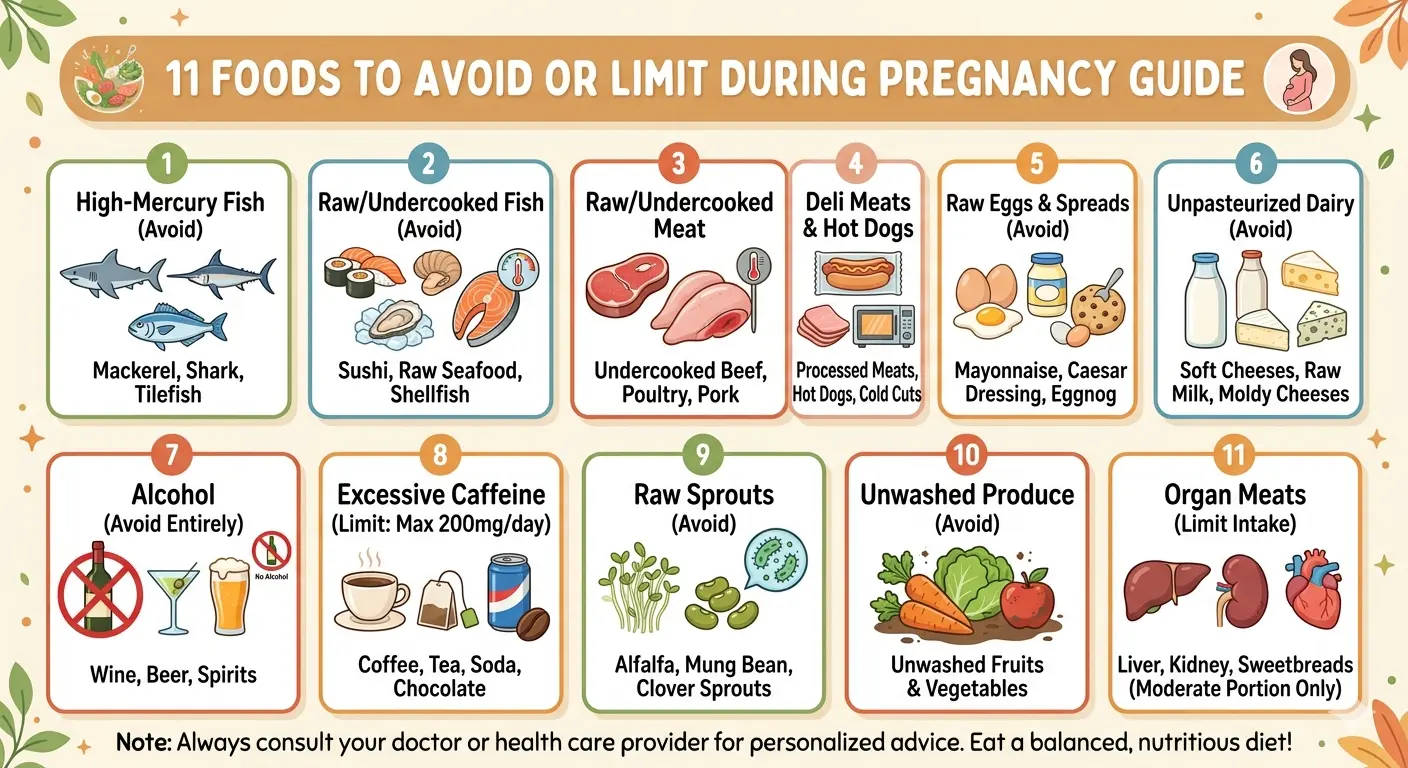
1. High-Mercury Fish
Mercury is a heavy metal often found in oceans and streams. In high amounts, it is toxic to the nervous system, kidneys, and immune system. For a developing baby, even moderate amounts of mercury can lead to developmental delays and brain damage.
Avoid these high-mercury fish:
Shark: Known for very high mercury accumulation.
Swordfish: Large predatory fish that should be strictly avoided.
King Mackerel: Contains significantly higher levels than Atlantic mackerel.
Tilefish: Specifically those from the Gulf of Mexico.
Bigeye Tuna: Often used in premium sushi or steaks.
What to eat instead:
Low-mercury options like Salmon, Anchovies, Herring, and Sardines are excellent choices as they are rich in Omega-3 fatty acids (DHA), which support the baby’s brain and eye development.
2. Raw or Undercooked Fish and Shellfish
Raw fish, especially shellfish like oysters and clams, can carry viral, bacterial, or parasitic infections. These include Norovirus, Vibrio, and Salmonella.
Risks involved:
Listeria: This bacterium is particularly dangerous. It can be passed to the baby through the placenta, even if the mother doesn’t feel sick. Listeria can lead to miscarriage, stillbirth, or premature labor.
Dehydration: Infections from raw shellfish often cause severe vomiting and diarrhea, leading to dangerous levels of dehydration for the mother.
Safety Tip: Always ensure fish is cooked to an internal temperature of 145°F (63°C). Avoid sushi containing raw fish; opt for “California Rolls” with cooked crab or veggie rolls instead.
3. Undercooked, Raw, and Processed Meat
Similar to raw fish, undercooked meat increases the risk of infection from several bacteria and parasites, including Toxoplasma, E. coli, Listeria, and Salmonella.
Specific Hazards:
Toxoplasmosis: A parasite found in undercooked meat that can cause blindness or intellectual disabilities in the baby later in life.
Deli Meats & Hot Dogs: Cold cuts, deli meats, and hot dogs can become contaminated with Listeria during processing or storage.
How to consume safely:
Cook all meat (beef, pork, poultry) until it is steaming hot and reaches the recommended internal temperature.
If you crave deli meats or hot dogs, they must be reheated until they are “steaming hot” (165°F) to kill any potential bacteria.
4. Raw Eggs
Raw eggs can be contaminated with Salmonella. While Salmonella rarely harms the baby directly, it can cause the mother severe illness, including fever, nausea, and abdominal cramps, which may lead to uterine contractions.
Hidden sources of raw eggs:
Homemade Caesar salad dressing.
Homemade mayonnaise or Hollandaise sauce.
Raw cookie dough or cake batter.
Lightly poached or “sunny-side up” eggs.
Safety Tip: Use pasteurized eggs for recipes that require raw or lightly cooked eggs, and ensure scrambled or fried eggs are cooked until the yolks are firm.
5. Unpasteurized Dairy Products and Soft Cheeses
Raw milk and unpasteurized cheeses can harbor a range of harmful bacteria, including Listeria, Salmonella, and Campylobacter.
Cheeses to be careful with:
Brie
Camembert
Roquefort (Blue cheese)
Feta
Queso Fresco
Note: These cheeses are generally safe only if the label explicitly states they are made from “pasteurized milk.” In many countries, most commercial cheeses are pasteurized, but always check the label at farmer’s markets or specialty shops.
6. Caffeine Intake
Caffeine is absorbed very quickly and passes easily into the placenta. Because babies do not have the enzyme needed to metabolize caffeine, high levels can build up.
Risks of high caffeine:
Low Birth Weight: High caffeine intake is linked to restricted fetal growth.
Increased Heart Rate: It can affect the baby’s heart rate and sleep patterns.
The Limit: Most health organizations, including the ACOG (American College of Obstetricians and Gynecologists), recommend limiting caffeine to under 200 mg per day. This is roughly the amount in one 12-ounce cup of brewed coffee. Remember that tea, chocolate, and some sodas also contain caffeine.
7. Raw Sprouts
Raw sprouts, including alfalfa, clover, radish, and mung bean sprouts, are often grown in warm, humid conditions—the exact environment where bacteria like Salmonella and E. coli thrive.
Unlike other vegetables, bacteria can get into the seeds before the sprouts even grow. These bacteria are nearly impossible to wash out.
Safety Tip: Always cook sprouts thoroughly. Once cooked, they are safe to consume and provide good fiber and vitamins.
8. Unwashed Produce
The surface of unwashed or unpeeled fruits and vegetables may be contaminated with several bacteria and parasites, most notably Toxoplasma gondii. This parasite lingers in the soil where the vegetables are grown.
The Danger: Many people infected with Toxoplasma show no symptoms, but it can cross the placenta and cause serious neurological issues for the infant.
Safety Tip: Rinse all produce thoroughly under running water. Peel fruits when possible and avoid bruised areas where bacteria can gather.
9. Alcohol
There is no “safe” amount of alcohol established for pregnancy. Alcohol consumption during pregnancy is a leading cause of preventable birth defects.
Risks include:
Fetal Alcohol Spectrum Disorders (FASD): This involves physical deformities, heart defects, and intellectual disabilities.
Miscarriage and Stillbirth: Even small amounts can increase these risks during the first trimester.
Advice: It is best to avoid alcohol completely throughout the entire pregnancy and while breastfeeding.
10. Organ Meat (Vitamin A Caution)
While organ meats (like liver) are a great source of iron, Vitamin B12, and copper, they contain very high levels of preformed Vitamin A (Retinol).
Consuming too much preformed Vitamin A, especially during the first trimester, can lead to congenital malformations and liver toxicity in the fetus.
The Limit: Limit liver consumption to once a week or small portions to avoid Vitamin A toxicity.
11. Processed “Junk” Foods
Pregnancy is a time of “nutrient density.” The body requires increased amounts of folate, choline, and iron. Filling the diet with highly processed foods (fast food, sugary snacks, instant noodles) provides “empty calories.”
Risks:
Excessive Weight Gain: Increases the risk of gestational diabetes.
Preeclampsia: High sodium in processed foods can contribute to high blood pressure.
Nutrient Deficiency: If the mother eats junk food, the baby may not get the essential building blocks for healthy development.
Summary Table: Quick Reference for Expectant Mothers
| Food Category | Status | Reason / Safety Tip |
| High-Mercury Fish | Avoid | Toxic to baby’s nervous system. |
| Sushi (Raw Fish) | Avoid | Risk of Listeria and parasites. |
| Deli Meats | Limit | Must be reheated until steaming hot. |
| Soft Cheeses | Check Label | Safe only if made with pasteurized milk. |
| Raw Eggs | Avoid | Risk of Salmonella. Cook yolks firm. |
| Caffeine | Limit | Max 200mg per day (1 cup of coffee). |
| Alcohol | Avoid | No safe limit; causes FASD. |
| Unwashed Veggies | Avoid | Risk of Toxoplasmosis from soil. |
Frequently Asked Questions (FAQs)
1. Is any amount of alcohol safe during pregnancy?
No. There is no proven safe amount of alcohol to consume during pregnancy. Alcohol passes directly through the placenta to the baby and can lead to Fetal Alcohol Spectrum Disorders (FASD), causing lifelong physical and mental challenges. It is best to avoid it entirely.
2. Should I stop eating all types of fish?
Not at all. Fish is an excellent source of Omega-3 fatty acids, which are vital for your baby’s brain and eye development. You only need to avoid high-mercury fish (like Shark, Swordfish, and King Mackerel). Stick to low-mercury options like Salmon, Shrimp, and Catfish.
3. What should I do if I accidentally ate something on the “Avoid” list?
Don’t panic. One accidental serving is unlikely to cause harm. However, monitor yourself for symptoms like high fever, severe nausea, or flu-like aches, which could indicate a foodborne illness like Listeria. If you feel unwell, consult your doctor immediately.
4. Why is the caffeine limit set at 200mg?
High caffeine intake has been linked to an increased risk of miscarriage and low birth weight. Staying under 200mg per day (about one 12-ounce cup of coffee) keeps the caffeine levels in your bloodstream low enough for your baby to handle safely.
5. Are raw sprouts really that dangerous?
Yes, raw sprouts (like alfalfa and clover) are high-risk because bacteria can get inside the seeds before they even grow. Since you cannot wash bacteria out from the inside of a sprout, they must be cooked thoroughly to be safe.
6. Can I eat papaya and pineapple during pregnancy?
Papaya: Avoid unripe or semi-ripe papaya, as it contains latex that may trigger uterine contractions. Fully ripe papaya is generally considered safe.
Pineapple: While it contains bromelain, you would have to eat massive amounts for it to cause issues. In normal, moderate food portions, pineapple is safe for most women.
7. Is it safe to eat honey while pregnant?
Yes. Unlike infants under one year old—who should never have honey due to the risk of botulism—a pregnant woman’s digestive system can handle the spores safely, and they do not pass through the placenta to the baby.
8. How can I ensure my vegetables are safe from Toxoplasmosis?
The best way is to wash all produce under running water, even if you plan to peel it. Use a vegetable brush for firm produce like melons or cucumbers to remove any soil residue where the Toxoplasma parasite might live.
Conclusion: Building a Safe Plate
Eating during pregnancy doesn’t have to be a source of anxiety. By following these guidelines, you can significantly reduce the risk of foodborne illnesses. Focus on a diet rich in whole foods: lean proteins, whole grains, pasteurized dairy, and a rainbow of thoroughly washed fruits and vegetables.
Key Takeaway: When in doubt, cook it out. Heat is the most effective way to kill the bacteria that pose a threat to your pregnancy. Always consult with your healthcare provider or a registered dietitian to tailor these recommendations to your specific health needs.
You Can Read this Blog if you are interested in – Burrito Craft Game Guide: Unblocked Minecraft Fun