
Herbs for Energy Tea Recipes
Energize Naturally: The Best Herbs for Energy Tea
Feeling that afternoon slump or struggling with morning fatigue is a common experience. Many people reach for coffee or sugary energy drinks, but these often lead to crashes and jitters. Consequently, a gentler, more sustained solution is gaining popularity: herbal energy teas. These blends harness the power of specific herbs known to support vitality, focus, and endurance without the harsh side effects of excessive caffeine. This guide will explore the top herbs for crafting your own invigorating brews.
Why Choose Herbal Teas for Energy?
Firstly, it’s important to distinguish herbal “energy” from a caffeine spike. True herbal energy support often works by helping your body manage stress, improving mitochondrial function, or enhancing circulation and oxygen delivery. Therefore, these teas promote a sense of balanced alertness and resilience rather than a sudden, anxious rush. Moreover, they are typically rich in antioxidants and other beneficial compounds that support overall health.
Top Herbs to Include in Your Energy Tea
The following herbs are renowned for their ability to combat fatigue and enhance mental and physical stamina. You can use them individually or create synergistic blends.
| Herb | Primary Benefit for Energy | Key Active Compounds | Flavor Profile |
|---|---|---|---|
| Asian Ginseng (Panax ginseng) | Adaptogen; reduces fatigue & improves mental performance | Ginsenosides | Earthy, slightly bitter, sweet aftertaste |
| Rhodiola Rosea | Adaptogen; fights mental & physical burnout | Rosavins, Salidroside | Floral, slightly astringent |
| Yerba Mate | Provides clean caffeine with nutrients & antioxidants | Caffeine, Theobromine, Polyphenols | Grassy, herbal, robust |
| Green Tea | Sustained alertness from L-theanine & caffeine synergy | Caffeine, L-theanine, EGCG | Vegetal, fresh, slightly astringent |
| Ginkgo Biloba | Enhances cerebral blood flow & cognitive function | Flavonoids, Terpenoids | Mild, slightly bitter |
| Peppermint | Stimulates senses & combats mental fatigue | Menthol | Cool, refreshing, bright |
| Ginger | Boosts circulation & fights inflammatory fatigue | Gingerols, Shogaols | Spicy, warm, pungent |
| Holy Basil (Tulsi) | Adaptogen; lowers stress cortisol to free up energy | Eugenol, Ursolic acid | Spicy, clove-like, aromatic |
How to Craft Your Perfect Energy Tea Blend
Creating your own blend allows you to tailor the effects and flavor to your personal needs. Here is a simple framework to get started.
1. Choose Your Base
Select one or two primary energizing herbs. For instance, Yerba Mate or Green Tea are excellent foundational choices because they provide a gentle caffeine lift. Alternatively, for a caffeine-free base, consider robust herbs like Rooibos.
2. Add an Adaptogen
Adaptogenic herbs help your body resist stressors, which is a major cause of fatigue. Rhodiola or Asian Ginseng are powerful additions. Importantly, if you have specific health conditions or are on medication, consult a healthcare provider before using adaptogens.
3. Include a Circulatory Herb
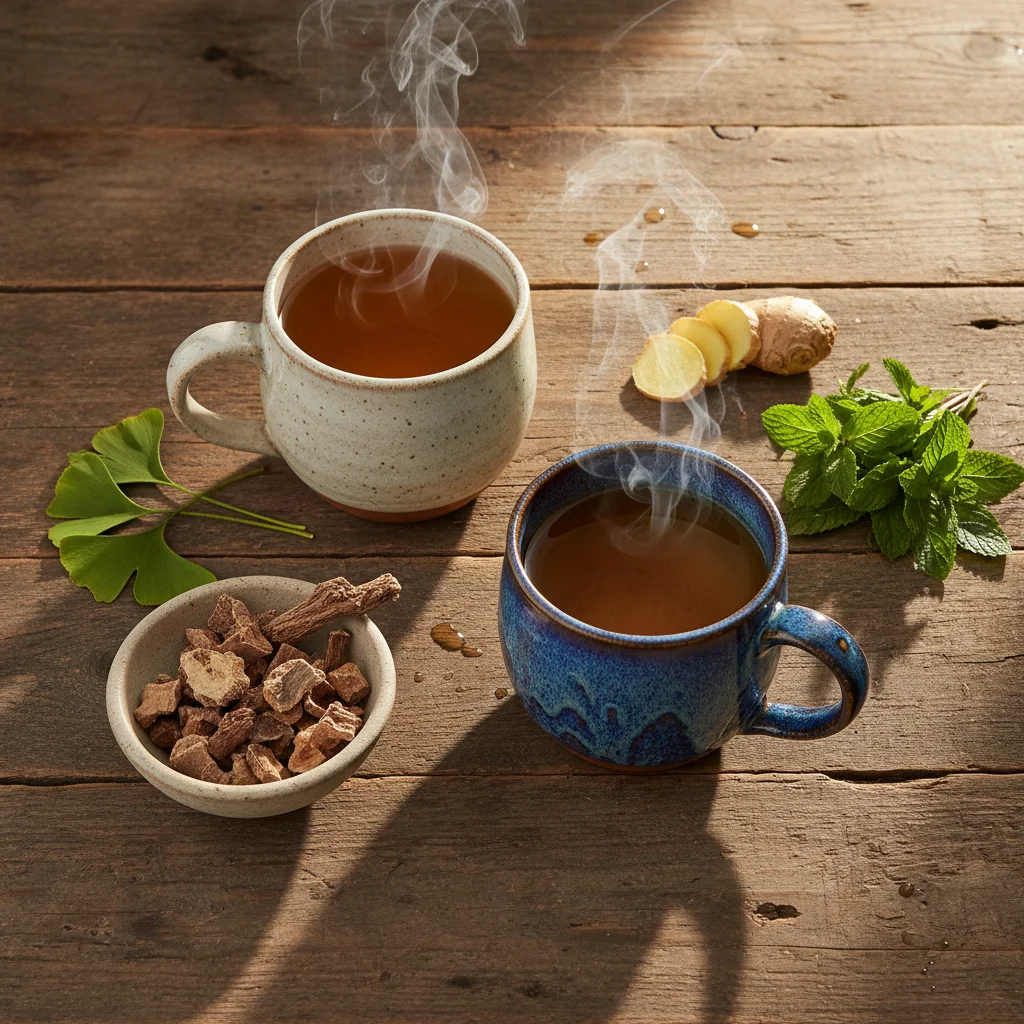
Enhanced blood flow delivers more oxygen and nutrients to your cells. Ginkgo Biloba is renowned for this, particularly for brain function. Ginger is another fantastic option that also adds a warming spice.
4. Finish with Flavor & Aroma
This step makes your tea enjoyable. Peppermint or Holy Basil can brighten the blend and add their own invigorating properties. A slice of lemon or a dash of cinnamon can also enhance the flavor profile.
Two Simple Energy Tea Recipes to Try
Sustained Focus Blend
- 1 tsp Green Tea (base for L-theanine & caffeine)
- 1/2 tsp Ginkgo Biloba (circulatory support)
- 1/4 tsp Ginger, dried (warming circulation boost)
- A few fresh Peppermint leaves (for aroma & freshness)
Instructions: Steep in 8 oz of hot water (175°F for green tea) for 3-4 minutes. Strain and enjoy in the morning or early afternoon.
Stress-Resilience Adaptogen Brew (Caffeine-Free)
- 1 tsp Rhodiola Rosea root (primary adaptogen)
- 1/2 tsp Holy Basil (Tulsi) (supporting adaptogen & flavor)
- 1/2 tsp dried Orange Peel (for a bright, uplifting flavor)
- A pinch of Cinnamon (warming and supports blood sugar balance)
Instructions: Steep in 8 oz of boiling water for 7-10 minutes to fully extract the adaptogenic compounds. Strain and drink when feeling overwhelmed or fatigued from stress.
Important Considerations & Safety
While herbal teas are generally safe, they are potent. Firstly, always source your herbs from reputable suppliers to ensure purity and quality. Secondly, start with small amounts to see how your body reacts. Furthermore, pregnant or nursing women and individuals with chronic health conditions (especially related to blood pressure, blood thinning, or auto-immune issues) should consult a doctor. Notably, some herbs, like ginseng, are not recommended for long-term daily use.
Additionally, remember that true energy comes from a holistic foundation. A potent energy tea works best when paired with adequate sleep, proper nutrition, and regular exercise. For more on supporting your body’s foundational health, explore our review of an Advanced Mitochondrial Formula, which delves into cellular energy production.
Beyond Tea: A Holistic Approach to Vitality
Herbal teas are a wonderful tool, but they are part of a larger picture. For days when you need a different kind of boost, you might consider a clean, functional beverage. For comparison, you can read about a popular option in our detailed Function Energy Drink review. Moreover, if a sore throat is sapping your energy, knowing the right herbal remedy is key—discover our recommendations for the best tea for sore throat.
In conclusion, turning to herbs for energy tea is a time-tested, natural method to enhance your vitality. By understanding the properties of herbs like ginseng, rhodiola, and yerba mate, you can create personalized blends that support sustained energy, improve focus, and help your body manage daily stress. Therefore, why not explore these natural boosters and craft a cup of wellness that truly revitalizes you?


2 thoughts on “Herbs for Energy Tea Recipes”
Comments are closed.