
Is Nutella Healthy? Facts & Alternatives
Is Nutella Healthy? A Detailed Look at the Popular Spread
The question “Is Nutella healthy?” is one of the most common in the world of popular foods. Its creamy texture and irresistible chocolate-hazelnut flavor have made it a pantry staple globally. However, its reputation often swings between being a delicious treat and a nutritional concern. To answer this definitively, we must look beyond the marketing and examine its ingredients and nutritional profile closely.
What is Nutella Made Of? Breaking Down the Ingredients
Firstly, understanding what’s in the jar is crucial. The primary ingredients, in order of quantity, are:
- Sugar
- Palm Oil
- Hazelnuts
- Skimmed Milk Powder
- Fat-Reduced Cocoa
- Lecithin (an emulsifier)
- Vanillin (an artificial flavor)
Consequently, the very first ingredient is sugar. This is a critical point because, by weight, sugar makes up over half of the product. Palm oil is the second ingredient, providing the spreadable texture but also adding saturated fat. Hazelnuts and cocoa, while present, are not the dominant components.
Nutella Nutrition Facts: The Sugar and Fat Reality
A detailed look at the nutrition label reveals why moderation is key. The following table outlines the nutritional content for a standard two-tablespoon (37g) serving.
| Nutrient | Amount per 37g Serving | % Daily Value* |
|---|---|---|
| Calories | 200 | 10% |
| Total Fat | 12g | 15% |
| Saturated Fat | 4g | 20% |
| Total Sugars | 21g | 42% |
| Protein | 2g | 4% |
| Dietary Fiber | 1g | 4% |
| Calcium | 40mg | 4% |
| Iron | 0.6mg | 4% |
*Percent Daily Values are based on a 2,000 calorie diet.
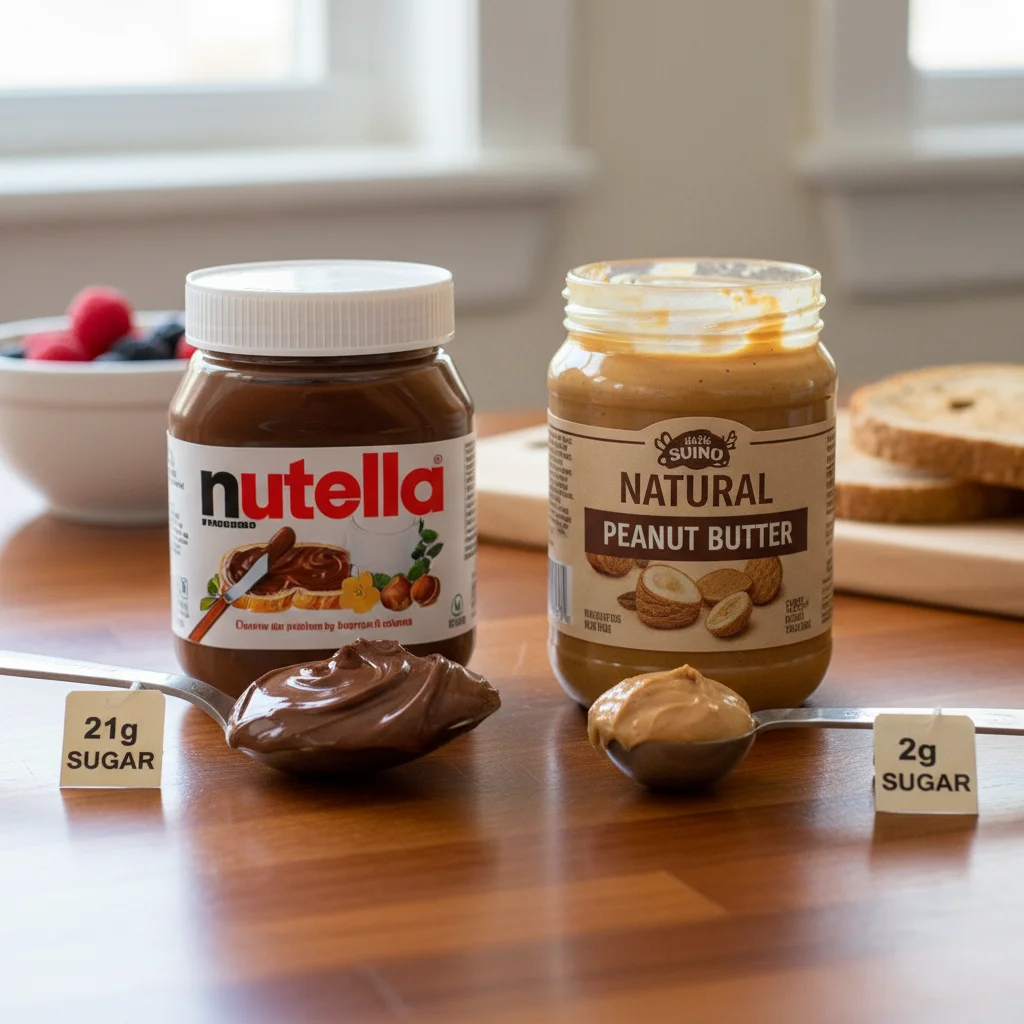
The data is revealing. A single serving contains 21 grams of added sugar, which is more than half of the American Heart Association’s recommended daily limit for women (25g) and nearly half for men (36g). Moreover, the 4 grams of saturated fat from palm oil contributes a significant 20% of the recommended daily limit.
Nutella vs. Peanut Butter: A Nutritional Showdown
To put this into perspective, it’s helpful to compare Nutella to a classic spread: peanut butter. This comparison highlights the stark differences between a nut-based spread and a sweetened confection.
| Criteria (per 2 tbsp) | Natural Peanut Butter | Nutella |
|---|---|---|
| Primary Ingredients | Peanuts, Salt | Sugar, Palm Oil, Hazelnuts |
| Calories | ~190 | 200 |
| Total Fat | 16g | 12g |
| Saturated Fat | 2.5g | 4g |
| Total Sugar | 1-2g (naturally occurring) | 21g (added) |
| Protein | 8g | 2g |
| Fiber | 2g | 1g |
As shown, natural peanut butter provides substantially more protein and fiber with minimal added sugar, making it a more nutrient-dense choice for sustained energy. Nutella, however, offers a quick energy spike primarily from sugar and fat.
So, Is Nutella a Healthy Choice?
Based on the evidence, Nutella is best classified as a dessert or occasional treat, not a health food. Its high added sugar and saturated fat content, coupled with relatively low amounts of protein and fiber, mean it lacks the nutritional balance of true health foods.
Consuming it regularly in standard serving sizes can contribute to excessive sugar intake, which is linked to weight gain, increased risk of heart disease, and blood sugar spikes. For individuals managing conditions like diabetes or monitoring their blood sugar levels, it requires careful consideration.
However, this doesn’t mean you must eliminate it entirely. The core principle is portion control. Using a thin layer rather than heaping spoonfuls can allow you to enjoy the flavor without a major sugar overload.
Healthier Ways to Enjoy Nutella & Smart Alternatives
If you love the taste but want a more balanced approach, consider these strategies:
- Practice Strict Portion Control: Use a teaspoon, not a tablespoon.
- Pair with Nutrient-Rich Foods: Spread a small amount on whole-grain toast with banana slices, or use it as a dip for strawberries. The fiber and nutrients from the fruit help mitigate the sugar rush.
- Explore Homemade Versions: You can make a healthier version at home using primarily roasted hazelnuts, a small amount of dark cocoa powder, and a natural sweetener like dates or a modest amount of maple syrup.
- Choose Alternative Spreads: For a daily spread, opt for natural nut butters (almond, peanut, cashew) or seed butters. For a chocolate fix, try mixing cocoa powder into plain Greek yogurt or a nut butter.
The Final Verdict
Therefore, while Nutella can be part of a balanced diet, it should not be mistaken for a nutritious staple. Its health impact is directly tied to frequency and quantity. For a truly healthy breakfast or snack, whole foods and minimally processed spreads are superior choices. Ultimately, enjoying Nutella mindfully as an occasional indulgence is the most realistic and healthy approach for most people.
If you’re interested in other food comparisons, you might enjoy our analysis of the nutritional value of graham crackers or the benefits of blueberries vs. raspberries.

