
Low Calorie Pasta Replacements
Your Guide to Low Calorie Pasta Replacements
Craving a big bowl of pasta but worried about the calorie count? You’re not alone. Traditional pasta, while delicious, can be a significant source of carbohydrates and calories. Consequently, many health-conscious individuals are turning to innovative, low-calorie pasta replacements.
These alternatives not only help manage weight but also often pack a more powerful nutritional punch with added fiber, vitamins, and minerals. Therefore, exploring these options can transform your favorite comfort food into a nutrient-dense, guilt-free pleasure.
Why Consider a Pasta Alternative?
Firstly, traditional wheat pasta is primarily composed of refined carbohydrates, which can cause rapid spikes in blood sugar. Moreover, a standard serving can contain around 200 calories before you even add sauce. For those managing weight, blood sugar, or simply seeking a more volumous meal, low-calorie swaps are a strategic choice.
Additionally, many replacements are made from vegetables or legumes, inherently providing more fiber and protein, which enhance satiety and support digestive health. If you’re exploring other dietary supports for wellness, you might find our guide on best brain health supplements insightful.
Top Low Calorie Pasta Replacements to Try
Here is a comparative look at some of the most popular and effective pasta substitutes available today.
| Replacement | Key Ingredient | Approx. Calories per Cup (Cooked) | Best Texture For | Primary Benefit |
|---|---|---|---|---|
| Zucchini Noodles (Zoodles) | Zucchini | ~20 | Angel hair, thin spaghetti | Extremely low calorie, high in vitamin C |
| Shirataki Noodles | Konjac yam fiber | ~10 | Any pasta type, especially in Asian dishes | Nearly zero calories and carbs, glucomannan fiber |
| Spaghetti Squash | Spaghetti squash | ~40 | Spaghetti, fettuccine | Sweet, nutty flavor; rich in beta-carotene |
| Heart of Palm Noodles | Hearts of palm | ~20 | Linguine, thicker noodles | Neutral taste, firm “al dente” texture |
| Edamame/Mung Bean Pasta | Edamame or mung beans | ~180 | Any pasta type | High-protein, low-net-carb option |
| Kelp Noodles | Seaweed (kelp) | ~6 | Ramen, cold pasta salads | Mineral-rich, very crunchy |
How to Cook and Enjoy Each Type
Understanding how to properly prepare these alternatives is crucial for the best culinary experience.
Zucchini Noodles (Zoodles)
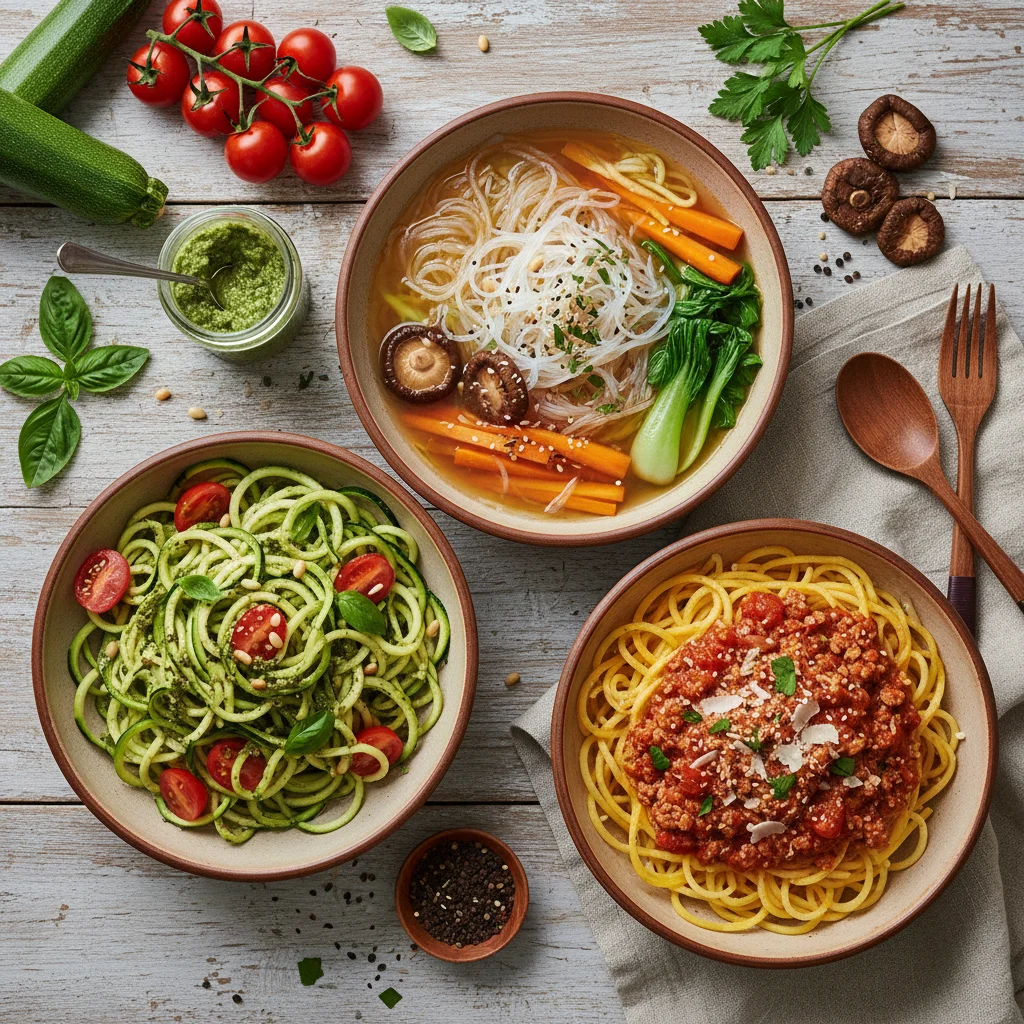
Because zucchini contains a lot of water, it’s essential to avoid sogginess. Firstly, spiralize the zucchini. Secondly, you can sauté them in a pan for just 2-3 minutes until tender-crisp, or use a “dry sauté” method with no oil to evaporate moisture. They pair perfectly with light pesto, marinara, or a lemon-garlic sauce.
Shirataki Noodles
These noodles have a unique preparation. They come packed in liquid with a distinct odor. Therefore, you must rinse them thoroughly under cold water for a minute. Then, for a better texture, dry-fry them in a non-stick skillet over medium heat for several minutes to remove excess moisture. They excel in stir-fries, ramen, and dishes with robust sauces like peanut or curry.
Spaghetti Squash
This requires a bit more time but is worth it. Firstly, cut the squash in half lengthwise and scoop out the seeds. Then, roast it face-down on a baking sheet until tender. Once cool, use a fork to scrape out the spaghetti-like strands. Its slightly sweet flavor complements meaty Bolognese, creamy Alfredo, or simply olive oil and herbs.
Integrating Replacements into Your Diet
Transitioning to these alternatives can be seamless. For instance, start by mixing half traditional pasta with half zucchini noodles in your next dish. Furthermore, focus on pairing them with flavorful, high-quality sauces and proteins to create a wholly satisfying meal. Remember, a holistic approach to health often includes other supportive habits; for example, managing stress is vital, and resources like our article on I hate my life can offer guidance on seeking support during tough times.
Nutritional Benefits Beyond Calories
The advantage of these swaps extends far beyond a simple calorie reduction. Primarily, vegetable-based noodles increase your daily intake of vitamins and antioxidants. For example, zucchini provides vitamin C and potassium, while spaghetti squash is rich in vitamin A. Secondly, the fiber content in options like shirataki (from glucomannan) and edamame pasta supports gut health and promotes a feeling of fullness, which can aid in weight management. According to research published by the National Institutes of Health, dietary fiber plays a crucial role in metabolic health.
Final Thoughts on Making the Switch
Adopting low-calorie pasta replacements is a practical and delicious strategy for enhancing your diet. However, it’s important to manage expectations; these are alternatives, not exact replicas. They offer their own unique textures and flavors that can become new favorites in their own right.
Ultimately, by incorporating these options, you can enjoy the comforting ritual of a pasta meal while aligning with your health and wellness goals. So, grab a spiralizer or explore the international aisle of your grocery store—your next favorite dish awaits.

