
Powdered Casein Benefits & Uses
Powdered Casein: The Slow-Release Protein Powerhouse
If you’re exploring the world of protein supplements, you’ve likely encountered whey protein dominating the shelves. However, another dairy-derived protein, powdered casein, offers a unique and powerful set of benefits, particularly for recovery and satiety. This comprehensive guide will explain what powdered casein is, its key advantages, and how you can effectively incorporate it into your nutrition plan.
What is Powdered Casein?
Powdered casein is a dietary supplement derived from milk. Milk protein is composed of two primary types: whey (about 20%) and casein (about 80%). During cheese production, casein is separated, filtered, and dried into a fine powder. Unlike whey, which is quickly absorbed, casein forms a gel or clot in the stomach. Consequently, it digests very slowly, providing a steady, prolonged release of amino acids into the bloodstream over several hours.
This “time-release” property is its defining characteristic and the source of its most celebrated benefits.
Key Benefits of Powdered Casein
Integrating powdered casein into your regimen can support various health and fitness goals. Here are its primary advantages:
1. Promotes Muscle Recovery and Growth
The slow digestion rate of casein creates a sustained anti-catabolic (muscle-sparing) environment. By providing a steady trickle of amino acids—especially leucine, a critical branched-chain amino acid (BCAA) for muscle protein synthesis—it helps repair muscle tissue damaged during exercise. This makes it an ideal supplement to take before periods of fasting, such as before bed, to support recovery overnight.
2. Enhances Feelings of Fullness
Because it forms a gel in the stomach, casein can promote satiety and reduce hunger cues more effectively than some other protein sources. Therefore, it can be a valuable tool for those managing calorie intake for weight management goals.
3. Rich in Essential Nutrients
High-quality casein powder is packed with all nine essential amino acids and is particularly high in calcium, which is crucial for bone health. Moreover, it often contains bioactive peptides that may support immune function and digestive health.
4. Versatile and Easy to Use
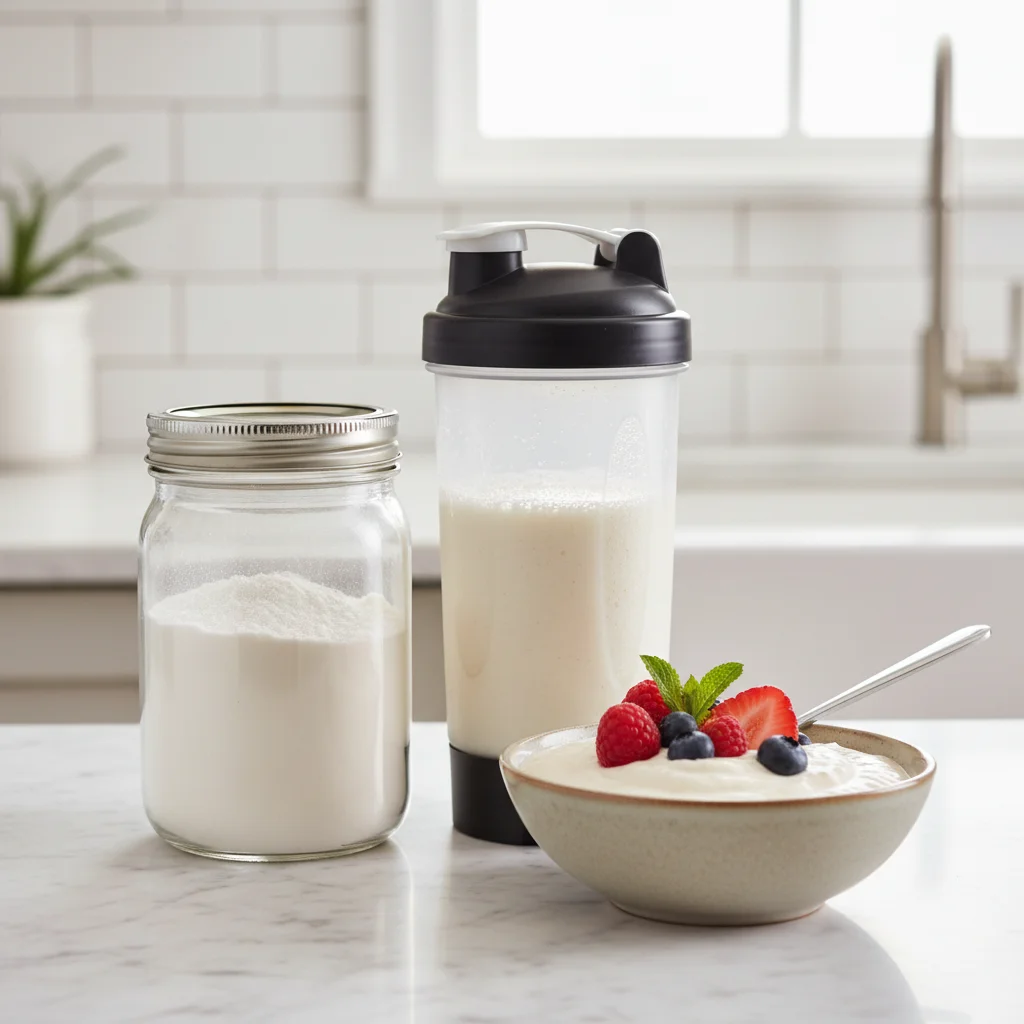
Powdered casein has a thick, creamy texture when mixed, making it perfect for protein puddings, smoothies, and baking. Its mild flavor blends well into many recipes without overpowering them.
Powdered Casein vs. Whey Protein: A Detailed Comparison
Understanding the difference between these two dairy proteins is crucial for choosing the right one for your needs.
| Feature | Powdered Casein | Whey Protein |
|---|---|---|
| Digestion Speed | Slow (digests over 4-7 hours) | Fast (digests in 1-2 hours) |
| Primary Use Case | Anti-catabolism, nighttime, between meals | Post-workout, muscle protein synthesis |
| Texture When Mixed | Thick, creamy, pudding-like | Thin, shakes easily |
| Amino Acid Profile | Complete, high in glutamine | Complete, very high in BCAAs/leucine |
| Best For | Sustained amino release, curbing hunger | Rapid muscle repair after training |
As shown, they are complementary, not interchangeable. Many athletes use whey immediately after a workout for a rapid anabolic spike and casein before bed for prolonged recovery.
How to Use Powdered Casein Effectively
Timing and dosage are key to maximizing the benefits of casein protein.
- Before Bed: The most common and effective use. A serving of 20-40 grams can fuel muscle repair throughout the night.
- Between Meals: If you face long gaps between meals, a casein shake can help maintain amino acid levels and control hunger.
- In Recipes: Use it to boost the protein content of oatmeal, pancakes, muffins, or homemade protein bars. Its thickening property is ideal for creating no-bake protein bites or puddings.
For general health, a standard serving is typically 20-30 grams. For athletic individuals, needs may range from 1.6 to 2.2 grams of protein per kilogram of body weight daily, with casein comprising a portion of that intake. Always consult with a healthcare professional for personalized advice, especially if you have concerns about prostate health or other specific conditions.
Potential Considerations and Side Effects
While casein is safe for most people, there are a few points to note.
- Lactose/Milk Allergy: Since it’s derived from milk, casein contains lactose and the milk protein casein. Individuals with lactose intolerance or a milk protein allergy should avoid it or seek hydrolyzed, lactose-free versions.
- Digestion: Some people may experience bloating or digestive discomfort initially due to its thick, slow-digesting nature.
- Quality Matters: Always choose a product from a reputable brand with minimal additives. Look for third-party testing certifications to ensure purity.
Who Should Consider Powdered Casein?
This supplement is particularly beneficial for:
* Athletes and Bodybuilders seeking to minimize muscle breakdown.
* Individuals on a Weight Management Plan who need help managing appetite.
* Anyone with High Protein Requirements who struggles to meet them through food alone.
* Older Adults looking to support muscle mass and bone health, though a balanced diet is paramount.
Conclusion: Is Powdered Casein Right for You?
Powdered casein is a highly effective, slow-digesting protein that excels at promoting long-term muscle recovery and enhancing satiety. While it shouldn’t replace whole food sources of protein, it serves as a powerful strategic tool in your nutritional arsenal. If your goals include improved overnight recovery, better appetite control, or a versatile protein for recipes, casein is certainly worth considering. For more information on optimizing your overall dietary approach, explore our guide on blood sugar levels and the 10 worst foods for prostate health you should avoid.

