
Roses Tea Benefits & Brewing Guide
The Complete Guide to Roses Tea: Benefits, Brewing, and Beyond
Roses are universally admired for their beauty and fragrance, but their potential extends far beyond the garden. For centuries, cultures around the world have harnessed the power of the rose by steeping its petals to create a delicate, aromatic, and surprisingly potent herbal infusion known as roses tea. This guide will explore everything you need to know about this floral beverage, from its impressive health profile to the art of brewing the perfect cup.
What is Roses Tea?
Roses tea is a caffeine-free herbal tisane, or infusion, made primarily from the dried petals and buds of the Rosa species. It is crucial to note that roses grown for tea should be organic and free from pesticides, as conventional garden roses are often treated with chemicals not meant for consumption. The most commonly used varieties include Rosa damascena (Damask rose) and Rosa rugosa, prized for their intense aroma and flavor.
Historically, roses have held a significant place in traditional medicine systems, including Ayurveda and Traditional Chinese Medicine. Consequently, their use in tea is not merely for pleasure but is rooted in a long history of therapeutic application.
Top Health Benefits of Drinking Roses Tea
The benefits of roses tea are linked to its rich composition of bioactive compounds, including vitamins (especially Vitamin C), polyphenols, flavonoids, and essential oils. Here is a breakdown of its most celebrated advantages.
1. A Natural Aid for Stress and Mood
The act of sipping a warm cup of roses tea is inherently soothing. Moreover, the aroma and compounds in rose petals are believed to have mild anxiolytic (anxiety-reducing) properties. The scent alone can help calm the nervous system, making this tea an excellent choice for unwinding after a stressful day.
2. Supports Digestive Health
Roses tea has traditionally been used to soothe an upset stomach and improve digestion. Its mild anti-inflammatory properties may help ease bloating and discomfort. Therefore, enjoying a cup after a meal can be a gentle digestive aid, similar to other herbal teas like peppermint tea or chamomile tea.
3. Promotes Skin Health and Hydration
Rich in antioxidants that combat free radicals, roses tea can contribute to healthier skin from the inside out. Its anti-inflammatory effects may help with conditions like redness and acne. Additionally, because it is a hydrating fluid, it supports overall skin moisture and elasticity.
4. Rich Source of Antioxidants and Vitamin C
The polyphenols in rose petals, such as gallic acid, are powerful antioxidants. These compounds help protect your cells from oxidative stress, which is linked to chronic diseases and aging. Furthermore, rose hips (the fruit of the rose plant) are exceptionally high in Vitamin C, though they are a different ingredient often blended with petals.
5. May Help Relieve Menstrual Discomfort
Due to its potential antispasmodic and anti-inflammatory effects, roses tea is a popular folk remedy for easing menstrual cramps (dysmenorrhea) and reducing associated mood swings. The warmth of the tea can also provide comforting relief from abdominal pain.
6. Supports Immune Function
The combination of Vitamin C (particularly in rose hip tea) and antioxidants provides a boost to the immune system. This makes it a comforting beverage to reach for during cold and flu season, much like our guide to the best tea for sore throat.
Nutritional Profile & Key Compounds
The exact nutritional content varies based on the rose species and preparation, but key active compounds include:
* Polyphenols & Flavonoids: Quercetin, gallic acid, and anthocyanins (which give red roses their color).
* Vitamins: Notably Vitamin C, especially in rose hips.
* Essential Oils: Including citronellol, geraniol, and nerol, which contribute to the signature aroma.
* Minerals: Trace amounts of calcium, magnesium, and potassium.
How to Brew the Perfect Cup of Roses Tea
Brewing roses tea correctly is essential to extract its delicate flavors and benefits without turning it bitter.
Ingredients:
* 1-2 teaspoons of dried organic rose petals (or 1 rose tea bag)
* 8 oz (240 ml) of fresh, filtered water
Step-by-Step Instructions:
1. Heat Water: Firstly, bring water to a near-boil, around 200°F (93°C). Avoid using fully boiling water, as it can destroy some of the delicate compounds and make the tea bitter.
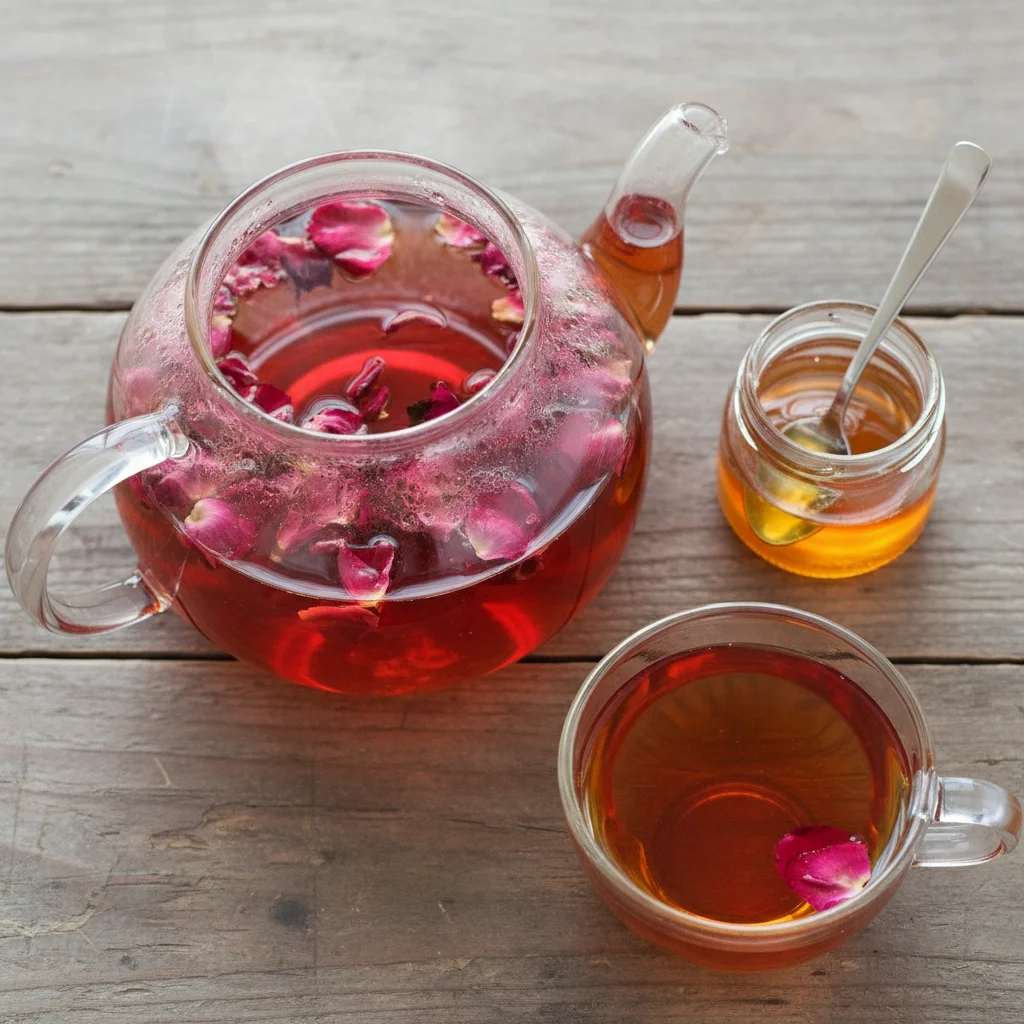
2. Steep: Next, place the rose petals in a teapot or cup, pour the hot water over them, and cover. This traps the aromatic essential oils.
3. Wait: Allow the tea to steep for 5-7 minutes. A longer steep yields a stronger flavor and deeper color.
4. Strain & Serve: Finally, strain the petals and enjoy. You may sweeten it with a touch of raw honey if desired.
Delicious Roses Tea Recipes & Blends
You can easily customize your roses tea by blending it with other herbs and spices.
| Blend Name | Ingredients | Primary Benefit |
|---|---|---|
| Calming Rose-Chamomile | Rose petals, chamomile flowers | Enhances relaxation and promotes sleep |
| Digestive Rose-Ginger | Rose petals, fresh ginger slices | Soothes stomach, reduces nausea |
| Immune-Boosting Rose-Hibiscus | Rose petals, hibiscus flowers, orange peel | High in Vitamin C, tart and refreshing |
| Spiced Rose Chai | Rose petals, black tea, cardamom, cinnamon, cloves | Warming, aromatic, with a caffeine kick |
Potential Side Effects and Precautions
Roses tea is generally considered safe for most people when consumed in moderation. However, there are a few important considerations:
* Pesticides: Always use food-grade, organic roses. Garden roses are often not safe for consumption.
* Allergies: Individuals with known allergies to roses or other plants in the Rosaceae family should avoid it.
* Pregnancy/Breastfeeding: While likely safe in culinary amounts, it’s best to consult a healthcare provider before using it medicinally.
* Drug Interactions: There is no strong evidence of interactions, but due to its potential mild diuretic and antioxidant effects, consult your doctor if you are on medication, especially for kidney or heart conditions.
Frequently Asked Questions (FAQs)
Can I make roses tea from fresh petals?
Yes, you can. However, ensure they are from an organic, pesticide-free source. Use about double the amount of fresh petals compared to dried.
What does roses tea taste like?
It has a distinctly floral, slightly sweet, and subtly tangy or fruity flavor with a luxurious aromatic scent.
Where can I buy quality roses for tea?
Look for “culinary-grade” or “food-grade” dried rose petals at health food stores, specialty tea shops, or reputable online retailers.
Is roses tea good for weight loss?
While not a magic solution, it can be a excellent zero-calorie, hydrating beverage to replace sugary drinks. Its potential mood-boosting and digestive benefits may indirectly support a healthy lifestyle. For more on holistic health approaches, you might explore resources on gut health.
Conclusion: A Timeless Elixir for Modern Wellness
In summary, roses tea is far more than a fragrant novelty. It is a versatile herbal infusion with a compelling history and a range of potential benefits, from calming the mind to supporting the skin and digestion. By choosing high-quality, organic petals and brewing with care, you can easily incorporate this elegant and healthful drink into your daily ritual.
Therefore, why not steep a cup today and experience the timeless comfort of roses?

