
Star Anise Powder Benefits & Uses
Star Anise Powder: Your Guide to a Versatile Spice
Star anise, with its distinctive eight-pointed pod, is a cornerstone of many global cuisines and traditional medicine cabinets. While whole star anise is beautiful for steeping, star anise powder offers unparalleled convenience and intensity for cooking and wellness.
This finely ground form unlocks the spice’s full aromatic potential, making it a secret weapon for passionate home cooks and health-conscious individuals alike. Consequently, understanding its uses and benefits can significantly elevate your culinary and wellness routines.
What is Star Anise Powder?
Star anise powder is simply the dried, star-shaped fruit of the Illicium verum tree, ground into a fine, aromatic dust. Native to Southeast Asia and a key ingredient in Chinese five-spice powder, it boasts a powerful, sweet licorice flavor reminiscent of aniseed, though the two plants are unrelated. The grinding process ruptures the spice’s essential oil cells, releasing a more immediate and potent flavor compared to the whole pod. Therefore, it integrates seamlessly into dry rubs, baked goods, and spice blends where a uniform distribution is crucial.
Culinary Uses of Star Anise Powder
The primary use of star anise powder is, of course, in the kitchen. Its warm, sweet, and slightly peppery notes can transform both sweet and savory dishes.
- Spice Blends: It’s the irreplaceable heart of Chinese five-spice powder. You can also add it to garam masala, pumpkin pie spice, or custom meat rubs.
- Baking: A pinch adds incredible depth to fruit pies (especially apple or pear), spice cakes, cookies, and even chocolate desserts.
- Savory Dishes: It beautifully seasons braised meats like pork or duck, rich stews, soups (like pho), and even marinades for grilled vegetables.
- Beverages: Stir a small amount into mulled wine, chai tea, or hot chocolate for a warming, complex flavor.
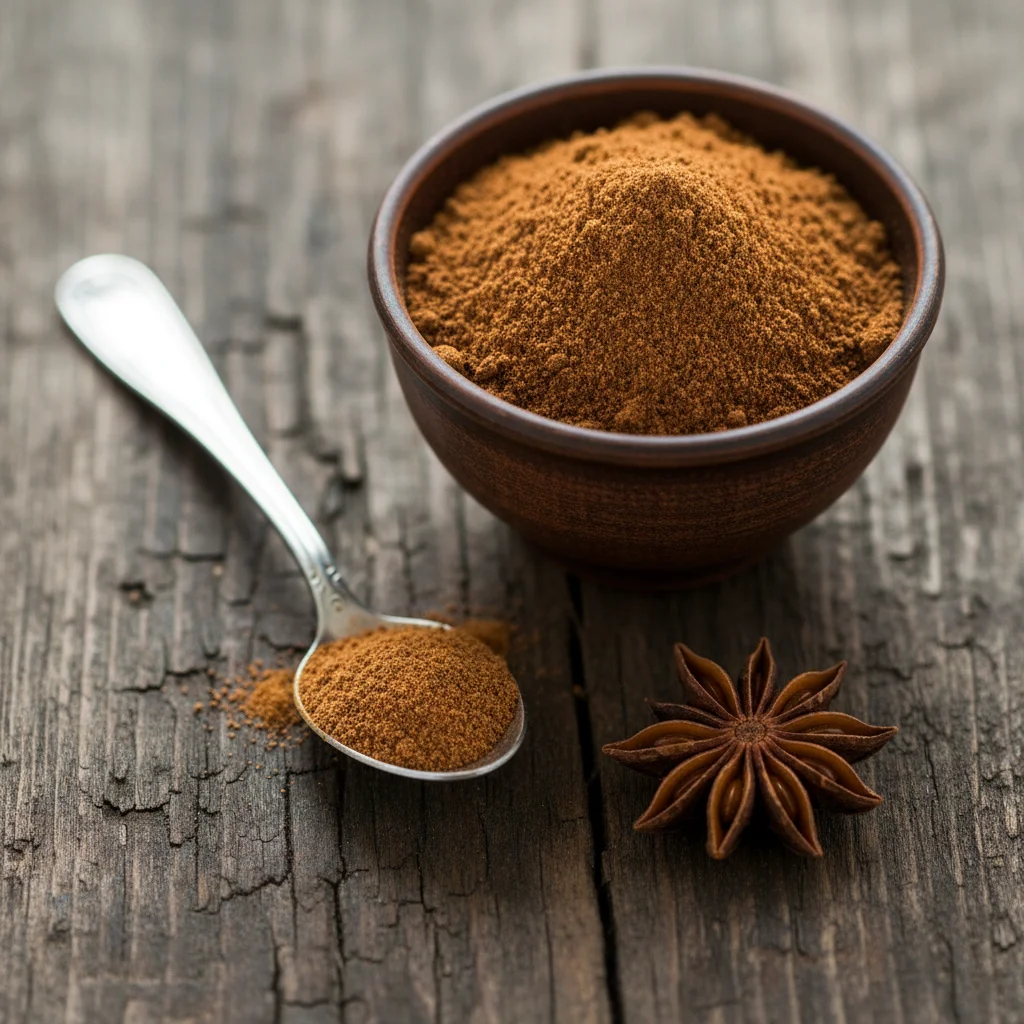
Substitution Guide: Powder vs. Whole
Because the powder is more concentrated, you need to adjust quantities carefully. As a general rule:
* 1 whole star anise pod ≈ ½ to 1 teaspoon of star anise powder.
* Always start with less powder, as its flavor disperses instantly. You can add more, but you can’t take it out.
Potential Health Benefits and Traditional Uses
Beyond its culinary appeal, star anise has been used for centuries in traditional healing systems like Ayurveda and Traditional Chinese Medicine. Modern science is beginning to explore these uses, largely due to its rich content of bioactive compounds like shikimic acid (a precursor for the antiviral drug oseltamivir/Tamiflu) and anethole, which gives it its characteristic flavor.
Here is a summary of its most researched potential benefits:
| Potential Benefit | Key Active Compound | Traditional & Research Insight |
|---|---|---|
| Antimicrobial & Antifungal Properties | Anethole, Linalool | Studies suggest it may help fight certain bacteria and fungi. It has been used traditionally to support oral health. |
| Antiviral Potential | Shikimic Acid | This compound is a primary source for pharmaceutical antiviral synthesis. Whole star anise was historically used in teas for flu-like symptoms. |
| Digestive Aid | Anethole | Known as a carminative, it may help reduce gas, bloating, and indigestion. A tea made from the spice is a common home remedy. |
| Antioxidant Support | Various Polyphenols | Contains compounds that help combat oxidative stress in the body, which is linked to chronic disease. |
| Respiratory Comfort | Expectorant Properties | Its warming quality and potential antimicrobial action made it a traditional choice for soothing coughs and congestion. For other natural approaches to throat health, explore our guide on the best tea for sore throat. |
Important Note: While star anise (Illicium verum) is safe for culinary use, it is crucial to avoid Japanese star anise (Illicium anisatum), which is highly toxic. Always purchase from reputable sources. Moreover, these benefits are based on preliminary research and traditional use; star anise powder is not a substitute for professional medical advice or treatment.
How to Make Your Own Star Anise Powder
Making your own powder ensures maximum freshness and potency. It’s a simple process:
1. Select: Choose whole, unbroken star anise pods that are richly aromatic.
2. Toast (Optional): Lightly toast the pods in a dry skillet over medium heat for 1-2 minutes until fragrant. This deepens the flavor.
3. Grind: Let the pods cool, then break them into pieces. Use a dedicated spice grinder, high-powered blender, or mortar and pestle to grind them into a fine powder.
4. Sift: For an ultra-fine texture, sift the powder through a fine-mesh sieve.
5. Store: Keep your homemade powder in an airtight container, away from light and heat, for up to 6 months.
Buying and Storing Tips
When purchasing pre-ground star anise powder, look for vibrant color and a strong, sweet aroma—signs of freshness. Because ground spices lose potency quickly, buy in small quantities. For long-term storage, you can keep whole pods and grind them as needed; this is the best method for preserving flavor. Additionally, consider integrating other potent powders into your health regimen, such as the best powder supplements for gut health, which can complement a holistic approach to wellness.
Conclusion
Star anise powder is far more than just a ground spice. It is a versatile culinary powerhouse that can elevate everything from a humble stew to an elegant dessert. Furthermore, its historical use in wellness practices, supported by emerging scientific interest, adds another layer to its value. By understanding how to use, make, and store it, you can harness the full potential of this remarkable spice in your kitchen and home apothecary. Start with a small jar, experiment boldly, and discover how its unique licorice warmth can become a staple in your cooking.