
Whole30 vs Paleo: Key Differences for Your Diet Plan
Whole30 vs Paleo: Decoding the Diets to Find Your Fit
Navigating the world of popular diets can be confusing, especially when two well-known plans like Whole30 and Paleo seem so similar at first glance. Both emphasize whole foods and have transformed many people’s relationships with eating. However, understanding their core philosophies is crucial because they serve fundamentally different purposes. This comprehensive guide will dissect the key differences between Whole30 and Paleo, helping you decide which approach aligns with your health and wellness goals.
The Core Philosophy: Reset vs. Lifestyle
The most significant distinction lies in each diet’s fundamental intention.
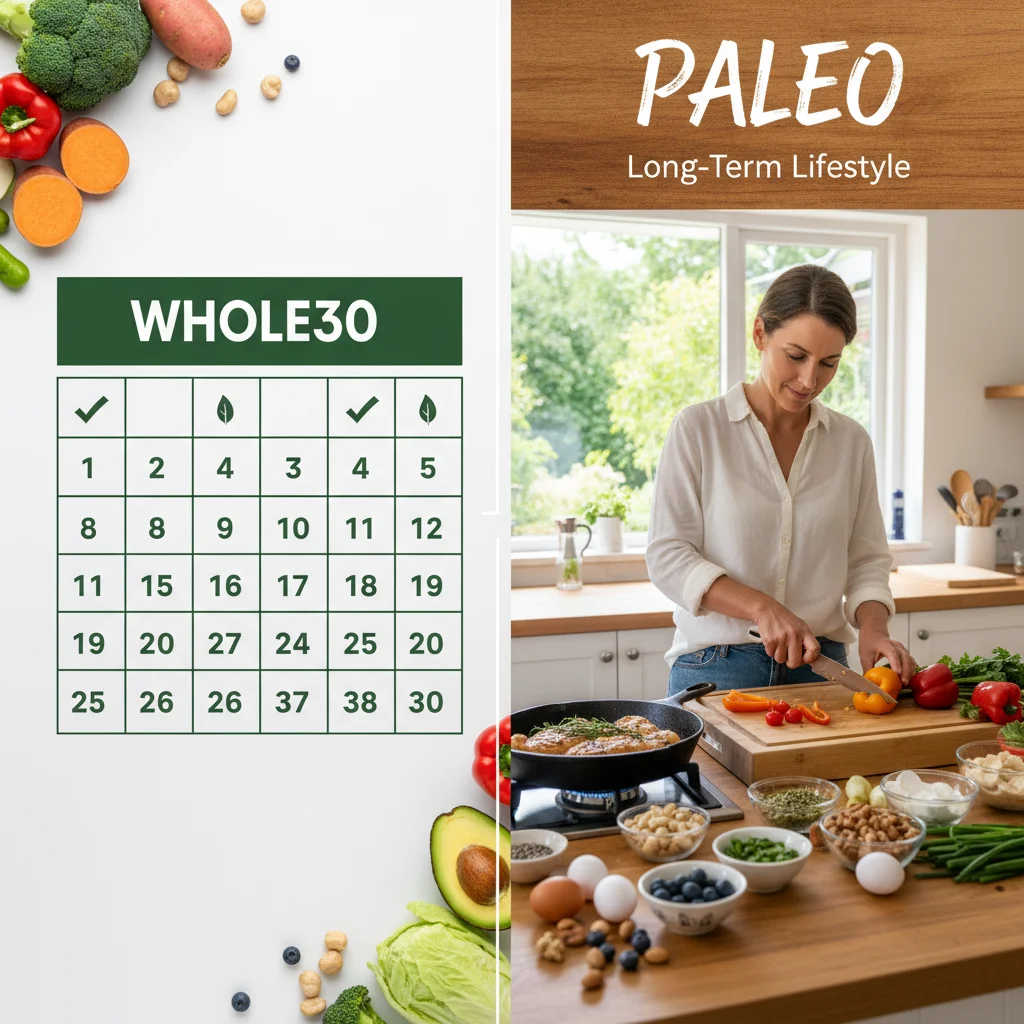
Whole30 is best described as a short-term, 30-day nutritional reset program. It’s structured like an elimination diet, designed to identify potential food sensitivities by removing common inflammatory triggers. The primary goal isn’t weight loss (though it can be a side effect), but rather to “reset” your metabolism, heal your gut, and change your psychological relationship with food. After the 30 days, you systematically reintroduce eliminated foods to observe their effects on your body.
The Paleo Diet, conversely, is modeled as a long-term lifestyle. It’s based on the premise of eating like our Paleolithic ancestors, focusing on foods that could be hunted, fished, or gathered. The goal is sustained health, energy, and wellness by consuming nutrient-dense, unprocessed foods while avoiding modern agricultural products like grains and legumes, which some believe the human body is not optimally adapted to digest.
Head-to-Head: The Rulebook Comparison
To clearly see where these diets align and diverge, let’s break down their specific protocols in a side-by-side comparison.
| Dietary Component | Whole30 Rules | Paleo Diet Guidelines |
|---|---|---|
| Primary Purpose | 30-day elimination reset to identify food sensitivities. | Long-term ancestral health lifestyle. |
| Duration | Strictly 30 days. No exceptions. | Indefinite, adaptable long-term plan. |
| Grains | All are prohibited (wheat, rice, oats, corn, etc.). | All are generally avoided, but some modern versions allow pseudo-grains like quinoa. |
| Legumes | All are prohibited (beans, lentils, peanuts, soy). | All are generally avoided due to phytates and lectins. |
| Dairy | All is prohibited (milk, cheese, yogurt). | Often avoided, but some versions allow high-quality, full-fat dairy like butter or ghee. |
| Added Sugar | All is prohibited, including natural sweeteners like honey or maple syrup. | Generally minimized, but natural sweeteners like honey are often permitted in moderation. |
| Alcohol | Not permitted in any form, even for cooking. | Typically permitted in moderation, especially in forms like red wine. |
| “Paleo-fied” Treats | Strictly forbidden. No pancakes, muffins, or desserts made with approved ingredients. | Generally permitted in moderation, as they are made from “approved” ingredients. |
| Reintroduction Phase | Mandatory. A structured process to test eliminated food groups. | Not applicable, as it is a continuous way of eating. |
What Can You Actually Eat?
Despite the restrictions, both diets encourage a bounty of nourishing whole foods. Your plate on either plan will likely be full of:
- Proteins: Meat, poultry, fish, seafood, and eggs.
- Vegetables: A vast array, with emphasis on leafy greens and colorful varieties.
- Fruits: In moderation, focusing on whole fruits rather than juices.
- Healthy Fats: Avocados, olive oil, coconut oil, and nuts and seeds (though peanuts are not allowed as they are legumes).
The difference in mindset is key here. On Whole30, you’re following a strict protocol. On Paleo, you’re building a dietary framework. For instance, creating a dessert with almond flour, eggs, and dates would be considered breaking the “spirit” of Whole30 but is perfectly acceptable on a Paleo plan. This distinction is vital for long-term adherence and mental satisfaction.
Choosing Your Path: Which Diet is Right for You?
Your choice between Whole30 and Paleo should hinge on your specific objectives.
Consider the Whole30 program if:
* You suspect you have food sensitivities causing issues like bloating, low energy, or skin problems and want a clear method to identify them.
* You want to break unhealthy cravings and habits, particularly around sugar and snack foods.
* You are motivated by a short-term, strict challenge with a clear finish line.
* You need a structured “reset” before adopting a more flexible long-term diet. Many people use Whole30 as a jumpstart to a Paleo lifestyle.
Consider the Paleo lifestyle if:
* You are looking for a sustainable, long-term way of eating to support overall health.
* You want a framework that allows for more flexibility, especially when dining out or traveling.
* You are not necessarily trying to diagnose a food intolerance but want to eat a cleaner, anti-inflammatory diet.
* You enjoy recreating baked goods and treats using approved ingredients.
It’s important to note that while both diets can support health, they are restrictive and may not be suitable for everyone. Consulting with a healthcare provider or registered dietitian before making significant dietary changes is always recommended, especially if you have underlying health conditions. For more on how specific foods impact wellness, you can explore resources on prostate health or the benefits of antioxidants.
The Verdict: Reset or Revolution?
In summary, Whole30 and Paleo are close relatives with different missions. Whole30 is a strict, 30-day elimination reset with rigid rules designed for discovery and habit-breaking. Paleo is a flexible, ancestral-inspired lifestyle that provides a template for long-term healthy eating.
Therefore, they are not mutually exclusive. Many individuals successfully complete a Whole30 to gain insights into their body’s responses and then transition to a modified Paleo diet for maintenance, using the knowledge gained during reintroduction to personalize their long-term plan. Ultimately, the “better” diet is the one that you can adhere to in a way that supports your unique health goals, energy levels, and relationship with food.

