
Xanthan Gum Substitutes for Baking & Cooking
The Ultimate Guide to Xanthan Gum Substitutes
Xanthan gum is a common ingredient in gluten-free baking and many processed foods, acting as a crucial thickener, stabilizer, and emulsifier. However, you might find yourself needing a substitute because you’ve run out, are following a specific diet, or simply prefer a whole-food alternative. Fortunately, several effective replacements can save your recipes. This guide will explore the best xanthan gum substitutes, detailing how and when to use them for perfect results every time.
Why Xanthan Gum is Used (And Why You Might Need a Swap)
Firstly, understanding xanthan gum’s role is key to choosing the right substitute. It is a polysaccharide fermented from simple sugars, which creates a gel-like substance when mixed with liquid. Consequently, it provides viscosity, prevents ingredient separation, and traps air in gluten-free batters to improve texture.
You might seek an alternative for several reasons:
* Allergies or Sensitivities: While rare, some individuals may react to xanthan gum, especially if it’s derived from corn, soy, or wheat.
* Dietary Preferences: Those following strict clean-eating or whole-food diets may wish to avoid this processed additive.
* Availability: It’s not always stocked in every pantry or local store.
* Digestive Concerns: In large quantities, it can cause bloating or digestive upset, similar to other soluble fibers.
Therefore, having a list of reliable substitutes is essential for any home cook or baker.
Best Xanthan Gum Substitutes: A Detailed Comparison
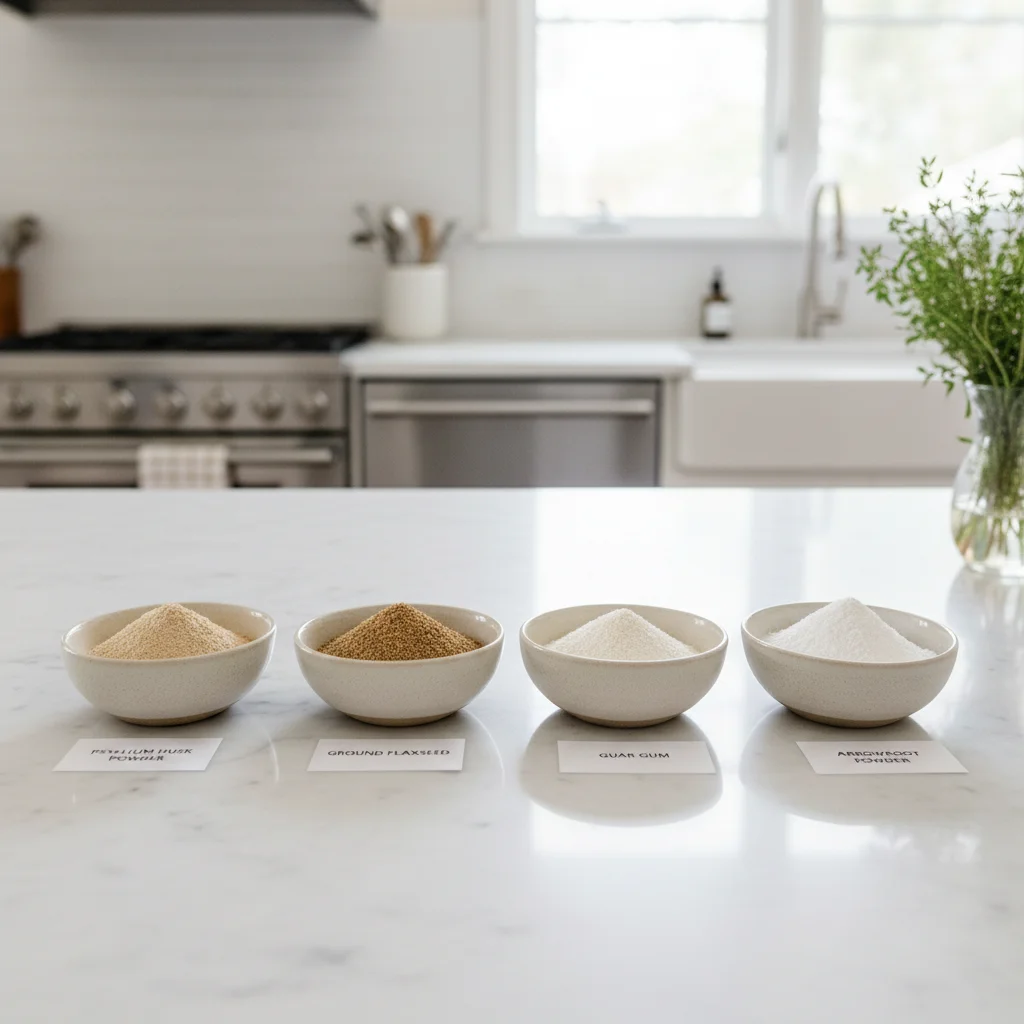
The ideal substitute depends entirely on your recipe. For instance, a sauce requires a different approach than a loaf of bread. The following table breaks down the top alternatives, their best uses, and conversion ratios.
| Substitute | Best Used In | How to Use (Ratio to Replace 1 tsp Xanthan Gum) | Key Notes |
|---|---|---|---|
| Psyllium Husk Powder | Gluten-Free Breads, Pizza Dough | Use 2 teaspoons | Creates excellent elasticity and structure; absorbs a lot of liquid. |
| Ground Chia Seeds or Flaxseeds | Egg Replacer, Burgers, Quick Breads | Mix 1 tbsp with 3 tbsp water, let gel | Adds fiber and nutrients; provides binding and moisture. |
| Guar Gum | Ice Cream, Sauces, Gluten-Free Baking | Use 1:1 ratio | Very similar to xanthan; can be more effective in cold foods. |
| Arrowroot Powder | Sauces, Gravies, Fruit Fillings | Use 2 teaspoons | Creates a clear, glossy finish; excellent for thickening at low temps. |
| Cornstarch | Sauces, Stir-Fries, Puddings | Use 2 teaspoons | Must be cooked to remove starchy taste; creates an opaque texture. |
| Gelatin or Agar-Agar | Gummies, Jellies, Custards | Follow package instructions | Provides a firm set; agar-agar is a plant-based alternative. |
| Egg Whites | Gluten-Free Cakes, Meringues | 1-2 egg whites | Adds structure and leavening; not suitable for vegan diets. |
How to Choose and Use Your Substitute
Selecting the right alternative requires considering the recipe’s mechanics. Here’s a deeper dive into the top choices.
For Gluten-Free Baking: Psyllium Husk & Guar Gum
Gluten-free baking relies heavily on binders to replicate gluten’s network. Psyllium husk powder is arguably the best whole-food substitute for bread. When hydrated, it forms a stretchy gel that mimics gluten, giving bread a chewy, airy crumb. Importantly, start with the recommended ratio and adjust, as it can make batters very thick.
Alternatively, guar gum is a direct 1:1 swap in many baking recipes. It is also a fermented product and behaves almost identically to xanthan gum. Some find it works even better in frozen desserts, as it maintains stability at cold temperatures. For more on incorporating healthy fibers into your diet, explore our guide on the best powder supplements for gut health.
For Thickening Sauces & Soups: Arrowroot & Cornstarch
If you’re making a gravy, soup, or stir-fry sauce, a simple starch is your best bet. Arrowroot powder is a fantastic thickener that works at lower temperatures than cornstarch and creates a beautifully clear, glossy sauce. It’s also neutral in flavor.
Cornstarch is a highly accessible option. However, you must always create a slurry (mix it with cold water first) before adding it to a hot liquid to prevent clumping. Moreover, it must be simmered for a minute to cook out the starchy flavor and reach full thickness.
For Binding & Egg Replacement: Chia & Flax “Eggs”
In recipes like veggie burgers, meatballs, or certain baked goods where binding is the primary goal, a chia or flax “egg” is perfect. To make one, simply mix one tablespoon of ground seeds with three tablespoons of water and let it sit for 5-10 minutes until it forms a viscous gel. This gel binds ingredients together and adds valuable omega-3 fatty acids. Additionally, understanding other nutritional swaps can be helpful, such as knowing the difference between raw honey vs pure honey for sweeteners.
Pro Tips for Successful Substitution
Experimenting with substitutes can be tricky, so follow these tips for success:
* Start Small: Always begin with a slightly smaller amount than recommended. You can add more, but you can’t remove it once added.
* Hydrate Properly: Ingredients like psyllium, chia, and flax need time to absorb liquid and form a gel. Incorporate this resting time into your recipe.
* Consider Flavor: Some substitutes, like flaxseed, have a distinct nutty flavor that may alter the taste of delicate baked goods.
* Mix Thoroughly: To prevent clumping—especially with powders like guar gum or arrowroot—whisk them thoroughly with other dry ingredients before adding liquids.
Ultimately, finding the right xanthan gum substitute empowers you to adapt recipes to your needs without sacrificing texture or quality. Whether you’re thickening a sauce or baking a gluten-free loaf, there’s a suitable alternative waiting in your cupboard. For those managing specific health conditions, it’s always wise to consider how ingredients interact with your body, much like being aware of the 10 worst foods for prostate health you should avoid.

