
Kosher vs Halal: Key Differences
Kosher vs Halal: Understanding Religious Dietary Laws
Navigating the world of religious dietary laws can be complex, especially when comparing two of the most well-known systems: Kosher and Halal. While both originate from Abrahamic traditions and share some similarities—such as prohibiting pork—they are distinct sets of rules governing what adherents can eat and how food must be prepared.
Consequently, understanding these differences is crucial for interfaith awareness, inclusive hospitality, and personal dietary choices. This guide will break down the key principles, practices, and certifications for each.
What Does Kosher Mean?
The term “kosher” comes from Hebrew, meaning “fit” or “proper.” Kosher dietary laws, known as kashrut, are derived from the Torah, specifically in books like Leviticus and Deuteronomy. These laws provide a comprehensive framework for Jewish life.
Core Principles of Kosher Law
Kosher rules are intricate and govern several areas:
* Permitted Animals: Only land animals that chew their cud and have split hooves are allowed (e.g., cows, sheep, goats). Consequently, pigs, rabbits, and camels are forbidden.
* Slaughter Method (Shechita): A trained ritual slaughterer (shochet) must use a perfectly sharp knife to make a swift, deep cut across the throat, ensuring minimal pain. The blood must then be drained, as consuming blood is strictly prohibited.
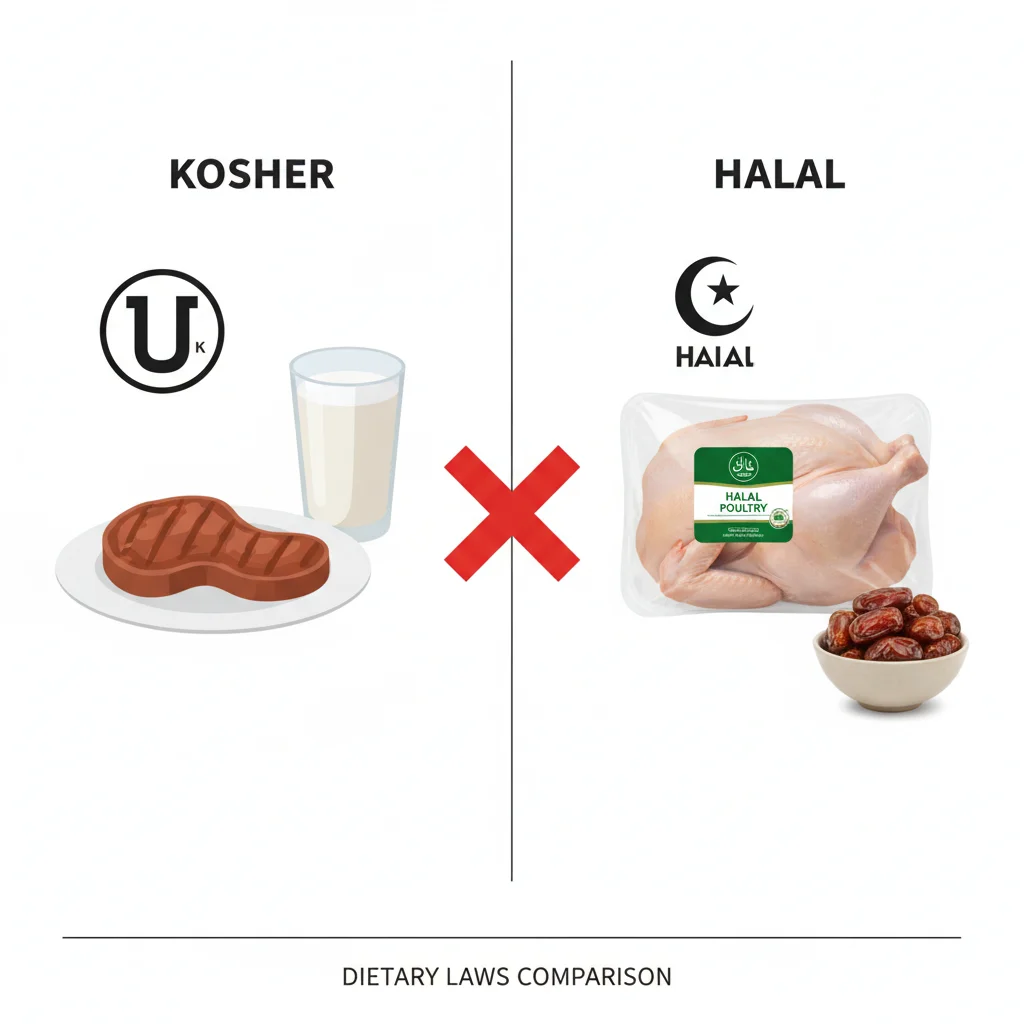
* Separation of Meat and Dairy: This is a fundamental rule. Meat and dairy products cannot be eaten together, cooked together, or even served using the same utensils. Observant kitchens often have separate sets of dishes, cookware, and even sinks.
* Forbidden Foods: Pork and shellfish (like lobster, shrimp, and clams) are not kosher. Additionally, certain parts of permitted animals and insects are prohibited.
What Does Halal Mean?
“Halal” is an Arabic word meaning “permissible.” Halal dietary laws are prescribed in the Quran and the teachings of the Prophet Muhammad (Hadith). They form part of the broader Islamic code of living known as Sharia.
Core Principles of Halal Law
Halal guidelines focus on the permissibility of substances and the method of processing:
* Permitted Animals: All animals are halal except those explicitly forbidden, such as pigs, carnivorous animals, and certain birds of prey. Notably, seafood is generally considered halal by most Islamic schools of thought.
* Slaughter Method (Dhabihah): The slaughter must be performed by a sane adult Muslim. The name of Allah must be invoked at the time of slaughter (“Bismillah”). Similar to shechita, a sharp knife is used to cut the throat, windpipe, and blood vessels to drain the blood quickly.
* Prohibition of Intoxicants: Alcohol and other intoxicants are strictly forbidden in Islam. This extends to foods cooked with alcohol or containing alcohol-based flavorings.
* Avoidance of Contamination: Halal food must not come into contact with non-halal substances during preparation, processing, or storage.
Kosher vs Halal: A Side-by-Side Comparison
The table below summarizes the primary distinctions between these two dietary systems.
| Feature | Kosher (Jewish Law) | Halal (Islamic Law) |
|---|---|---|
| Scriptural Source | Torah (Old Testament) | Quran and Hadith |
| Pork | Forbidden | Forbidden |
| Seafood | Only fish with fins & scales allowed (no shellfish) | Generally all seafood is permitted |
| Animal Slaughter | Must be performed by a Jewish shochet; specific blessing. | Must be performed by a Muslim; name of Allah invoked. |
| Meat & Dairy | Never mixed. Requires separate utensils and waiting periods. | Can be mixed. No prohibition on combining. |
| Alcohol | Permitted for consumption (in moderation, per tradition). | Strictly forbidden in all forms. |
| Certification Symbol | Symbols like Ⓤ, Ⓚ, or “OU” from a rabbinical authority. | Symbols like “Halal” text or the Arabic script from an Islamic body. |
Certification and Modern Food Production
In today’s global food market, both kosher and halal certifications are vital. They assure consumers that products comply with religious standards from ingredient sourcing to manufacturing. Kosher certification is provided by rabbinical organizations (e.g., the Orthodox Union), while Halal certification is issued by Islamic boards and councils.
Interestingly, many Muslims consider kosher meat acceptable in the absence of halal options, primarily because the slaughter methods are similar. However, the reverse is not typically true for observant Jews, largely because Islamic slaughter does not satisfy all kosher requirements, and the blessing is different. Moreover, kosher rules are often more restrictive regarding dairy and ingredient separation.
Why Understanding These Diets Matters
Whether you are hosting guests, developing food products, or simply expanding your cultural knowledge, respecting these dietary laws is important. Firstly, it promotes inclusivity and sensitivity. Secondly, for those exploring specific health or ethical diets, these systems offer structured approaches to eating. For instance, someone interested in clean eating might find the prohibitions on certain additives or processing methods aligned with their goals. If you’re curious about other structured dietary approaches, you might explore our guide on 9 vegan keto diet plans.
Furthermore, the principles behind these laws—such as mindful consumption, animal welfare during slaughter, and purity of ingredients—resonate with broader wellness trends. The attention to ingredient sourcing can be compared to the scrutiny one might apply when choosing the best powder supplements for gut health, where quality and composition are paramount.
Key Takeaways
- Kosher and halal are not interchangeable. They are separate religious dietary laws with unique rules.
- The separation of meat and dairy is a major differentiator, being central to kosher but not present in halal.
- Alcohol is prohibited in halal but is generally permitted under kosher guidelines.
- Certification labels are essential for consumers seeking to adhere to these laws in a modern marketplace.
In conclusion, while kosher and halal diets share a common Abrahamic heritage and some similar prohibitions, they are distinct frameworks that guide the daily lives of millions. By understanding their differences, we can make more informed, respectful, and inclusive choices, whether at the grocery store or the dinner table.

