
Outie Vaginal Anatomy Explained | What It Means & FAQs
Understanding “Outie Vaginal” Anatomy: A Guide to Normal Variation
If you’ve heard the term “outie vaginal” and wondered what it means, you’re not alone. This informal phrase is often used to describe the external appearance of the vulva when the inner labia (labia minora) are more prominent or extend beyond the outer labia (labia majora).
Firstly, it’s crucial to understand that this is a completely normal variation of female anatomy. The appearance of vulvas varies tremendously from person to person, much like other body parts. Consequently, there is no single “correct” or “ideal” look.
This guide will explain the anatomy, reassure you about normal diversity, and discuss when a change in appearance might warrant a conversation with a healthcare provider.
What Does “Outie Vaginal” Actually Refer To?
Technically, the term “vaginal” is a misnomer in this context. The visible external parts are collectively called the vulva. The vagina is the internal canal. When people say “outie vaginal,” they are typically describing the vulva’s structure.
- “Outie”: Usually implies that the inner lips (labia minora) are longer or more full, making them visible when looking at the vulva at rest. They may protrude past the outer lips (labia majora).
- “Innie”: Conversely, this describes a vulva where the inner lips are tucked inside the outer lips.
Both are entirely normal. The size, shape, color, and symmetry of the labia minora vary widely. A comprehensive review published by the National Institutes of Health (NIH) emphasizes that there is a broad range of normal labial anatomy.
Common Features of an “Outie” Appearance
- Prominent Labia Minora: The inner lips are more visible.
- Asymmetry: It is very common for one labium to be slightly longer or shaped differently than the other.
- Varied Pigmentation: The labia minora can range in color from pink to brownish-black.
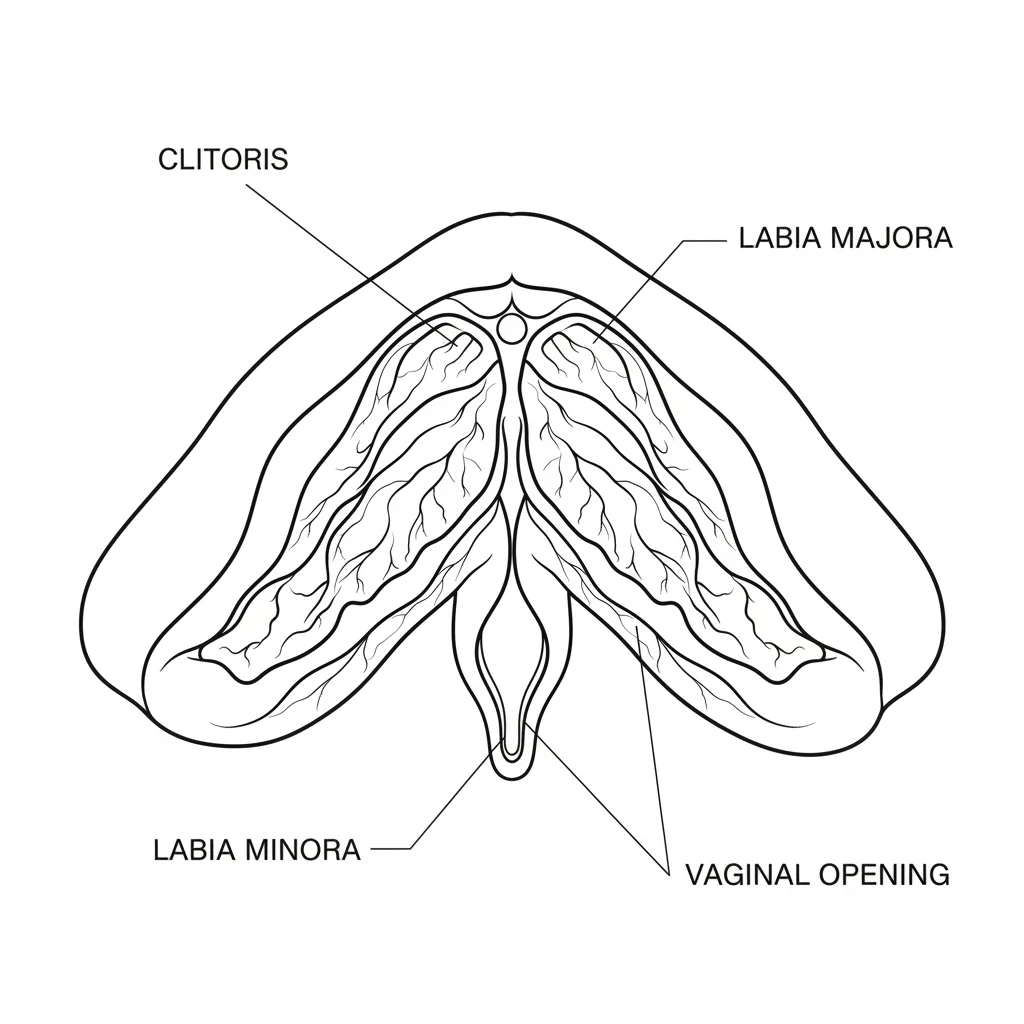
Labia Diversity: What’s Normal?
The idea that there is a “standard” vulva is a myth perpetuated by limited representation in mainstream media and pornography. In reality, diversity is the rule, not the exception.
| Feature | Range of Normal Variation | Key Point |
|---|---|---|
| Labia Minora Length | Can range from a few millimeters to several centimeters in length. | Length has no correlation with sexual function or sensitivity. |
| Labia Minora Shape | May be smooth, ruffled, tapered, or rounded. | All shapes are normal and healthy. |
| Symmetry | Perfect symmetry is rare. Most people have slight differences between the left and right side. | Asymmetry is typical and not a cause for concern. |
| Color | Colors include shades of pink, red, brown, purple, or black. | Pigmentation can change with hormones, age, and arousal. |
Moreover, factors like genetics, hormones, age, and childbirth can all influence the appearance of the vulva over time. Therefore, comparing your anatomy to others is not a useful or healthy practice.
When to Consult a Healthcare Provider
While an “outie” appearance is normal, certain symptoms or changes should be evaluated. It’s important to distinguish between natural variation and signs of a medical condition.
Consult a doctor if you experience:
- Sudden Changes: A rapid increase in size, color change, or the appearance of new lumps or bumps on one side.
- Pain or Discomfort: Persistent pain, itching, burning, or irritation that interferes with daily life or sexual activity.
- Physical Discomfort: Labial tissue that causes pain during exercise, cycling, or when wearing tight clothing.
- Skin Abnormalities: Sores, ulcers, warts, or unusual growths.
Many concerns can be addressed by a gynecologist or general practitioner. For instance, some individuals explore remedies for general intimate area discomfort, such as those discussed in our guide to natural sore throat remedies, which highlights the importance of soothing solutions for various bodily irritations. However, for vulvar-specific issues, a targeted medical opinion is essential.
Labiaplasty: A Note on Surgical Alteration
Labiaplasty is a cosmetic surgical procedure to reduce the size of the labia minora. It is a personal decision that should not be made lightly. Importantly, it is rarely medically necessary. If considering it, one must consult with a qualified, ethical surgeon who prioritizes function and health over an aesthetic ideal. Thoroughly discuss the risks, benefits, and your motivations beforehand.
Embracing Body Diversity and Health
The most important takeaway is that your body is unique. The concept of an “outie vaginal” simply describes one common variation in a beautiful spectrum of human anatomy. Focusing on the health and function of your body is far more valuable than focusing on its appearance against an arbitrary standard.
For those interested in overall wellness, understanding how different aspects of health interconnect can be empowering. For example, supporting your body’s foundational energy systems is a key part of vitality, a topic explored in resources like our Advanced Mitochondrial Formula review.
Final Thoughts: If you have questions about your anatomy, the most reliable source of information is a trusted healthcare professional. They can provide reassurance, answer your questions, and ensure that everything is healthy—because confidence often starts with understanding and accepting your own normal.

